Big Lots workers gain clearer pregnancy accommodation rights under new federal law
A new federal rule gave Big Lots workers a clearer way to ask for stools, extra breaks and lifting help when pregnancy affects the job.
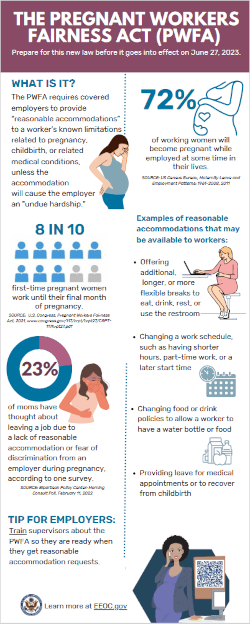
Pregnancy-related limits at work now came with a clearer federal process, and that mattered in a chain where store jobs often mixed register duty, stocking, cleanup and constant movement. The U.S. Equal Employment Opportunity Commission said the Pregnant Workers Fairness Act generally required covered employers with 15 or more employees to provide reasonable accommodations for a worker’s known limitations related to pregnancy, childbirth or a related medical condition unless the change would create an undue hardship. The final rule was issued on April 15, 2024, published four days later, and took effect on June 18, 2024.
For Big Lots associates, the law gave practical options when pregnancy made standing, lifting, pacing or restroom access harder. The EEOC’s examples of possible accommodations included extra or longer breaks to eat, drink or use the restroom, a stool to sit on, changes to equipment or workstations, changes to a uniform or dress code, safety equipment that fit properly, temporary reassignment, light duty or help with lifting, telework and leave. In a store setting, that could mean asking to sit during slower periods at the front end, stepping away for more frequent breaks, or shifting away from repeated box handling in the stockroom.
The key legal point was not that every request had to be granted. It was that the employer had to engage with the request. The process was supposed to start with a conversation about the known limitation and the work environment, then move into a specific request and documentation if needed. For a store associate or supervisor, that made the difference between a quick dismissal and a workable temporary adjustment. The PWFA also sat alongside other protections, including Title VII and the Americans with Disabilities Act, and it did not limit any federal, state or local law that offered equal or greater protection. The EEOC said more than 30 states and cities already had accommodation laws on the books, which made the federal standard especially important for chain employers operating across state lines.

Big Lots’ own footprint showed why the rule landed with unusual force. In a quarterly filing for the period ended May 4, 2024, the company said it operated 1,392 stores in 48 states and an e-commerce platform. Later in 2024, Big Lots filed for chapter 11 bankruptcy in the U.S. Bankruptcy Court for the District of Delaware, then disclosed an asset purchase agreement with Gordon Brothers Retail Partners on December 27, 2024. A subsequent filing said Variety Wholesalers intended to acquire between 200 and 400 Big Lots stores and up to two distribution centers. In a business that was already shifting stores, staffing and schedules, early communication about pregnancy-related limits became even more important.
This article was produced by Prism’s automated news system from verified source data, official records, and press releases, then run through automated quality and moderation checks before publishing. The system is built and supervised by the people who set the standards it runs under. Read our full AI policy.
Did this article answer your question?