Big Lots workers should review tax withholding as hours and pay shift
When hours swing, withholding can swing too. Big Lots workers can avoid tax-season surprises by checking their W-4 after schedule changes, second jobs, or extra shifts.
Why uneven hours matter at tax time
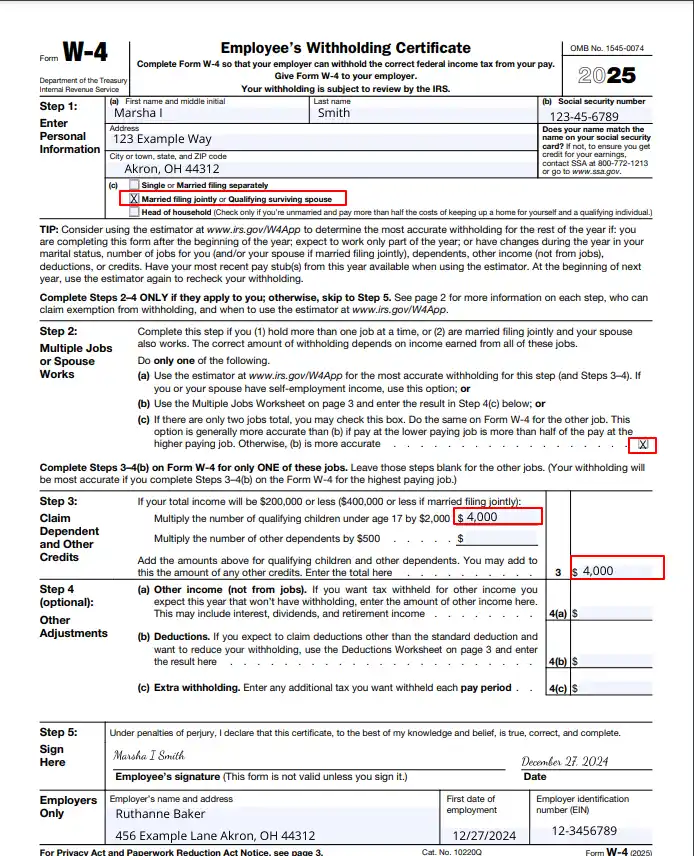
A retail paycheck can look steady right up until it does not. For Big Lots workers, the issue is not just how much is in this week’s deposit, but whether federal withholding still fits a schedule that may have been cut, stretched, or reshuffled by overtime, a second job, or seasonal demand. The IRS says withholding is the amount of federal income tax taken from your paycheck, and it depends on how much you earn and the information you give your employer on Form W-4.
That makes paycheck stability a real issue, not an abstract tax question. If your hours fall for several months, then jump during the holidays, the amount withheld can drift away from what you actually owe. The result can be a tax bill that lands hard in spring, or a refund so large that you spent the year lending the government money interest-free.
Big Lots workers have seen how fast pay can change
This matters even more in a company like Big Lots, where the workforce has already been through major disruption. Big Lots operated 1,392 stores as of Feb. 3, 2024. Reuters later reported the company had around 1,400 U.S. stores and more than 30,000 workers before it filed for Chapter 11 bankruptcy on Sept. 9, 2024, in the U.S. Bankruptcy Court for the District of Delaware.
The chain’s closure process intensified the uncertainty. An October 2024 update said Big Lots planned another 150 store closures, bringing total planned and completed closures to nearly 500. For hourly workers, that kind of churn can mean shorter schedules, sudden transfers, second jobs to fill the gap, or a burst of extra shifts when a store is trying to clear inventory or cover staffing holes. Each of those changes can affect how much tax is withheld from each check.
What to look at on every pay stub
The cleanest habit is also the simplest one: check every pay stub, not just the net pay. USAGov says paycheck stubs should show how much federal tax was withheld in the most recent pay period and how much has been withheld year to date. That year-to-date number is the one that tells you whether your withholding is staying on track as your hours move up and down.
- Your hours are lower than they were when you filled out your W-4.
- You are picking up overtime, holiday shifts, or bonus pay.
- You started a second job and did not adjust either employer’s withholding.
- Your take-home pay is rising or falling faster than expected because of changes in taxes withheld.
A quick review can reveal warning signs early:
That small check can keep a worker from being surprised by a tax bill months later. It also helps separate a temporary scheduling bump from a real change in annual income, which is what ultimately matters to the IRS.
When to revisit your W-4
The IRS says workers should review withholding every January and again after major life changes. Those changes include a new job, marriage, divorce, separation, childbirth, adoption, or a home purchase. The same advice applies when your work life changes in ways that are common in retail but often overlooked in everyday budgeting.
For Big Lots workers, the moments to revisit a W-4 often include: 1. You take on a second job to make up for reduced store hours. 2. You start getting more shifts during seasonal peaks or clearance events. 3. You move from part-time to fuller schedules, or the reverse. 4. Your household changes, such as a marriage, a new dependent, or a home purchase.

The point is not to engineer a perfect refund. It is to keep the amount withheld closer to your real tax situation so your paycheck is usable now, not distorted by a mismatch that shows up later.
How the IRS tools can help
The IRS Tax Withholding Estimator is built for exactly this kind of uneven income. The tool can help you check your W-4 withholding and, after use, generate a pre-filled Form W-4 that you can give to your employer. That makes it easier to translate a messy year of changing hours into a withholding setup that better matches your actual pay.
The estimator has also been updated for 2026 to reflect changes including no tax on tips and no tax on overtime. That matters for hourly retail workers who may rely on extra shifts to smooth out earnings, because overtime-heavy periods can change your annual tax picture faster than a regular weekly schedule would. Even if your base pay has not changed, the mix of hours, premiums, and additional jobs can shift your withholding enough to warrant an update.
A practical routine for workers with shifting schedules
The smartest move is to treat withholding like part of your monthly budget check, not a once-a-year tax chore. If your hours have changed for more than a short stretch, or if a second job has become part of your regular routine, it is worth running the numbers again. A worker who is juggling reduced shifts this month and overtime next month needs a W-4 that reflects the year as a whole, not just one paycheck.
- Compare each stub with the previous one, especially the federal tax line.
- Watch the year-to-date withholding total, not just the current check.
- Revisit the IRS estimator after a job change or major life event.
- Submit a new W-4 when your income pattern changes enough to alter your expected tax bill.
A simple routine can keep things manageable:
For hourly workers, that kind of check can stabilize the household budget. It can also make a spring tax bill less punishing when rent, groceries, and other fixed costs do not wait for the IRS calendar.
The bigger lesson for retail paychecks
Big Lots has gone through store closures, bankruptcy proceedings, and an unstable operating environment that has touched thousands of workers. In that setting, paychecks are not just a reflection of hours worked. They are also a reminder that taxes need to track the reality of the job, especially when schedules are uneven and income is harder to predict.
The best time to adjust withholding is before the mismatch gets expensive. For Big Lots workers, that means checking the stub, using the estimator, and updating the W-4 when hours, household circumstances, or a second job change the shape of the year.
Know something we missed? Have a correction or additional information?
Submit a Tip