NLRB orders Amazon to bargain again, just before Prime Day
Federal labor law just forced Amazon back to the table at DCK6, a reminder that bargaining orders can still turn organizing pressure into leverage for Big Lots workers.
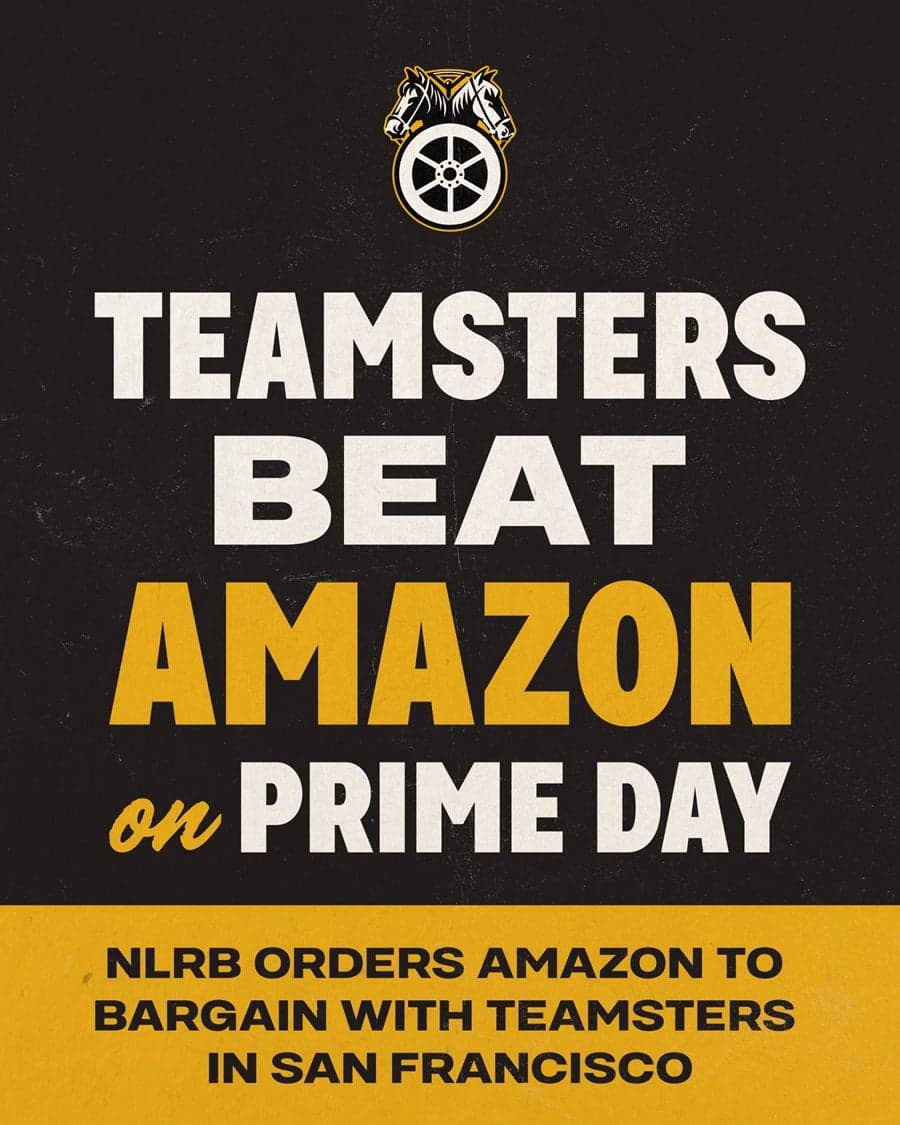
A federal labor order has put Amazon back at the bargaining table for its DCK6 facility in San Francisco, and the Teamsters said the ruling landed hours before Prime Day began. For Big Lots workers watching how employers respond when labor law bites, the case shows how an organizing drive can turn into formal leverage even when a company keeps resisting.
The Teamsters said on June 23 that the National Labor Relations Board ordered Amazon to bargain with workers at DCK6, making it the company’s second bargaining order in less than three months after a separate order involving JFK8 in Staten Island. Amazon’s Prime Day 2026 ran from June 23 to June 26, which gave the ruling added weight as one of the year’s biggest retail sales pushes was already underway.
The San Francisco case has been building since October 2024, when more than 100 Amazon workers at DCK6 formed a Teamsters union and demanded recognition outside the NLRB election process. The Teamsters called that the first-ever Amazon warehouse union recognition demand made outside the board’s election route. In October 2024, San Francisco Mayor London Breed joined a rally with Amazon Teamsters and other California leaders calling on Amazon to recognize the union.
A National Labor Relations Board administrative law judge later issued a detailed decision on May 29, 2026, finding Amazon violated federal labor law on four counts in the DCK6 case after the company refused to recognize the union. The Teamsters said the ruling showed Amazon could not keep dodging legal obligations. Amazon said it disagrees with the San Francisco decision and is appealing it.
The timing matters beyond one warehouse. Amazon’s logistics network helps set the pace for the broader retail economy that discount chains like Big Lots live inside, where speed, low prices and nonstop fulfillment shape store-floor expectations as much as warehouse conditions do. Cornell research in 2026 found that consumer demand for cheap, rapidly delivered products creates harsher working conditions in e-commerce fulfillment centers than in traditional warehouses, and labor analysts have argued that organizing logistics giants requires pressure across the supply chain, not just inside one workplace.
For Big Lots workers in stores, warehouses and distribution centers, the DCK6 order is a reminder that federal labor rights still move from paper to practice when workers organize, file charges and force employers to answer in public. The Amazon fight now spans San Francisco and Staten Island, and it keeps showing how bargaining orders can change the balance of power even when management pushes back.
This article was produced by Prism’s automated news system from verified source data, official records, and press releases, then run through automated quality and moderation checks before publishing. The system is built and supervised by the people who set the standards it runs under. Read our full AI policy.
Know something we missed? Have a correction or additional information?
Submit a Tip