Retail sales rise 4.9%, but shoppers keep shifting online
Retail sales climbed 4.9%, but online channels grew 11.1%, putting more pressure on Big Lots stores to prove value fast.

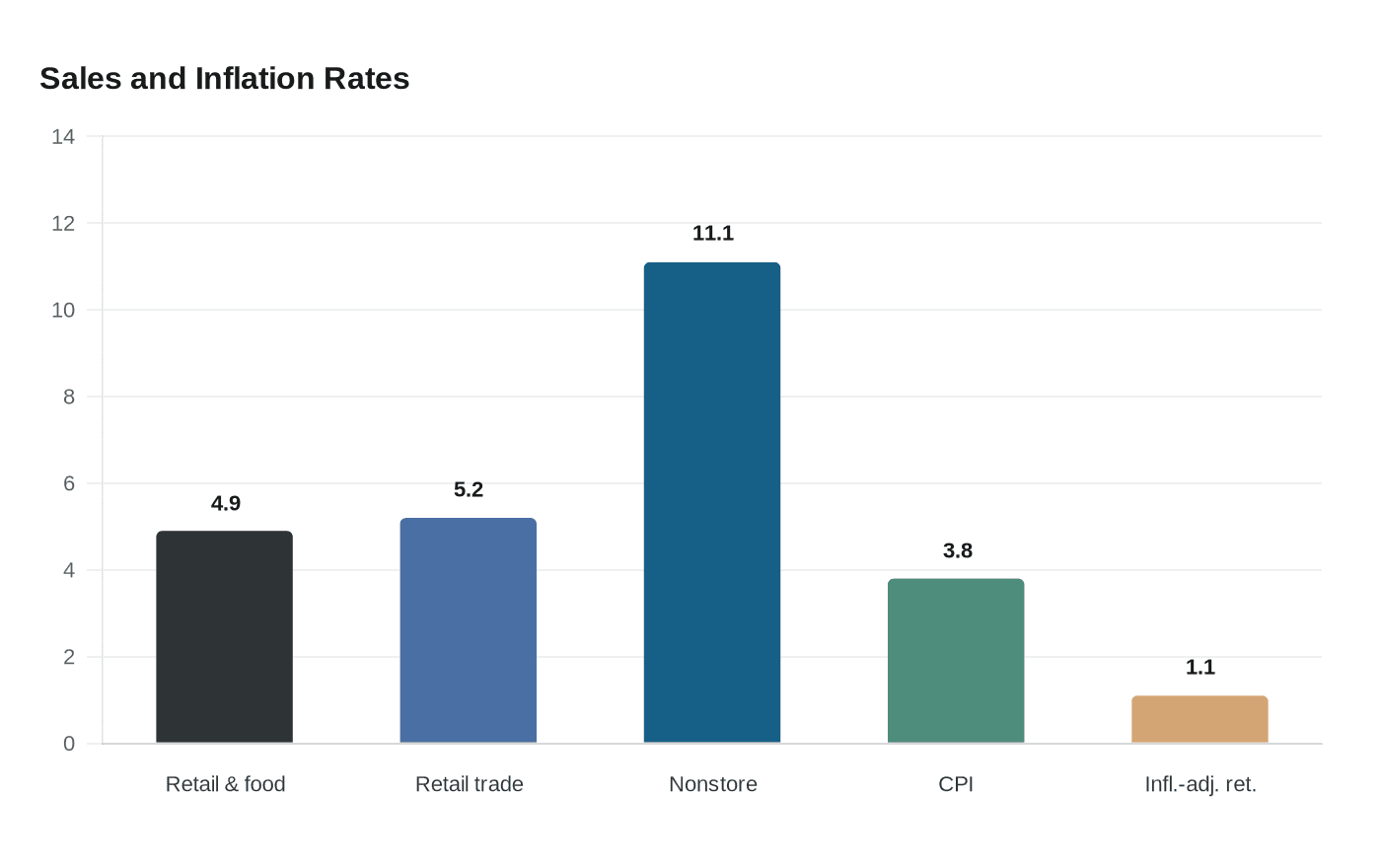
Retail spending is still growing, but the mix is shifting in a way that puts more pressure on Big Lots stores to make every visit count. The U.S. Census Bureau said April 2026 retail and food services sales reached $757.1 billion, up 0.5% from March and 4.9% from a year earlier. Retail trade sales rose 5.2% year over year, but nonstore retailers jumped 11.1%, a sign that shoppers are increasingly comparing prices and buying through channels that can turn a sale into a click.
For Big Lots workers on the floor, that combination usually means more emphasis on value signaling and less room for slack. When shoppers are splitting trips between stores and online sellers, associates have to do more than ring up purchases. They have to make the bargain obvious at the shelf, keep clearance and seasonal merchandise moving, and help turn a quick browse into a conversion before the customer walks out. In a treasure-hunt format, where the mix changes often, that kind of execution matters even more because a weak trip can easily become a lost trip.

The headline sales gain also comes with an inflation catch. The Census Bureau’s retail figures are not adjusted for price changes, and the U.S. Bureau of Labor Statistics said the consumer price index rose 0.6% in April and 3.8% over the prior 12 months. Energy prices were up 3.8% on the month and 17.9% over the year. Reuters reported economists estimated inflation-adjusted retail sales actually fell 0.1% in April and were up just 1.1% from a year earlier. That is the kind of environment where nominal growth can look healthier than it feels on the ground.

The broader backdrop is also different for Big Lots than it was before the company’s restructuring. On Dec. 27, 2024, Big Lots announced a strategic transaction with Gordon Brothers Retail Partners that would transfer Big Lots assets, including stores, distribution centers and intellectual property, to other retailers and companies, including Variety Wholesalers. Big Lots said Variety Wholesalers intended to acquire between 200 and 400 Big Lots stores and up to two distribution centers, with the goal of preserving jobs and keeping the brand alive.
That makes the sales data less a sign of easy business ahead than a reminder of how tightly every store has to operate. Big Lots’ jobs page says there are opportunities in more than 220 stores across 17 states, but the company is still working through a smaller, more selective footprint. In that setting, even modest retail growth does not automatically translate into easier shifts. It usually means tighter payroll discipline, sharper merchandising, and more pressure on associates to convert traffic without depending on big-ticket discretionary spending.
This article was produced by Prism’s automated news system from verified source data, official records, and press releases, then run through automated quality and moderation checks before publishing. The system is built and supervised by the people who set the standards it runs under. Read our full AI policy.
Did this article answer your question?