Chipotle managers get DOL toolkit on overtime and child labor rules
A Chipotle schedule or paycheck can expose wage problems fast. The DOL toolkit shows what to check on hours, overtime and youth work before small errors turn into unpaid labor.
The most useful part of the Labor Department’s restaurant toolkit for a Chipotle crew member is not the legal jargon. It is the reminder that every minute on the clock, every schedule change, and every task assigned to a younger worker should leave a trail that matches the paycheck.
For managers, that makes the toolkit a practical self-audit. For workers, it is a warning that timekeeping mistakes are often paycheck mistakes, especially in a high-volume restaurant where overtime can spike during promotions, understaffing, or holiday traffic.
What the toolkit is really for
The U.S. Department of Labor says its restaurant toolkit is part of the Wage and Hour Division’s compliance-assistance work, built to answer common questions and give employers free guidance, forms, informational materials, and posters that satisfy federal notice requirements. The point is not to bury operators in paperwork. It is to make the basic rules visible enough that a store can check itself before a problem grows.
That matters because the Fair Labor Standards Act covers most full-time and part-time private-sector workers, and the restaurant-specific rule is straightforward: restaurants and fast-food businesses with annual gross sales from one or more establishments totaling at least $500,000 are subject to the law. Once a Chipotle location falls under that framework, minimum wage, overtime, recordkeeping, and child labor standards are not optional extras. They are the baseline.
Start with the hours you can prove
If you are checking your own schedule or paycheck, start with the simplest question: do the hours on the record match the hours you actually worked? The toolkit’s value is that it turns broad labor law into store-level questions a crew member can ask without a law degree: were all hours captured, were schedule changes logged, and was any work done off the clock?
That last point is especially important in restaurants, where the real shift can begin before the clock-in time and end long after the posted end time. Pre-shift prep, closing tasks, cleanup, and last-minute catch-up work can all add time that should be counted if they are part of the job. A manager who is using the toolkit well is not just watching the posted schedule. They are making sure the time system reflects what happened on the floor.
A worker should be able to line up the schedule, the timecard, and the paycheck and see the same story. If those three do not match, the issue should be treated as a wage problem, not a memory test.
Overtime is a weekly test, not a shift-by-shift guess
The core overtime rule in the Fair Labor Standards Act is simple: premium pay generally applies when an employee works more than 40 hours in a workweek. That means a long day on Friday can matter less than the full seven-day total, and a schedule that looks manageable on paper can still create overtime if earlier shifts run long.
For Chipotle managers, that is where the toolkit becomes operational. It helps translate compliance into staffing decisions, especially when labor demand jumps unexpectedly. A store that is short-handed or unusually busy can burn through hours quickly, and the cost of ignoring that reality is not just payroll trouble. It is the risk of an overtime surprise that should have been visible days earlier.
Crew members can use the same logic to self-check a week before payroll closes. If the week has stacked up with extra prep, a split shift, or a late close, the right question is whether the store has tracked the total hours accurately and applied overtime when required.
Recordkeeping is the paper trail that protects both sides
The toolkit also highlights recordkeeping, which is where many wage disputes begin. The Labor Department’s message is blunt in practice if not in tone: covered employers must keep required records for non-exempt workers, and those records are what settle arguments about hours, pay, and job duties.
That makes the daily paper trail important. Schedule changes should be documented. Time worked should be captured. If a manager asks someone to stay late, come in early, or handle closing tasks that were not on the original schedule, that change needs to show up somewhere in the store’s records. When it does not, workers are left to prove work that the system failed to acknowledge.
The best use of the toolkit is as a checklist before the payroll cycle closes. If the store cannot explain a gap between the schedule and the timecard, or if repeated edits keep showing up without documentation, the problem is not cosmetic. It is a compliance risk.
Youth-work rules are part of the same picture
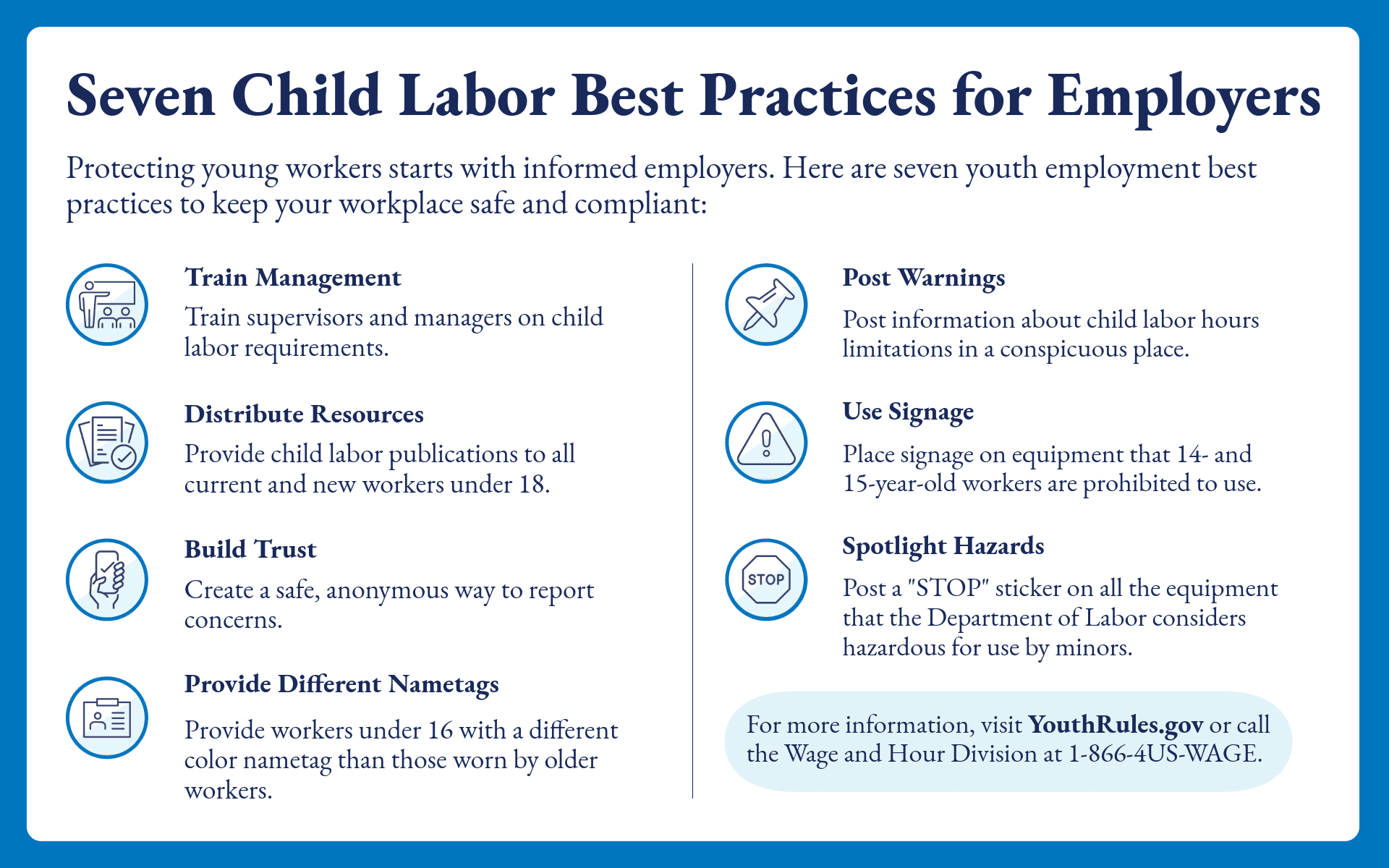
The child labor rules in the restaurant toolkit are not a side note. The Labor Department says they are meant to make sure work is safe and does not jeopardize young workers’ health, well-being, or educational opportunities. For restaurants and quick-service establishments, the department’s child-labor fact sheet, revised in July 2010, remains a reminder that these rules are longstanding even when the toolkit itself feels modern.
For a Chipotle store, that means managers have to know exactly what workers under 18 can and cannot do. The question is not just whether a younger employee can be scheduled. It is whether the tasks assigned to that worker fit the federal rules. A manager who does not know those limits is not just making a staffing mistake. They are creating a legal one.
That is especially relevant in a business where young workers often move between dining room support, kitchen tasks, and closing duties. The toolkit pushes managers to treat youth-work assignments with the same seriousness as payroll, because both can turn into enforcement issues when the records and the reality do not line up.
Why Chipotle’s own history makes this harder to ignore
Chipotle has already lived through enough labor scrutiny to know these rules are not abstract. On August 9, 2022, the company announced a settlement with the New York City Department of Consumer and Worker Protection over claims tied to the Fair Workweek Law and earned safe and sick leave, with the case reaching back to 2017 and a fund created to pay affected workers.
The company also faced federal child-labor enforcement before that. A December 30, 2020 Labor Department release said Chipotle agreed to pay civil penalties after child-labor violations were found and to comply with child labor laws going forward. That history gives the restaurant toolkit real weight inside a chain of this size. Scheduling, payroll, and youth-work rules are not theoretical compliance topics. They are recurring operational risks.
For employees, that history is a reminder to trust the records, not verbal assurances. For managers, it is a sign that the store-level details matter long before any outside agency gets involved. In a restaurant built on speed and repeatable systems, labor compliance has to work the same way.
The practical lesson is simple: check the hours, check the overtime, check the records, and check the task assignments for younger workers. At Chipotle, those are the places where wage and hour problems usually show up first, and the toolkit exists to catch them before they spread.
This article was produced by Prism’s automated news system from verified source data, official records, and press releases, then run through automated quality and moderation checks before publishing. The system is built and supervised by the people who set the standards it runs under. Read our full AI policy.
Did this article answer your question?