Chipotle pitches hands-on summer internships for 2026 applicants
Chipotle’s summer internships are pitched as a real pipeline into operations, marketing, and menu work, with 10-week hands-on projects in Newport Beach and Columbus.
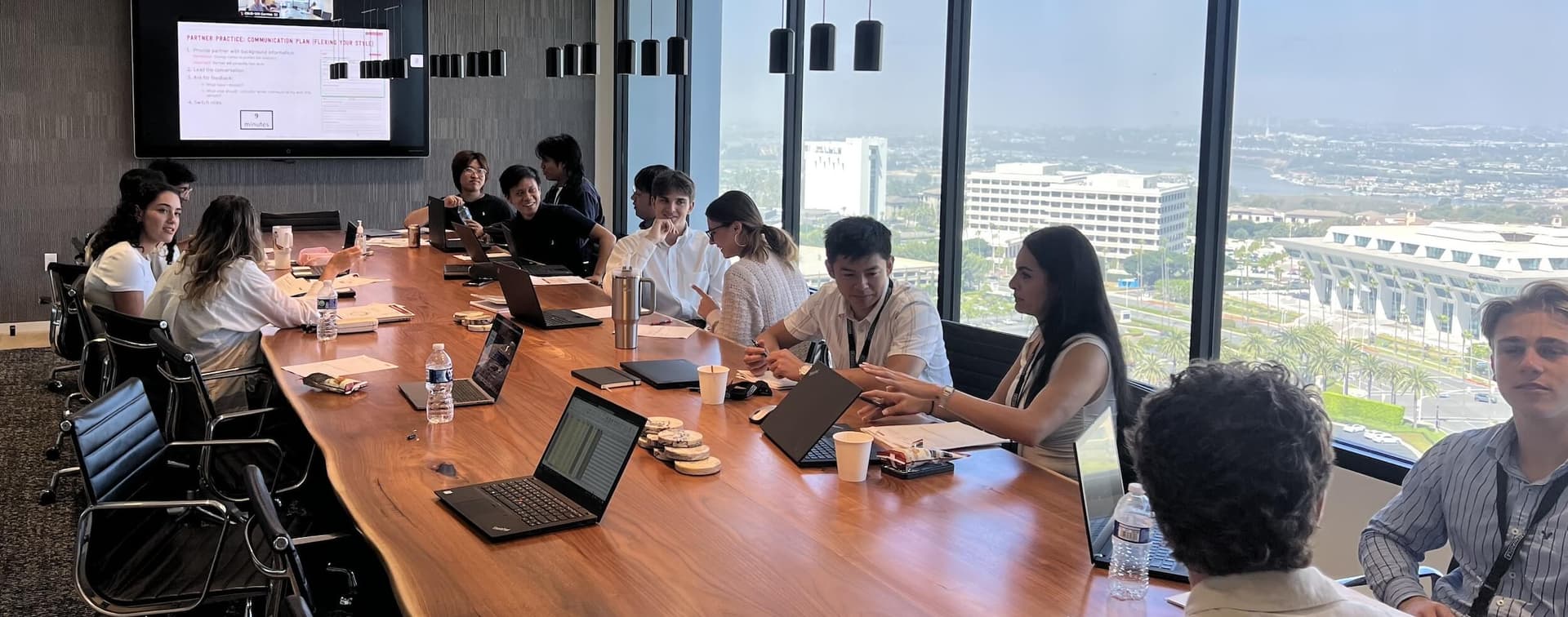
Chipotle is selling its summer 2026 internship as a working tour of the business, not a glossy campus flyer. The 10-week program runs from June 15 through August 21 and places interns in Newport Beach and Columbus, where they are promised hands-on exposure to operations, marketing strategies, menu innovation, and sustainable practices.
What the internship is really trying to teach
The company says interns work closely with experts and learn how the business connects from sourcing high-quality ingredients to delivering customer experiences. That matters because it frames the internship around operational literacy, not just observation: interns are expected to do meaningful work, join collaborative projects, and pick up mentorship along the way. Chipotle also uses Emma and Sam, two 2025 interns, in a “day in the life” feature, which is a pretty clear sign that the program is built around visible, hands-on participation.
That approach fits the company’s broader self-image. Chipotle describes itself as a food-focused, people-first employer that wants to “cultivate a better world,” invest in employee growth, champion diversity and inclusion, and support well-being for workers and the environment. If you are a student trying to figure out whether an internship will teach you anything transferable, that language points to a program that is meant to show how a restaurant brand actually works, not just how it markets itself.
Why this is a talent pipeline story, not just employer branding
The useful part of this internship is the mix of functions Chipotle is putting in front of students. Its corporate careers page lists marketing, operations services, supply chain, restaurant design and development, and food safety as separate business tracks, and its marketing jobs include a Senior Manager, Brand Marketing role focused on menu innovation. In other words, the internship is sitting near real corporate ladders, not a generic student program with no obvious next step.
That is also why the story matters for restaurant workers who may want a future off the line. A crew member who later applies for an internship, or a student who starts in the restaurant and then moves into support center work, is not just learning brand vocabulary. They are learning how menu development, sourcing decisions, brand work, and restaurant operations fit together, which is exactly the kind of systems thinking that travels into supply chain, marketing, restaurant design, and food-systems jobs. Chipotle’s support center page says its corporate headquarters and restaurant support center are meant to express the mission through real food, responsible sourcing, and mindful business practices that support restaurants and crew.
What the front-line ladder already looks like
Chipotle’s internship pitch lands differently when you look at how the company describes restaurant careers. On the crew side, Chipotle says workers are trained across grill, cashier, prep, salsa, and expo, and the company says more than 80 percent of its managers are promoted from Crew. The company’s job pages also point to a clear internal ladder: an Apprentice General Manager role exists to help people grow into general managers by handling day-to-day restaurant operations, hiring and training people, and delivering a guest-obsessed experience.
The management roles are practical, not abstract. A Service Leader is responsible for food quality, food safety, crew scheduling, cross-training, performance reviews, cash handling, and office paperwork, while also developing future Service Leaders. That is the kind of experience that explains why Chipotle can credibly describe front-line work as preparation for bigger jobs, because the role is already part leadership, part operations, and part training. The company also says 80 percent of its leaders started as Chipotle Crew Members.
Compensation shows the same mix of structure and local variation. A Crew Member posting in Los Angeles says the base pay range is eligible for digital tips and that actual base pay may vary depending on skill level, experience, and education. A Service Leader posting in New York also lists digital tips, tuition assistance, free food, medical, dental and vision coverage, paid time off, and holiday closures. The company’s job board is city-specific, which underscores that the work is standardized in some ways but still tied to local labor markets when it comes to pay and staffing.
How Chipotle is talking to students from every angle
The internship is only one part of a larger student strategy. In August 2025, Chipotle launched Chipotle U Rewards, which it described as the first major national restaurant brand loyalty program designed specifically for college students. The program gives students 1,000 bonus points at sign-up and 20 percent more points on every purchase, with the goal of getting them to free Chipotle faster.
Chipotle followed that with Chipotle U Rivalry Week in November 2025, a campus competition that rewarded the 10 U.S. college towns with the most new Chipotle U Rewards members with a buy-one-get-one offer. The company also built a live leaderboard and sign-up race around the campaign, which is a very Chipotle way of doing student marketing: turn school identity into a game, then tie the reward back to the app.
By May 2026, the company was using Chipotle U data to spotlight how students actually order. Columbus, Ohio led group orders and guac orders; Boston ordered the most delivery; Baton Rouge topped queso blanco; Norman ordered the most burritos; Kent led taco orders; and West Lafayette was named America’s most Chipotle-obsessed college town. Chipotle paired that data release with a graduation gift-card promotion, giving the first 10,000 guests who bought $40 or more in graduation-themed digital gift cards a buy-one-get-one free entrée code. The message is hard to miss: the company is trying to meet students as both consumers and future employees.
The bigger career lesson
For applicants, the internship looks useful because it is tied to real work, not just brand exposure. The strongest preparation for a long-term career at Chipotle is the ability to connect restaurant execution to bigger business decisions: how ingredients are sourced, how a menu idea becomes a test, how a guest experience gets measured, and how a crew role can turn into leadership. Chipotle’s education benefits, including debt-free degrees after 120 days of employment through Guild Education, nearly 100 degree options at ten universities, and a $5 million commitment over five years to support future farmers and ranchers, show that the internship sits inside a much wider talent-development system.
That is the workplace payoff here. Chipotle is telling students that summer experience can be a first step into operations, marketing, or supply chain, and it is telling restaurant workers that the same standards that make the line hard can also make a resume stronger. The interns who get the most out of the program will be the ones who come away understanding how a burrito line, a menu test, and a sourcing decision all belong to the same business.
This article was produced by Prism’s automated news system from verified source data, official records, and press releases, then run through automated quality and moderation checks before publishing. The system is built and supervised by the people who set the standards it runs under. Read our full AI policy.
Did this article answer your question?