Latitude Food Group seeks new CEO, keeps franchising strategy intact
Latitude Food Group is looking for a new CEO after Mike Burns left for Cafe Rio, but franchising, not strategy, is staying put.
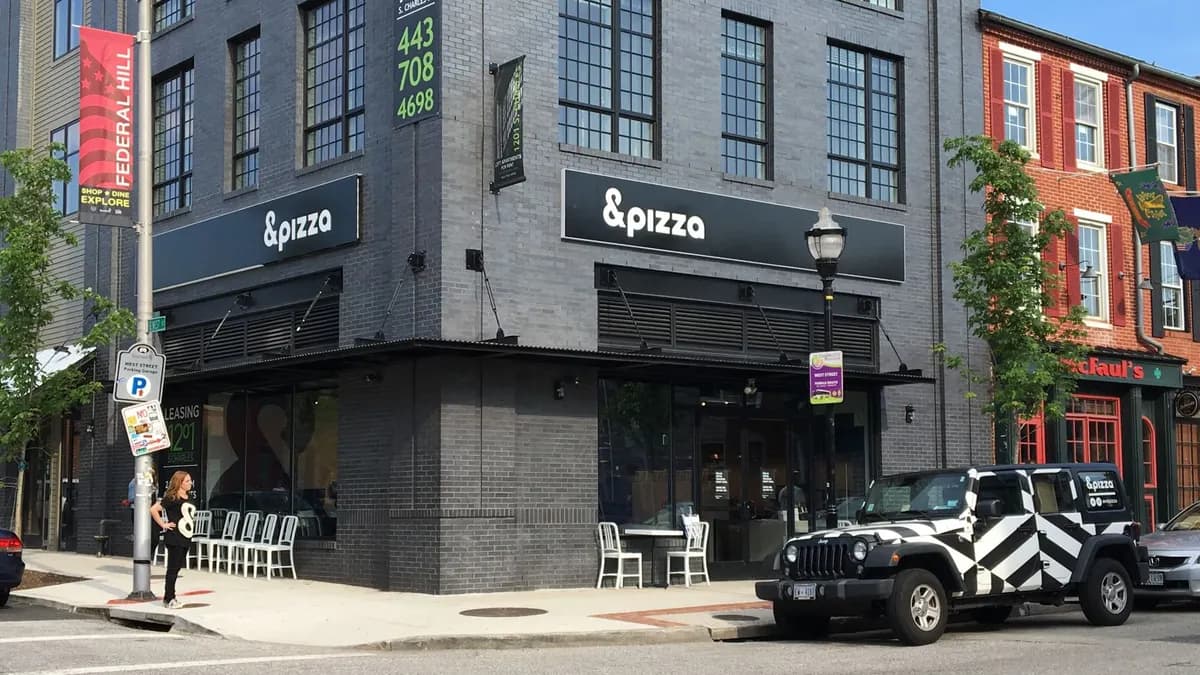
Latitude Food Group is searching for its next chief executive after Mike Burns left to run Cafe Rio, but the company says the playbook around &pizza and Tijuana Flats has not changed. For restaurant workers, that is the familiar split between the public message of continuity and the private reality of a leadership reset: the people at the top move fast, while the people on the line are expected to keep service, hiring, and sales moving without missing a beat.
The company said general counsel Cody Towns is serving as acting CEO during the search and has been with Latitude since January 2024. Chief Marketing Officer Sergio Pérez said the strategy was built by a team, not one executive, and the company is still focused on improving unit economics and growing through franchising. Latitude said it expects domestic openings in Las Vegas, Atlanta, and Charleston, South Carolina, along with international expansion into India. It also said both brands are seeing better same-store sales and traffic without steep discounting. Tijuana Flats, which went through bankruptcy and acquisition, has leaned on limited-time offers and a menu refresh to help sales recover.

That kind of churn is not unusual in restaurants under pressure. Chipotle provides a useful comparison: Scott Boatwright became CEO on Nov. 11, 2024, after serving as interim chief executive since August 2024 and previously as chief operating officer. Chipotle said it ran a thorough external search before confirming him, and it pointed to his responsibility for more than 125,000 employees and over 3,600 restaurants. For crew members, kitchen managers, service managers, apprentices, and general managers, that matters because a new CEO can change the pace of hiring, scheduling, menu rollout, and training expectations long before any investor presentation shows the shift.
Chipotle’s numbers show why boards keep pressing for leaders who can execute. Full-year 2024 revenue rose 14.6% to $11.3 billion, comparable sales increased 7.4%, and the company opened 304 company-owned restaurants plus three international licensed locations. But first-quarter 2025 comparable sales fell 0.4% even as revenue climbed 6.4% to $2.9 billion, and the company said it wanted to return to positive transaction comps in the second half of 2025. Boatwright said then that the business was dealing with weather and weaker consumer spending.
The same pressure explains why internal pipelines matter. Chipotle has tied growth to programs such as Cultivate University, which prepares new field leaders and team directors for multi-unit management, and its LEAD program, which selected 45 employees for a nine-month emerging leaders track. In a business where strategy resets can arrive from the boardroom quickly, the stores still have to absorb the change one shift, one training class, and one labor target at a time.
This article was produced by Prism’s automated news system from verified source data, official records, and press releases, then run through automated quality and moderation checks before publishing. The system is built and supervised by the people who set the standards it runs under. Read our full AI policy.
Did this article answer your question?