OSHA resources help Chipotle managers spot restaurant safety hazards
Chipotle’s biggest safety risks are ordinary shift hazards: cuts, burns, slips, and strain. OSHA’s digital tools help managers spot patterns before they turn routine.

Chipotle’s safety problems are the kind that can disappear into a busy shift until someone gets hurt: a wet floor near the dish area, a knife slip at prep, a hand too close to hot equipment, a heavy pan lifted the wrong way. OSHA’s restaurant tools matter because they turn those everyday hazards into something managers can actually track, train on, and fix before injuries become routine.
Why OSHA’s library belongs in a Chipotle manager’s toolkit
OSHA now makes its publications primarily digital, which makes the agency’s food-service materials easier to pull up, share, and use on the floor. For restaurant leaders, that matters less as a tech upgrade than as a practical one: the guidance is easier to circulate to kitchen managers, service managers, apprentices, and crew members who need quick answers during a shift.
The agency’s broader data resources are just as useful. OSHA collects inspection and citation data, electronically submitted injury and illness data, severe injury and fatality data, and chemical exposure health data. That gives managers a public framework for looking at how injuries happen, what regulators look for, and where restaurants tend to fail the same basic tests over and over.
The hazards Chipotle crews actually face
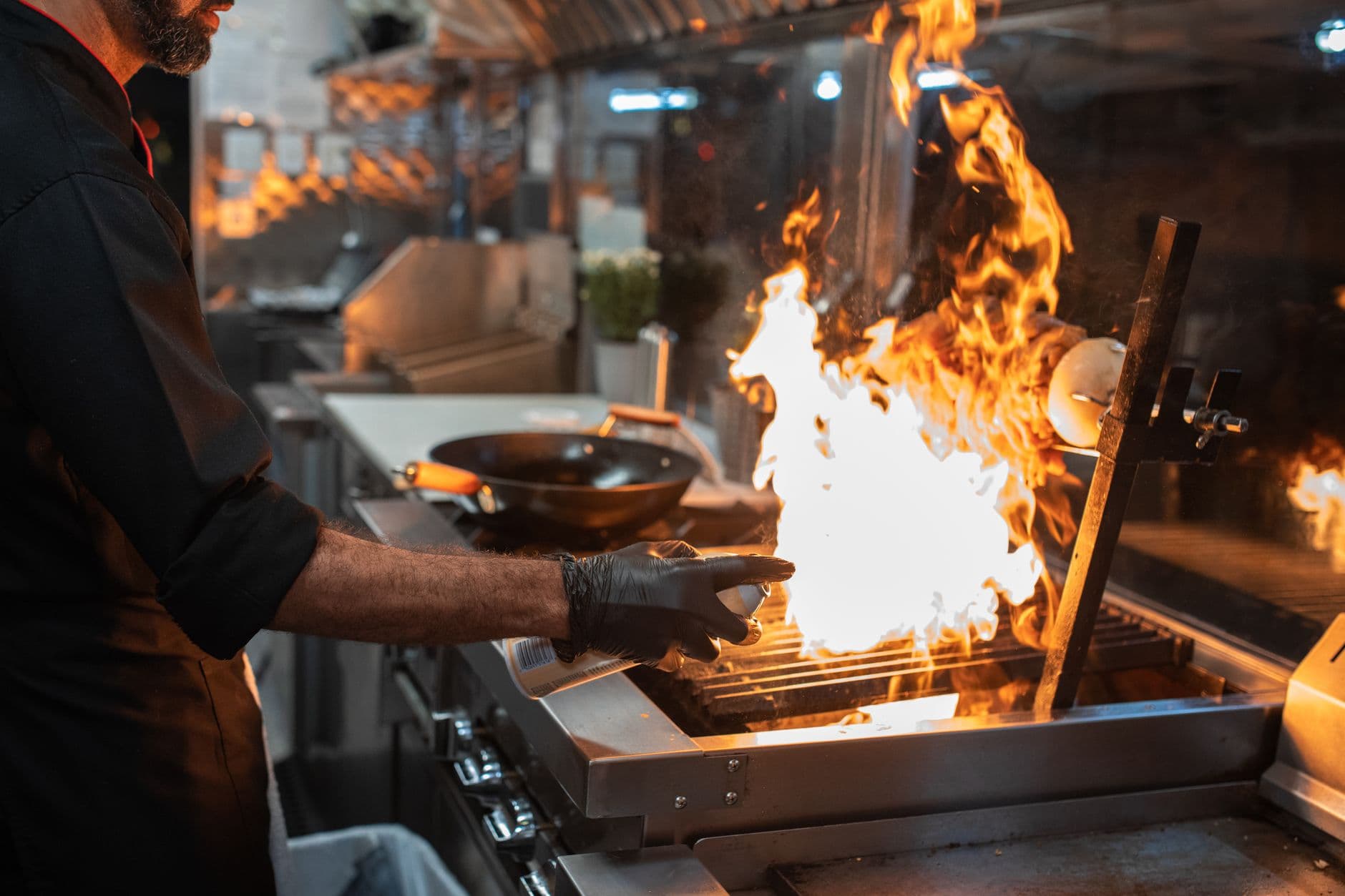
The most useful way to read OSHA’s restaurant guidance is not as a compliance checklist but as a hazard map. Chipotle workers spend their shifts around knives, grills, hot surfaces, liquids, carts, cords, and crowded stations, which is exactly the kind of environment where small mistakes can cascade.
OSHA’s Young Worker Safety in Restaurants eTool is aimed at teen workers and restaurant employers, and it covers the hazards young workers commonly run into on the job. That includes cooking, food prep, serving, and cleanup, the same activity zones where a new crew member can get hurt while trying to keep pace.
The agency’s kitchen-equipment guidance is even more specific. It identifies burns from hot surfaces, cuts and lacerations, becoming trapped in walk-in freezers, electrical shocks from frayed cords, and amputations from unguarded equipment. For a Chipotle manager, those are not abstract categories. They are the injuries that show up when equipment is crowded, maintenance slips, or training does not match the pace of service.
Cuts, burns, and slips are not separate problems
The cleanest mistake restaurants make is treating each injury type as unrelated. In practice, they are often linked by the same underlying conditions: crowded stations, rushed movement, wet floors, poor housekeeping, and equipment that does not get checked often enough.
Cuts and lacerations are a major example. The U.S. Bureau of Labor Statistics reported 93,800 nonfatal injuries and illnesses in full-service restaurants in 2019, including 8,110 cuts and lacerations that resulted in days away from work. That is a reminder that knife injuries are not rare flukes in this industry; they are a predictable outcome when prep work, speed, and repetition collide.
Burns and slips follow the same pattern. Hot pans, steam, tortillas, and surfaces near cooking equipment can injure workers in seconds, while wet work areas can turn a normal walk into a fall. OSHA’s guidance is useful because it helps managers see these as station-design and supervision problems, not just bad luck.
Young workers need a different level of attention
OSHA says the service industry ranks highest among U.S. industries for injury among workers ages 16-19. That makes restaurant safety a hiring and onboarding issue as much as a maintenance issue, especially in kitchens that rely on newer workers to move quickly from one station to another.
That is where the young worker restaurant eTool is especially relevant. It gives managers a structured way to think about tasks that may be routine for experienced staff but risky for someone who is new, nervous, or still learning how the line works. At Chipotle, where training often has to catch up with constant volume and turnover, that matters more than any one poster on the wall.
Use incident data before an injury becomes a pattern
OSHA’s investigation summaries are valuable because they show how real incidents unfold and what causal factors sit underneath them. That can help leaders think more clearly about training, equipment placement, and station design instead of waiting for the same kind of mistake to repeat.
The agency’s Severe Injury Report dashboard, launched in 2024, makes that easier. Users can search and download severe injuries reported by federal-OSHA-covered employers back to 2015, with details by year, industry, state, establishment name, and classification code. For a restaurant manager, that is a practical way to look for patterns in severe injuries across locations, not just isolated events.
The point is not to become a data analyst. It is to ask better questions: Are there repeated injuries in prep? Is one station producing more cuts than the others? Are slips clustering near closing? Is the same piece of equipment showing up in incident notes again and again?
Chipotle’s enforcement history shows what OSHA looks for
Chipotle has already appeared in OSHA enforcement records for issues that are easy to overlook during a rush. One 2025 citation involved monthly fire-extinguisher inspections. Another 2025 citation involved access to electrical panels being blocked because supplies and clothes were stored in front of them.
Those are not dramatic failures, and that is exactly why they matter. A blocked panel or an extinguisher that is not visually checked each month is the kind of maintenance lapse that can sit in plain sight until there is an emergency. In a restaurant, the smallest gap in housekeeping can become the biggest risk when heat, grease, water, and electricity are all in the same space.
Food safety and worker safety rise or fall together
Chipotle says its Food Safety Advisory Council and Board of Directors oversee food safety policies and practices. That signals an important point for managers: food safety and worker safety are not separate worlds. A restaurant that is careful about cleanliness, equipment upkeep, and process discipline is usually better positioned to reduce injuries too.
That connection is where OSHA’s resources become most useful. They help managers move beyond after-the-fact fixes and build habits around inspection, visibility, and routine maintenance. In a high-volume kitchen, the goal is not to eliminate every hazard. It is to make sure the hazards are visible before they become normal.
For Chipotle crews, that means the public safety framework already exists. The real work is using it early, station by station, shift by shift, until prevention is part of the job rather than a response to the last injury.
This article was produced by Prism’s automated news system from verified source data, official records, and press releases, then run through automated quality and moderation checks before publishing. The system is built and supervised by the people who set the standards it runs under. Read our full AI policy.
Did this article answer your question?