OSHA warns restaurant workers face violence risks at Chipotle-style jobs
At Chipotle, a threat on the line is not the same as a slur in the break room, and crews need to know which incidents demand an emergency report now.
A threat to “wait outside” after close is a violence risk on a Chipotle line before it is anything else. OSHA flags restaurants as higher risk for workplace violence because they run on speed, cash handling, late hours, and constant face time with the public.
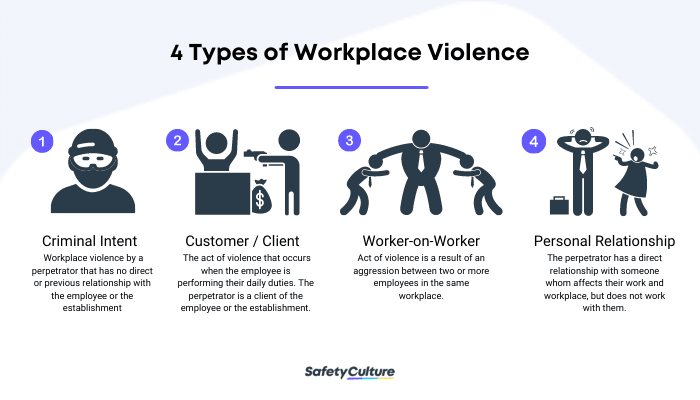
What counts as violence, and what counts as harassment
OSHA treats workplace violence as a safety problem that can be reduced with a prevention program, engineering controls, administrative controls, and training. The EEOC treats harassment as a civil-rights problem when offensive conduct becomes a condition of continued employment or is severe or pervasive enough to create a hostile work environment, and it is unlawful when it is tied to protected traits such as race, color, national origin, sex, religion, disability, age 40 or older, or genetic information. In a restaurant, the two categories can overlap, but they are not the same thing. Repeated racial, sexual, or religious slurs are harassment first. When the conduct is both, it belongs in both lanes.
For Chipotle crews, the practical test is simple: if someone could get hurt, treat it as a safety incident immediately. If the conduct is offensive, discriminatory, or sexual but not immediately dangerous, it still needs to be documented and escalated, because employers have a duty under EEOC standards to correct harassment once they know about it and protect the worker from more of it. The same incident can trigger both obligations if a manager blocks a doorway while making sexual comments, or if a guest yells a slur and then tries to reach behind the line.
Why the distinction matters on a Chipotle line
OSHA’s restaurant guidance is blunt about where risk concentrates: serving areas, cash points, and isolated stations where a worker is left alone with the public. A Bureau of Labor Statistics study cited in OSHA’s young-worker material found 14 percent of overall youth workplace injuries in 1998 to 2002 were attributed to assaults or violent acts, and drive-thru windows can leave young workers isolated from fellow employees. Chipotle does not use a drive-thru in the usual way, but the same logic applies to any solo station, including a register at close, an online-order handoff, or a back entrance where a worker is alone with a stranger.
A guest who pounds the counter and says they will come back with friends is an immediate violence report. A coworker who keeps circling the prep table, corners a teenager in the dish area, or waits in the parking lot after shift is also immediate. Sexual comments, repeated touching, texts after work, stalking, or comments tied to religion, race, pregnancy, or gender identity should be documented the same day and escalated through the company’s complaint process, because those can be unlawful harassment even when the person has not swung a fist.
Chipotle’s record shows why workers should not wait
Chipotle has already paid to resolve multiple EEOC matters. In one case, the company paid $400,000 and entered a three-year consent decree that required an internal consent decree coordinator, revised anti-discrimination policies, added sexual harassment training, and anti-retaliation procedures at seven Washington restaurants in Bellevue, Redmond, Issaquah, and Sammamish. In another, Chipotle paid $50,000 in a Prattville, Alabama case involving allegations that a manager sexually harassed a crew member daily starting in October 2019. The EEOC also brought a broader sexual harassment and constructive discharge suit in 2021, saying two workers quit because they feared for their safety, and in 2024 the agency required Chipotle to pay $20,000 in a religious harassment case that also involved alleged retaliation.
Once a worker says the conduct is unsafe or tied to a protected trait, the company has notice, and the response has to be more than a shrug, a schedule tweak, or a promise to watch it.
What immediate reporting looks like in practice
A good rule for Chipotle crews is to report immediately when there is threat, force, stalking, or a weapon, and to document immediately when there is offensive conduct, sexualized behavior, or protected-trait harassment, even if nobody is physically injured. In practice, that means telling the shift leader or general manager right away, preserving names of witnesses, and making sure the incident reaches the company channel that handles safety or HR. If the situation is still live, the priority is to separate people, secure the line, and get outside help before the shift continues. The paperwork comes after the danger is contained.
That split is especially important on crowded shifts where a service leader is juggling cash handling, customer incidents, line breaks, and front-of-house training. Managers cannot solve these problems by hoping the shift ends first. A clear report path, no retaliation, and visible follow-through belong in the shift response.
The pay and promotion ladder is part of the story too
Chipotle says more than 80 percent of managers are promoted from Crew, and its in-restaurant careers pages frame Crew as the starting point for Kitchen Leaders, Service Leaders, and Apprentices. The worker who reports a problem may be the same person trying to move from hourly shift work into management, and the person receiving the report may be learning how to run the restaurant at the same time.
The pay varies by city and role. Chipotle lists Apprentice Hourly pay at $19.50 to $21.68 in West Springfield and $20.40 to $22.69 in Lancaster, while an Apprentice General Manager in Goleta is posted at $23.95 to $26.39 an hour and an Assistant Manager in Palo Alto at the same range. General Manager postings can be salaried, including $58,000 to $82,000 in Longmont and $61,000 to $85,000 in Bowie. Some Service Leader and Kitchen Leader postings also say the roles are eligible for digital tips.
A restaurant where the line is moving, the cash drawer is open, and managers are pushing throughput needs a lower threshold for reporting violence.
The legal pathways can differ, even when the conduct looks similar
In 2024, the U.S. Court of Appeals for the Eighth Circuit addressed allegations that a Chipotle worker was verbally harassed and sexually assaulted by a co-worker after starting work in May 2021, and it said Chipotle could not force arbitration under the federal law at issue because the dispute accrued after March 3, 2022. The same conduct can be a safety matter, a harassment matter, and a legal claim, depending on what happened and when it happened. That is why workers should report quickly, write it down clearly, and use both the safety and HR channels when the facts call for both.
Chipotle’s SEC filing states that the company has faced numerous media stories alleging workplace violence exposure and that the issue creates legal and reputational risk. Investors asked in 2024 for an independent third-party audit of safety practices, and the SOC Investment Group urged shareholders in May 2024 to support a health-and-safety proposal.
This article was produced by Prism’s automated news system from verified source data, official records, and press releases, then run through automated quality and moderation checks before publishing. The system is built and supervised by the people who set the standards it runs under. Read our full AI policy.
Did this article answer your question?