Why Chipotle's company-owned model puts pressure on training
Chipotle’s biggest growth bottleneck is the one inside the restaurant: training enough people to keep a company-owned empire consistent.
Chipotle’s expansion story looks like a real estate story on the surface, but the harder problem sits on the line. A Restaurant Dive analysis argued that franchising only works when the finances, site quality, fee structure, standards, and operator economics all line up, which is a reminder that growth depends on more than opening more doors. Chipotle has gone the other way, keeping ownership and accountability in-house, so the burden of making the model work falls directly on training, manager quality, and whether crews think the brand is worth building a future with.
Why the ownership model changes the burden
Chipotle’s public filing for 2025 says it owned 3,938 U.S. restaurants, 104 international restaurants, and 14 international partner-operated restaurants as of December 31, 2025. Its careers materials also say it is the only restaurant company of its size that owns and operates all its restaurants in North America and Europe. That means there is no franchise layer to absorb weak training, inconsistent service, or sloppy execution. If a store is struggling, the problem sits squarely with Chipotle’s own managers, apprentices, service leaders, and field teams.
That ownership choice matters for workers because it changes what “growth” actually means on the ground. In a franchised system, the brand can sell the concept to operators and let them carry much of the labor risk. At Chipotle, the company has to keep hiring, promoting, and retraining its own people fast enough to support a network that already reached its 4,000th restaurant in Manhattan, Kansas, on December 12, 2025, and is now more than halfway to its 7,000-unit goal in the U.S. and Canada.
The career ladder is part of the operating model
Chipotle’s employer brand leans heavily on internal advancement because the company needs it to. Its job postings say more than 80% of managers are promoted from Crew, and its apprentice postings say apprentices learn how to run a strong business, hire and train great people, and deliver a guest-obsessed experience. That is not just a recruiting line. It is the operating system for a chain that depends on turning hourly workers into the managers who keep the line moving, the prep set stocked, and the guest experience consistent.
The company has also tied that ladder to a more explicit financial promise. In Chipotle’s own hiring and newsroom materials, crew members can advance to a Restaurateur, the highest general manager role, in as little as three and a half years, with a total compensation package around $100,000 while leading a multi-million-dollar business. That matters to a crew member deciding whether to stay through a hard season, because the upside is framed as a real career, not a dead-end shift job.
What the pay picture says about retention
Chipotle’s compensation story is deliberately local, not uniform. One crew posting in San Jose listed an hourly pay range of $20 to $21 plus digital tips, and said compensation is subject to local wage and hour laws. Chipotle’s careers site also promotes an average wage of $15 per hour, which gives you the broad floor, but the actual offer changes by market, role, and local labor rules. For workers, that means the value of a Chipotle job can swing meaningfully from one city to the next.
Digital tips show up in a number of Chipotle management postings as part of the rewards package, alongside paid time off, holiday closures, competitive compensation, and opportunities for advancement. That matters because it shows the company is trying to make the store job feel more rewarding than a bare hourly wage, but it also makes the retention pitch more dependent on how clearly that pay package is communicated and how consistently it is delivered from one restaurant to another. In a company-owned system, that consistency is part of the job, not an afterthought.
Why growth puts even more pressure on training
Chipotle’s 2026 “Recipe for Growth” strategy is aimed at growing transactions while improving accuracy, efficiency, and speed, and the company said full-year 2025 revenue reached $11.9 billion. That is a big business with big ambitions, but the recipe only works if the in-restaurant experience stays stable enough to support the traffic. The chain also said it launched the strategy on February 3, 2026, which makes clear that operational execution, not just new unit count, is at the center of the next phase.
Chipotle is also betting on automation to support that growth, but the technology does not remove the need for trained people. Its digital makeline system builds bowls and salads automatically, while employees still operate the top makeline for burritos, tacos, quesadillas, and kid’s meals. Autocado, Chipotle’s avocado-processing system, is meant to cut, core, and peel avocados before they are hand mashed. The message to workers is clear: the company wants machines to absorb some repetitive labor, but it still needs people who know how to run a restaurant around them.
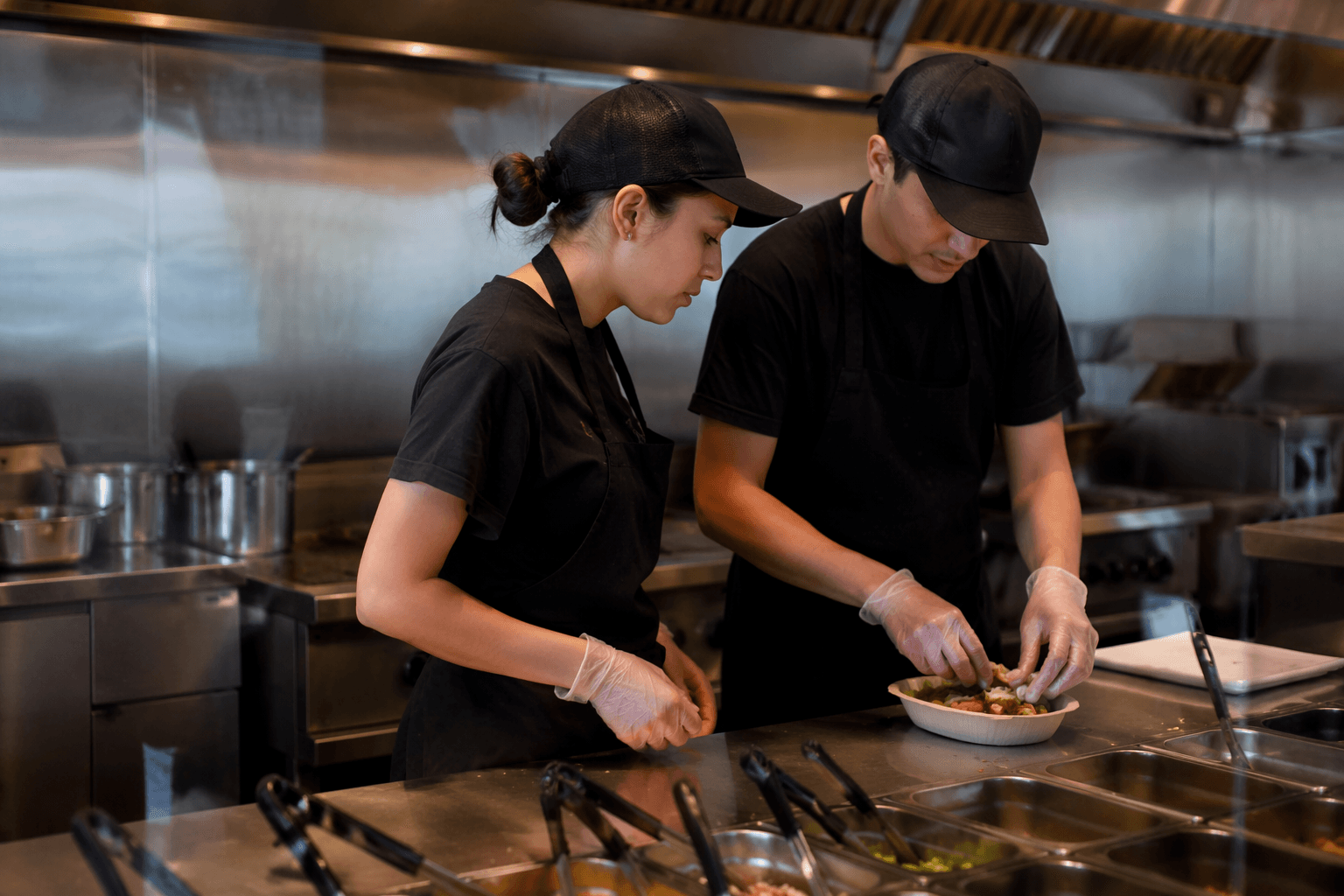
That is why the day-to-day manager jobs matter so much. Service leader postings describe responsibilities such as cross-training front-of-house crew, monitoring breaks, shift changes, and line schedules, and assisting with crew performance reviews, cash handling, and office paperwork. Kitchen leader postings add food safety, inventory, equipment maintenance, and crew development to the list. In other words, the company-owned model does not just demand more from the brand. It demands more from the people who have to teach the brand, enforce the brand, and keep it moving through a rush.
Chipotle’s franchise-free scale is part of its brand story, but the real employer-brand test is whether workers believe the company is worth learning for and staying with. If the chain can keep promoting crew into managers, keep local pay competitive, and keep training strong enough to support a 4,000-plus-unit footprint, then the company-owned model becomes a strength. If it cannot, the pressure shows up where it always does in restaurants: on the line, in the break room, and in the gap between what the brand promises and what the shift actually feels like.
This article was produced by Prism’s automated news system from verified source data, official records, and press releases, then run through automated quality and moderation checks before publishing. The system is built and supervised by the people who set the standards it runs under. Read our full AI policy.
Did this article answer your question?