Costco application reveals physically demanding, fast-paced hourly jobs
Costco’s application language spells out a job built on lifting, cleaning, member service, and early starts, with pay and scheduling that help explain the appeal.
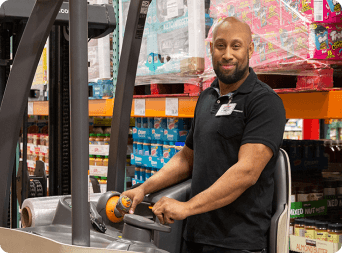
Costco’s hiring paperwork does something many warehouse applicants wish more employers would do: it shows the work instead of hiding it behind vague language. The jobs are entry-level, but they are not idle or desk-bound. In practice, the application points to constant movement, early shifts, cleanup, stocking, and member-facing pressure, all inside a company that still sells itself on strong wages, predictable scheduling, and a fast-moving warehouse culture.
What the application really says about the work
The clearest takeaway from Costco’s application materials is that the hourly jobs are built around motion, speed, and repetition. Merchandise stockers are expected to stock and straighten product across different areas of the warehouse. Bakery assistants mix ingredients, help with baking, wrap items, and handle cleanup and inventory. Food court assistants prepare and sell food and drinks, pull and stock supplies, clean the kitchen and dining areas, and provide prompt member service. Gas station attendants monitor pumps, clean spills, assist members, and respond to emergencies.
That list matters because it turns broad job titles into physical expectations. Stocking is not just unloading pallets, and bakery work is not just packaging muffins at the end of a shift. The work mixes production, sanitation, customer contact, and pace, which is exactly why a Costco shift can feel like several jobs at once.
The warehouse floor is built for movement, not stillness
Costco’s careers site describes warehouse and business center work as fast-paced and team-based, with employees preparing and displaying merchandise, providing excellent member service, and keeping locations clean and safe. That language matches the application’s reality check: the floor is organized around flow, not downtime. If you are new to Costco, the environment is designed to keep you moving from one task to the next while staying visible to members.
The company also says most candidates are hired for part-time, entry-level jobs such as front end assistant, food court, member service, and merchandise stocking. Merchandising stocking takes place in the early morning hours, which tells applicants something important about the rhythm of the warehouse. Some of the most labor-heavy work happens before the day is fully underway, when the product has to be ready before members start moving through the building.
What each role tends to demand
For applicants trying to read between the lines, the job titles are less about specialization than about how many functions can be packed into one shift. A few of the roles stand out:
- Front end assistant: fast member contact, cart handling, bagging support, and keeping the checkout flow moving.
- Food court assistant: food prep, stocking, cleaning, and direct member service at speed.
- Merchandise stocker: lifting, straightening, organizing, and keeping the warehouse presentation tight.
- Bakery assistant: mixing, baking help, wrapping, sanitation, and inventory work.
- Gas station attendant: safety awareness, spill response, pump monitoring, and member assistance.
That mix explains why Costco’s application reads more like an operational briefing than a simple job posting. The company is telling you that cleanliness, speed, and reliability are part of the job description, not extras.
Member service sits at the center of the culture
Costco’s own career materials are blunt about what it values most: member service is “Job No. 1.” That single phrase carries a lot of weight for hourly workers because it links physical labor to customer expectations. You are not only stocking product or cleaning up messes, you are doing it in a setting where member experience is the point of the operation.
The careers site also says Costco wants employees who help prepare and display merchandise, learn its merchandising philosophy, provide excellent service, and keep locations clean and safe. In plain terms, the company expects hourly workers to combine warehouse discipline with retail polish. That is one reason the work can feel demanding even before you get to the heavier lifting: you are expected to move product and protect the member experience at the same time.
Pay and scheduling help explain the draw
The physical demands would be harder to justify if Costco still paid like a low-wage retailer. In March 2025, the company raised starting wages by 50 cents an hour to at least $20 for all entry-level positions in the United States and Canada. It also raised the top of wage scales by $1 an hour, and said the average hourly rate for hourly U.S. employees was more than $32 by the end of 2025.
Costco’s 2025 sustainability report says the company updated its Employee Agreement with feedback from thousands of employees. The careers site adds another important piece: Costco guarantees minimum scheduled hours for full-time and part-time employees and posts weekly schedules at least three weeks in advance. For warehouse workers, that combination matters. Stronger pay and more predictable scheduling are part of why the jobs keep drawing applicants even when the work is physically demanding.
Labor pressure sits in the background
The 2025 wage changes also landed in a tense labor environment. Early in the year, Costco Teamsters members voted to authorize a strike, then Costco and the union reached a tentative agreement before a strike began. Reporting on the negotiations described about 18,000 Costco workers as unionized, roughly 8% to 10% of the company’s U.S. workforce.
That context matters because it shows the company’s high-wage model is not just a branding choice. Costco’s labor costs, scheduling policies, and internal mobility sit alongside worker pressure over pay and conditions. The bargaining backdrop also reinforces something the application already makes clear: Costco’s hourly jobs are labor-intensive enough that wages, hours, and safety are always part of the conversation.
Why the application is useful before you apply
For applicants and newer employees, Costco’s application materials are valuable because they remove the guesswork. They show that the work can start early, stay physical, and move quickly from stocking to service to cleanup. They also show that Costco sees these jobs as part of a larger system, one built on team operations, in-house promotion, and a pay structure that sits above much of retail.
That is the real story hidden inside the application: Costco is not promising an easy warehouse job. It is offering a demanding one, with clearer schedules and stronger wages than many competitors, and expecting people to keep up with a warehouse that never really sits still.
This article was produced by Prism’s automated news system from verified source data, official records, and press releases, then run through automated quality and moderation checks before publishing. The system is built and supervised by the people who set the standards it runs under. Read our full AI policy.
Did this article answer your question?