Costco career growth rewards workers who master multiple departments
At Costco, the fastest path up is learning the next department before your manager asks. Flexibility, reliability, and trust beat waiting for a title.
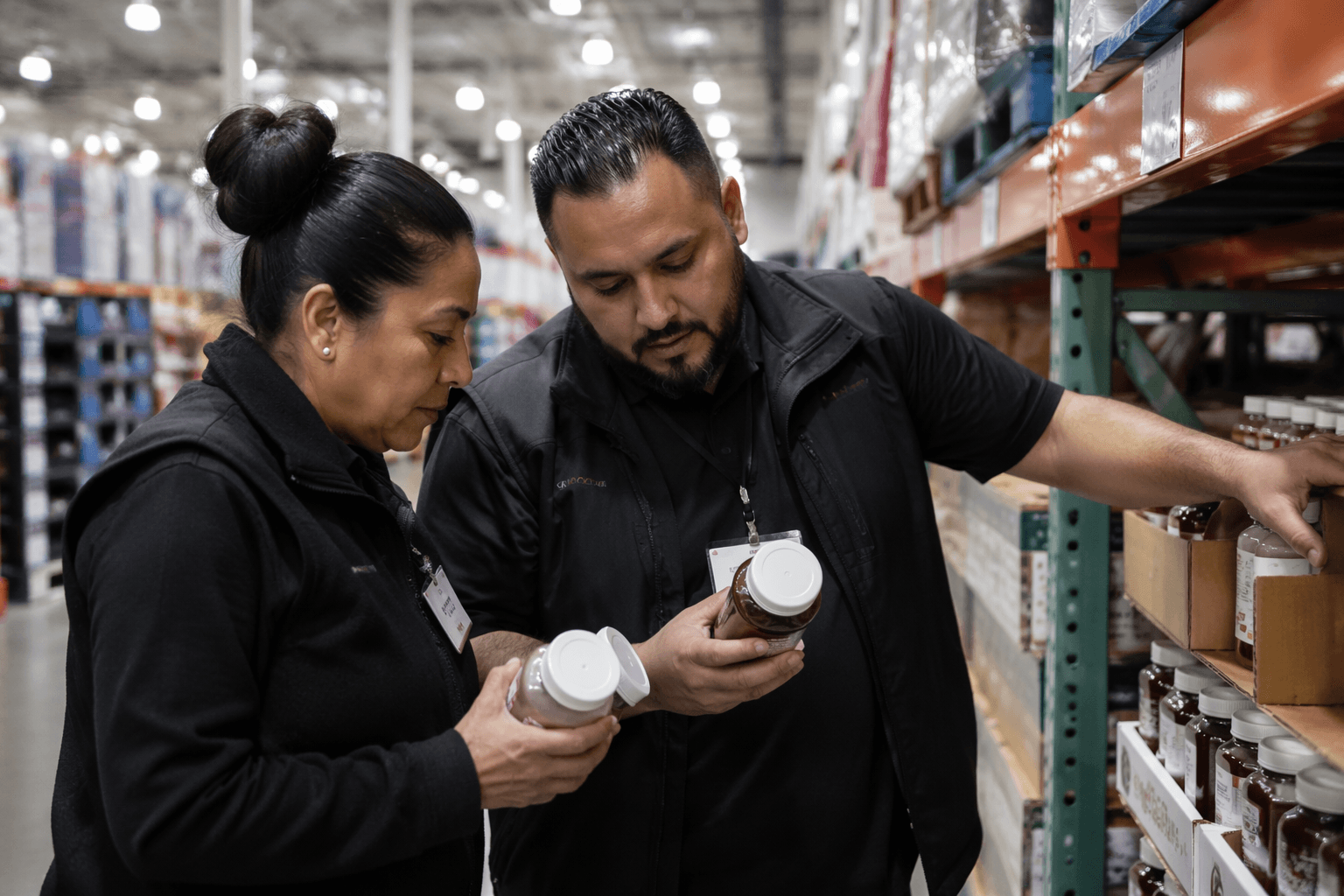
Costco’s career ladder is less about standing still and hoping for a promotion than becoming the person a warehouse cannot run without. Workers who move ahead tend to learn more than one department, stay steady under pressure, and build enough trust that supervisors hand them work touching the whole building.
Cross-training is the real mobility strategy
The first move is usually breadth. A front-end assistant who knows the service desk, a stocker who can help on the floor, a forklift operator who understands pallet flow, or a bakery employee who can close cleanly becomes harder to replace than someone locked into one narrow task. That matters in a business like Costco, where jobs move fast and where the same shift can demand a hand at the register, in receiving, or on the sales floor.
The practical version of cross-training is not abstract. It can mean learning deli or bakery closing routines, getting comfortable with backroom organization, or becoming the person who can jump to the front end when the line stretches. Workers who do this well stop being seen as “just” one thing, and that is often where mobility starts to open up.
It also helps to understand how Costco describes its own work. The company says warehouse and Business Center employees work in a fast-paced environment in a variety of positions. That is a clue to how the place functions: versatility is not extra credit, it is part of the job.
Reliability is a promotion signal
At Costco, managers notice the people who can be counted on when the building gets busy, messy, or short-staffed. Showing up on time is table stakes. So is communicating clearly, handling corrections without attitude, and finishing a reset or a closing sequence the right way the first time. Promotions usually go to the workers who make other people’s jobs easier, not harder.
That is why visible problem-solving matters. If a supervisor knows you can close a department correctly, train a new hire without creating drama, or step into an overloaded area and keep things moving, you are already building the reputation that leads to a bigger role. In a warehouse environment, trust is not a soft skill. It is a management filter.
Costco’s own materials reinforce that logic. The company says its accomplishments are tied directly to attracting, developing, and retaining employees, and that its success depends on the well-being of workers across the business. It also says pay, paid time off, and benefits are meant to recognize and reward continued contribution. That combination tells you what the company values: steady people who keep operations moving and stick around long enough to grow.
The workers who get stuck are usually the ones boxed into one identity
One of the easiest ways to stall is to let your role define your ceiling. If you are always treated as only a front-end person, only a merchandising person, or only a food-court worker, supervisors may never picture you in a broader leadership lane. The fix is to make yourself useful beyond your home base before anyone has to ask.
That means learning the handoffs that connect departments. Know how member flow affects the front end. Know how receiving affects the sales floor. Know how spoilage affects meat and bakery. Know how schedule changes affect morale. The more you understand the chain, the easier it is for a manager to trust you with work that carries more weight.
A worker who sees only their own station is easier to schedule, but harder to promote. A worker who sees the whole building is the one who starts to look like supervisor material.
Costco’s own pipeline rewards people who are ready
Costco has built a formal development system around that idea. More than 66,000 employees participate in its education, networking, and mentorship program, which shows that the company is not leaving development entirely to chance. It also continued its Supervisor in Training program in the U.S. and Canada, and over 7,500 hourly employees completed the six-week course in 2024. That is a concrete path from hourly work into leadership, not just a slogan about opportunity.
The internal pipeline appears to be strong as well. A 2026 Costco career-growth summary said 87 percent of Costco general managers are promoted from within. Independent summaries have described year-one retention at about 94 percent, which helps explain why openings can be competitive even in a company known for advancement. When people stay, the ladder gets crowded, and the employees who stand out are the ones who keep learning, keep showing up, and keep proving they can handle more than one department.
That internal culture fits the company’s broader self-image. Costco says it has been a leader in the warehouse club and retail industry for more than four decades, and its mission and Code of Ethics emphasize taking care of employees as well as members. For workers, that means the company’s high-wage, high-retention model is not just about attracting labor. It is about holding onto people long enough for skill, trust, and institutional knowledge to compound.
What actually moves a Costco career
If you want to break out of one department, the playbook is straightforward even if the execution takes patience:
- Learn a second area before you need it.
- Volunteer for the messy shifts where pressure is highest.
- Make supervisors’ lives easier by solving small problems cleanly.
- Ask for responsibilities that connect departments, not just tasks that repeat your current one.
- Treat every reset, close, and training moment as proof you can be trusted with more.
That is the real Costco lesson. Advancement usually goes to the worker who can cross boundaries, not the one who waits for a handoff. In a warehouse built on speed, reliability, and internal promotion, the best career move is often to become useful in more than one place.
This article was produced by Prism’s automated news system from verified source data, official records, and press releases, then run through automated quality and moderation checks before publishing. The system is built and supervised by the people who set the standards it runs under. Read our full AI policy.
Did this article answer your question?