Costco growth outlook strengthened by renewals, fee hikes and expansion
Costco’s renewal machine keeps cash flowing, which helps fund steady hiring, new warehouses, and more room for internal moves. The risk is simple: if renewals soften, that stability gets harder to defend.

Costco’s growth story is not just about Wall Street confidence. For the people stocking pallets, working the front end, cutting meat, baking, fitting glasses, or managing a warehouse, it is about whether the company keeps opening doors, filling schedules, and promoting from within. A business built on membership renewals and fee revenue gives Costco more predictable money than many retailers have, and that predictability is what helps support steadier staffing and expansion.
Membership is the engine behind the stability
Costco’s model depends on a simple trade: members pay annual fees, and in return the company offers low prices on a limited assortment, high sales volume, rapid inventory turnover, and operating efficiencies from volume purchasing, efficient distribution, and reduced handling. That structure matters because it produces recurring revenue before a single item leaves the warehouse, which gives Costco more room to plan ahead than retailers that live and die by unpredictable traffic or deep discount cycles.
That is why the renewal numbers matter so much. Costco said fiscal 2025 membership fee revenue increased 10%, and renewal rates at the end of fiscal 2025 reached 92.3% in the U.S. and Canada and 89.8% worldwide. Those are the kinds of figures that support the company’s reputation for stability, but they also translate into practical decisions on the floor: how many shifts are staffed, how quickly new buildings can be opened, and how much room managers have to move workers into new roles as the business grows.
The company also showed the strength of its operating model in fiscal 2025 sales. Net sales rose 8.1% to $269.9 billion from $249.6 billion a year earlier, and Costco ended the year with 914 warehouses. In plain terms, the company kept expanding while still pulling in members often enough to keep the machine humming.
The fee hike was small for members, but big for the business
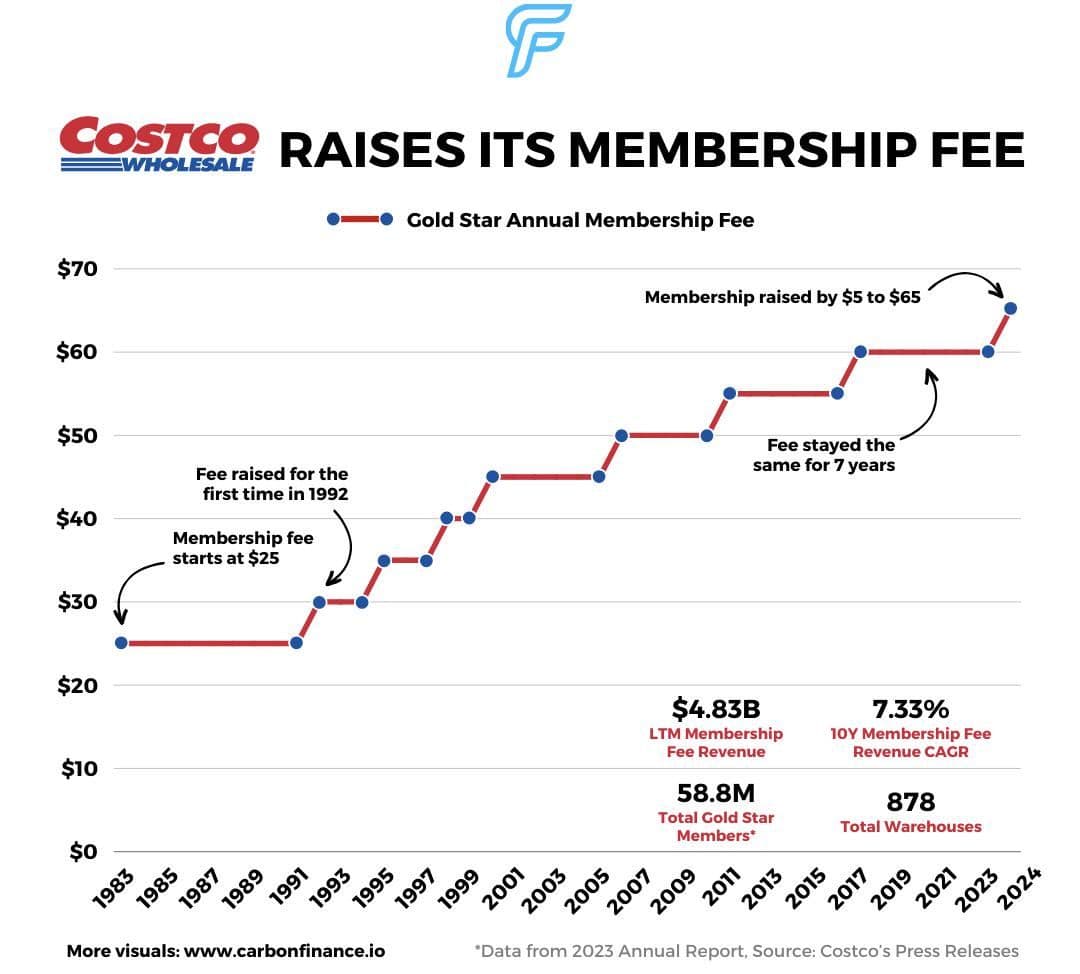
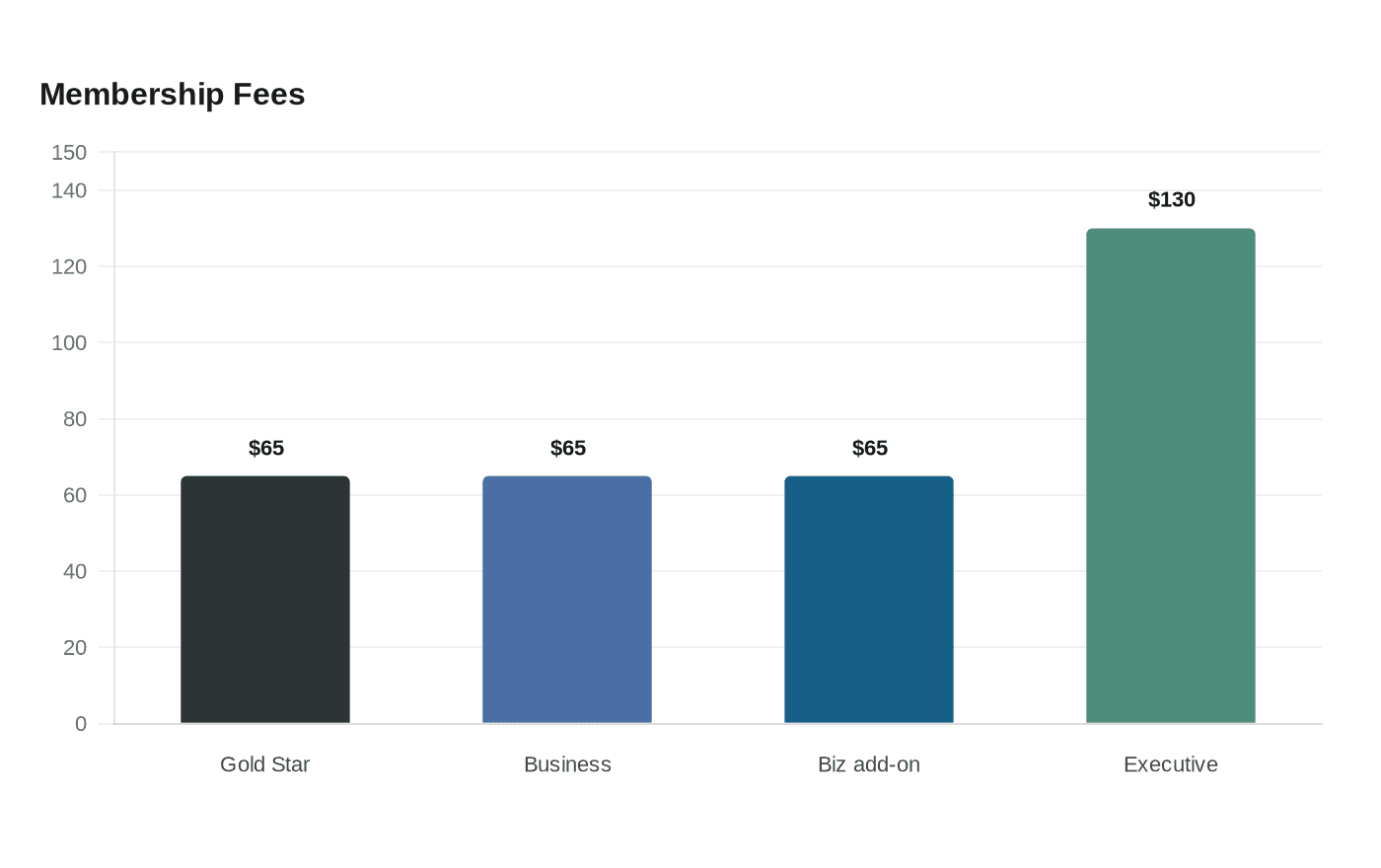
Costco’s membership-price increase, announced on July 10, 2024 and effective September 1, 2024, is one of the clearest examples of how the company turns membership economics into operating stability. The annual fee for U.S. and Canada Gold Star, Business, and Business add-on members rose to $65, while Executive memberships increased to $130. Costco also raised the Executive reward cap from $1,000 to $1,250, and said the change would affect around 52 million memberships.
For workers, that matters because a membership fee increase does not just pad a finance presentation. It helps reinforce the base of predictable revenue that can cushion labor costs, store maintenance, and expansion. In a retail sector where some chains react to pressure with layoffs, wage freezes, or chopped hours, Costco’s fee-backed model gives the company more room to keep investing in the people and buildings that keep service levels high.
The risk, though, is concentration. Built In flagged that Costco’s stability depends heavily on membership economics, which means the model is strong until it is not. If renewal rates slow or membership growth softens, Costco has less slack to absorb cost pressure without watching operations more closely. That is the part employees should care about most: the model is durable, but it is not invincible.
More warehouses mean more job openings, more transfers, and more advancement
Expansion is where the membership model becomes visible on the ground. Costco’s investor materials say the company’s warehouse footprint reached 914 locations as of September 25, 2025, and its new locations page shows the pipeline still moving across several markets. Coming sites include North Visalia, California; Syracuse, Utah; Pensacola, Florida; S. Kaohsiung, Taiwan; Albany, New York; Oconomowoc, Wisconsin; Otsego, Minnesota; and Mansfield, Texas.
That matters for workers because every new warehouse creates multiple layers of opportunity. New openings mean hiring waves, training needs, leadership slots, and more internal transfers for employees who want to move closer to home or step up into new responsibilities. For frontline staff, the expansion cycle often means more predictable hours during ramp-up and more chances to build tenure in a company that has historically valued promoting from inside its own structure.
The footprint also shows how Costco thinks about growth beyond the U.S. and Canada. Its warehouse-club model now stretches across markets including Mexico, Japan, the United Kingdom, Korea, Australia, Taiwan, China, Spain, France, Iceland, and New Zealand, with headquarters in Issaquah, Washington. That global reach is part of why the company can keep scaling its membership base even as it remains rooted in the same basic warehouse format that workers already know.
Why Costco’s history still matters to today’s workforce
Costco’s current model has older roots. The warehouse-club concept traces back to Price Club, founded in 1976 in San Diego by Sol Price, and the modern Costco came together after the 1993 merger with Price Club. That history matters because it shows the company was built around disciplined retail economics long before warehouse clubs became a familiar part of American shopping.
That legacy still shapes the employee experience now. Costco’s operating model rewards efficiency, consistency, and volume, which is one reason the company can maintain the kind of wage and benefit structure that has made it stand out in retail. A business that depends on high throughput needs workers who can keep the floor organized, the inventory moving, and the member experience reliable. The company’s stability is therefore not just a financial storyline. It is built every day by the people loading trucks, resolving returns, preparing food, and keeping the warehouse moving.
What happens if the growth engine slows
The clearest takeaway for employees is that Costco’s stability is real, but it is earned continuously. The company itself warns in SEC filings that delays or failures in areas such as comparable sales growth, membership fee revenue, new member sign-ups, renewal rates, gross margin, earnings, earnings per share, new warehouse openings, and dividend or stock-repurchase policies could hurt its stock price. That warning is aimed at investors, but the operational message reaches the floor: Costco cannot coast.
Members keep renewing because the value proposition works. The value proposition works because warehouses stay efficient, stocked, and well run. If that starts to slip, Costco has to defend its model more aggressively, which could mean tighter scrutiny of staffing, slower expansion, or less room to absorb cost pressure. If the company keeps doing what it has been doing, though, the result is the kind of rare retail stability that workers can actually feel in their schedules, paychecks, and career paths.
For Costco employees, that is the real business case. Renewals and fee hikes are not abstract finance stories. They are the machinery behind a company that can keep opening warehouses, keep offering internal mobility, and keep turning steady customer loyalty into steadier work.
This article was produced by Prism’s automated news system from verified source data, official records, and press releases, then run through automated quality and moderation checks before publishing. The system is built and supervised by the people who set the standards it runs under. Read our full AI policy.
Did this article answer your question?