Costco Local 174 deal adds seniority scheduling and just-cause discipline
Seniority now helps decide daily work at Costco’s Sumner depot, and just-cause discipline gives workers a real way to fight punishment instead of absorbing it.
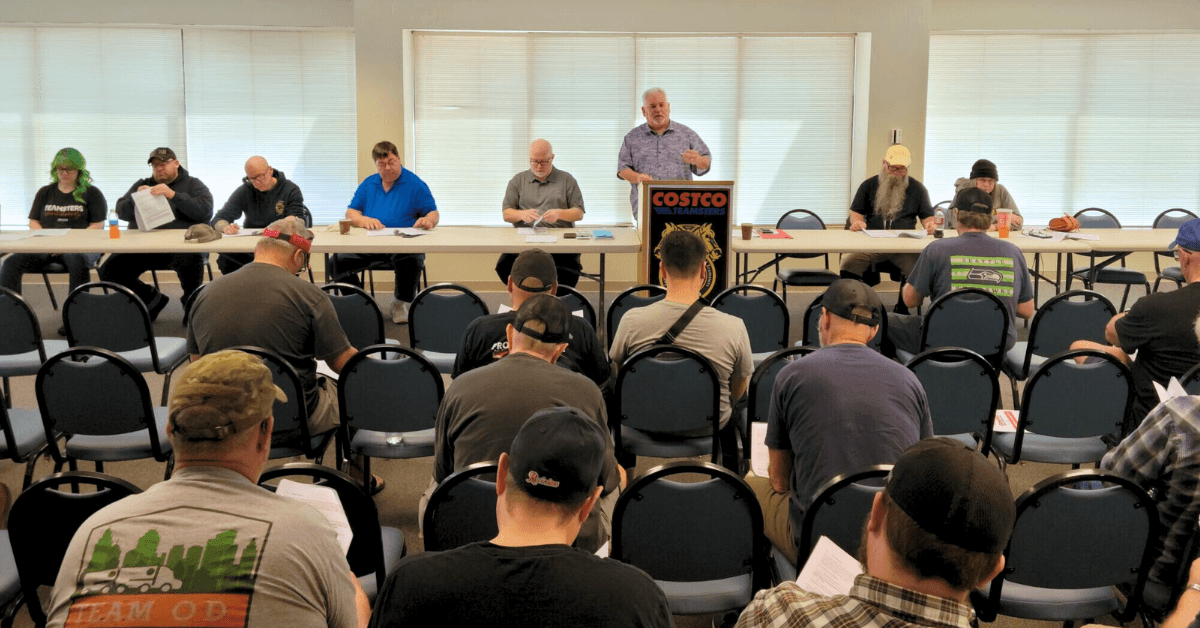
Costco’s Local 174 agreement is the kind of contract language workers feel before they ever read it. For more than 150 fleet drivers and MDO logistics workers in Sumner, Washington, seniority now shapes daily work assignments, while discipline has shifted from an unpaid suspension-first practice to a just-cause standard with a formal grievance path.
How the local deal turns contract language into a shift on the floor
This agreement runs from February 1, 2025 through January 31, 2028, and it was ratified in early April after Local 174 reported the vote on April 9, 2025. The deal also includes retroactive pay back to September 2024, which matters because it shows the contract is not just about future rules, but about making workers whole for time already worked under the old system.
That timing is part of the point. The local agreement was built to line up with the national Costco Teamsters master agreement, so the depot drivers who organized first were not bargaining in a vacuum. They were using the local contract to turn broad promises into enforceable rules for one specific group of workers who move freight, handle logistics, and keep the warehouse supply chain moving.
What seniority now means when management is assigning work
The biggest everyday change is scheduling control. Under the local agreement, drivers can use seniority to choose their workweek, start time, and workload on a daily basis. That sounds like contract language until you picture the real world: which driver gets the earliest start, who takes the longer route load, who gets stuck with the day that stretches past the usual window, and who has enough seniority to avoid the worst of the churn.
For warehouse and logistics workers, that kind of control is often where favoritism shows up first. A supervisor can say a schedule was based on business need, but workers know the difference between a system that is predictable and one that depends on who management likes, who it wants to punish, or who it wants to wear down. By tying those choices to seniority, Local 174 gave workers a clearer standard and made it harder for the day-to-day assignment process to become a quiet form of retaliation.
That matters beyond the driver seat. In physical jobs, workload is not an abstract management metric. It determines fatigue, safety, overtime exposure, and whether a worker ends the day with enough gas left to come back tomorrow. Seniority-based scheduling does not eliminate hard shifts, but it gives workers a rule they can point to instead of a favor they have to ask for.
Why just-cause discipline is such a big deal
The other major shift is discipline. According to the local agreement, Costco’s earlier practice of suspending a worker for three days before an investigation is gone, replaced by a just-cause standard and a formal grievance procedure. That is a dramatic change in how power works on the warehouse floor.
A just-cause system means discipline has to be justified, consistent, and reviewable. It is not a guarantee that no one gets disciplined. It is a guarantee that punishment cannot simply be handed out first and explained later. The grievance procedure matters for the same reason: it gives workers a formal path to challenge a manager’s decision instead of depending on goodwill, a side conversation, or whether a supervisor decides to reconsider on the spot.
For workers around delivery, equipment, and time-sensitive staffing, that protection has real consequences. A forklift operator, depot driver, or MDO worker can make a mistake under pressure, but the answer should not be automatic suspension as a management reflex. The local contract pushes discipline into a process, which gives workers a better shot at due process and gives managers a standard they have to meet.
How this deal fits into the larger Costco bargaining fight
This local contract did not appear out of thin air. The first Local 174 Costco contract was ratified on October 29, 2024 by nearly 97% of about 150 depot drivers, and it was intentionally short-term so it could expire on January 31, 2025 and line up with the national bargaining cycle. That was strategic. By syncing the local deal with the Costco Teamsters National Master Agreement, the union increased leverage instead of letting the local group bargain in isolation.
That earlier contract also marked a milestone: Local 174 said these workers were the first-ever Costco distribution center workers to unionize with the Teamsters. The successor agreement, ratified in April 2025, built on that momentum and covered more than 150 fleet drivers and MDO logistics workers. Teamsters Local 174 described it as a three-year agreement with major economic and workplace gains, including wage increases that the union said were greater than any other three-year period in Costco’s history.
The broader national picture matters too. More than 18,000 Costco workers ratified the national master agreement, which included a 22% increase in pension contributions, stronger seniority rights, vacation benefits, shop steward protections, and new safeguards against surveillance. The union said the national deal gave workers job security, scheduling protections, and fair working conditions, while nonunion Costco employees remain under handbook rules the company can change unilaterally.
What the money and benefits tell workers about leverage
The local agreement did not just change discipline and scheduling. It also protected health care and retirement and replaced 401(k) uncertainty with a defined-benefit pension for the local group. That distinction matters in a company known for paying above the retail floor. Costco’s wage model has long been part of its public identity, but the Teamsters have used bargaining to argue that high base pay is not enough if workers still lack dependable scheduling, pension security, or a meaningful way to contest discipline.
Local 174 secretary-treasurer Rick Hicks said members stayed united through a contentious organizing drive and first-contract fight, and that the agreement recognizes the value they bring to a very large Fortune 500 company. Teamsters Warehouse Division Director Tom Erickson said the local deal was meant to raise the bar at Costco and across the warehouse industry. In January 2025, NPR reported that Costco raised pay for nonunion workers while negotiations were still underway, which the union treated as proof that pressure was working.
That is the part workers should watch closely. Costco can advertise strong pay and benefits, but the real divide is between a company that sets rules on its own and a contract that forces management to justify them. At Local 174, the language now reaches into the daily life of the job: who gets the better shift, who gets disciplined, how fast a punishment can be challenged, and whether the warehouse floor runs on personality or on rules.
This article was produced by Prism’s automated news system from verified source data, official records, and press releases, then run through automated quality and moderation checks before publishing. The system is built and supervised by the people who set the standards it runs under. Read our full AI policy.
Did this article answer your question?