Costco says respect and inclusion start on the warehouse floor
Costco’s culture claim only matters if it shows up in pay, training, and manager behavior on the warehouse floor.
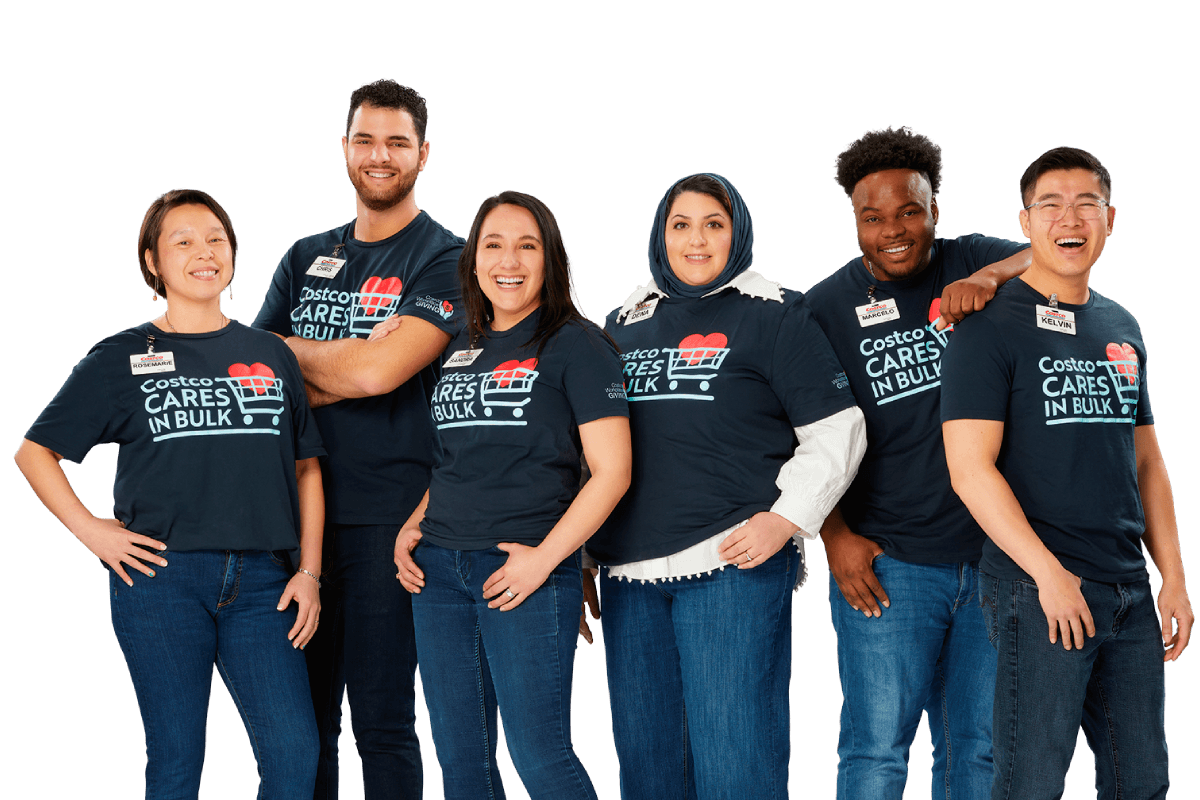
Costco likes to frame respect and inclusion as operating principles, not slogans. For a front-end assistant, stocker, forklift operator, meat or bakery worker, optical employee, or warehouse manager, the real test is whether that promise changes a shift: who gets trained, who gets heard, and who can raise a problem without paying for it later.
How Costco defines respect
On paper, Costco says its culture works because employees bring different backgrounds, points of view, and opinions to the table. The company links that diversity to creativity, innovation, satisfaction, and a sense of belonging, and it says that a more varied workforce connects it more closely to the communities where it operates and the suppliers it works with. That is a broad claim, but it is also a practical one: Costco is saying its culture is stronger when the warehouse reflects the neighborhood around it and when teams can learn from each other instead of just following scripts.
The company’s broader values language pushes the same idea. Costco says it has operated since its founding under a principle of doing the right thing for members, employees, suppliers, communities, and the environment. It also says inclusion and belonging are not separate from the business model, because hiring employees and engaging suppliers with different perspectives can widen the range of people and products it serves. In a warehouse environment, that matters less as branding than as a question of whether different kinds of workers can actually move up, adapt, and speak up.
What that looks like on the floor
For workers, culture is not the poster in the break room. It shows up in whether a department lead has time to train properly, whether a supervisor turns a packed aisle into a coaching moment or just pressure, and whether cross-training is offered as a path to skill-building or as a way to stretch an already thin crew. It also shows up in whether someone feels safe saying that a freezer is too cold, a pallet is stacked badly, or a process is slowing down the line.
Costco’s own materials suggest it understands that distinction. The company says its success depends on the well-being of employees across the business, and that its operational practices, benefits, and paid time-off policies are meant to acknowledge and fairly compensate workers for what they contribute. That is a notable framing in retail, where culture often gets reduced to perks that do little for the actual pace of work. Costco appears to be arguing for something more basic and more durable: fairness, practical support, and enough stability that people can keep doing the job well.

That approach matters because warehouse life is often defined by the quality of the supervisor relationship. Two buildings with the same pay scale can feel very different depending on how managers schedule, train, and respond under pressure. Costco’s culture pitch is strongest when it translates into predictable treatment, clear expectations, and a sense that the company is not asking for loyalty while ignoring the conditions that make loyalty possible.
Pay, benefits, and career paths are the clearest proof
If Costco wants employees to believe its respect language, pay is the easiest place to check. The company told shareholders in its 2024 annual report that it raised the starting wage to at least $19.50 an hour for all entry-level positions in the U.S. and Canada in July 2024. In its 2023 annual report, it said it increased the top of the wage scales by 85 cents an hour in March 2023 in the U.S., Canada, and Puerto Rico. Those moves are not just compensation news. They are also the company’s clearest signal that retention matters and that the model depends on keeping experienced people in the building.
Costco also says its people strategy rests on competitive wages and benefits, training and development opportunities, an Open Door Policy, and feedback programs that let employees raise concerns about benefits and culture. Its employee-development materials say more than 66,000 employees participate in an education, networking, and mentorship program, which is the kind of detail that matters to workers wondering whether there is a path forward beyond the current department or current building. In a company with a high-volume, low-margin business model, those pathways are part of how culture becomes a retention strategy rather than a slogan.
That is especially relevant for employees trying to decide whether Costco is a job or a career. Higher hourly wages matter, but so do the annual steps, the chance to learn another department, and the sense that a bakery worker or forklift operator can build a longer runway without leaving the company. Costco’s culture argument is that these pieces belong together: pay, growth, and treatment all reinforce each other.
Voice, accountability, and the hard test
The company’s internal accountability tools matter just as much as compensation. Costco says employees should promptly report actual or suspected violations of law or the Code of Ethics, and its whistleblower policy says good-faith reporting is protected from retaliation. It also maintains a confidential employee complaints and inquiries channel. That gives the company a way to claim that openness is part of the system, not just something managers are supposed to model when things are calm.
But the real test of openness is how it works when the issue is uncomfortable. A 2025 labor-judgment news report said a federal labor judge found Costco’s confidentiality rules in misconduct investigations could discourage employees from talking about workplace concerns, including harassment. That kind of challenge matters because it exposes the gap between a public commitment to respect and the lived experience of reporting a problem inside a warehouse. If workers think a complaint will disappear into a closed process, the company’s inclusion language loses force fast.
Why the business case matters to workers
Costco’s approach is not just moral language. It is part of a business model that depends on keeping employees engaged enough to move fast, solve problems, and serve members without burning out the team. The company’s annual filings show it still had strong member renewal rates, 92.9% in the U.S. and Canada and 90.5% worldwide at the end of fiscal 2024, then 92.3% and 89.8% at the end of fiscal 2025. Those numbers suggest the broader model is still working, and Costco’s own materials tie that success back to employee well-being.
That is why the culture question is worth taking seriously. Costco’s most credible promise is not that every warehouse will feel warm and perfect. It is that the company believes it can hold together a demanding retail operation by paying fairly, training consistently, leaving room for feedback, and treating employee voice as part of the operating system. For workers on the floor, that promise only counts if the daily experience matches it.
This article was produced by Prism’s automated news system from verified source data, official records, and press releases, then run through automated quality and moderation checks before publishing. The system is built and supervised by the people who set the standards it runs under. Read our full AI policy.
Did this article answer your question?