Costco’s culture pages explain why employees stay for decades
Costco’s culture pages are more than branding: they tie wages, training and ethics to the warehouse model that keeps workers and applicants coming back.
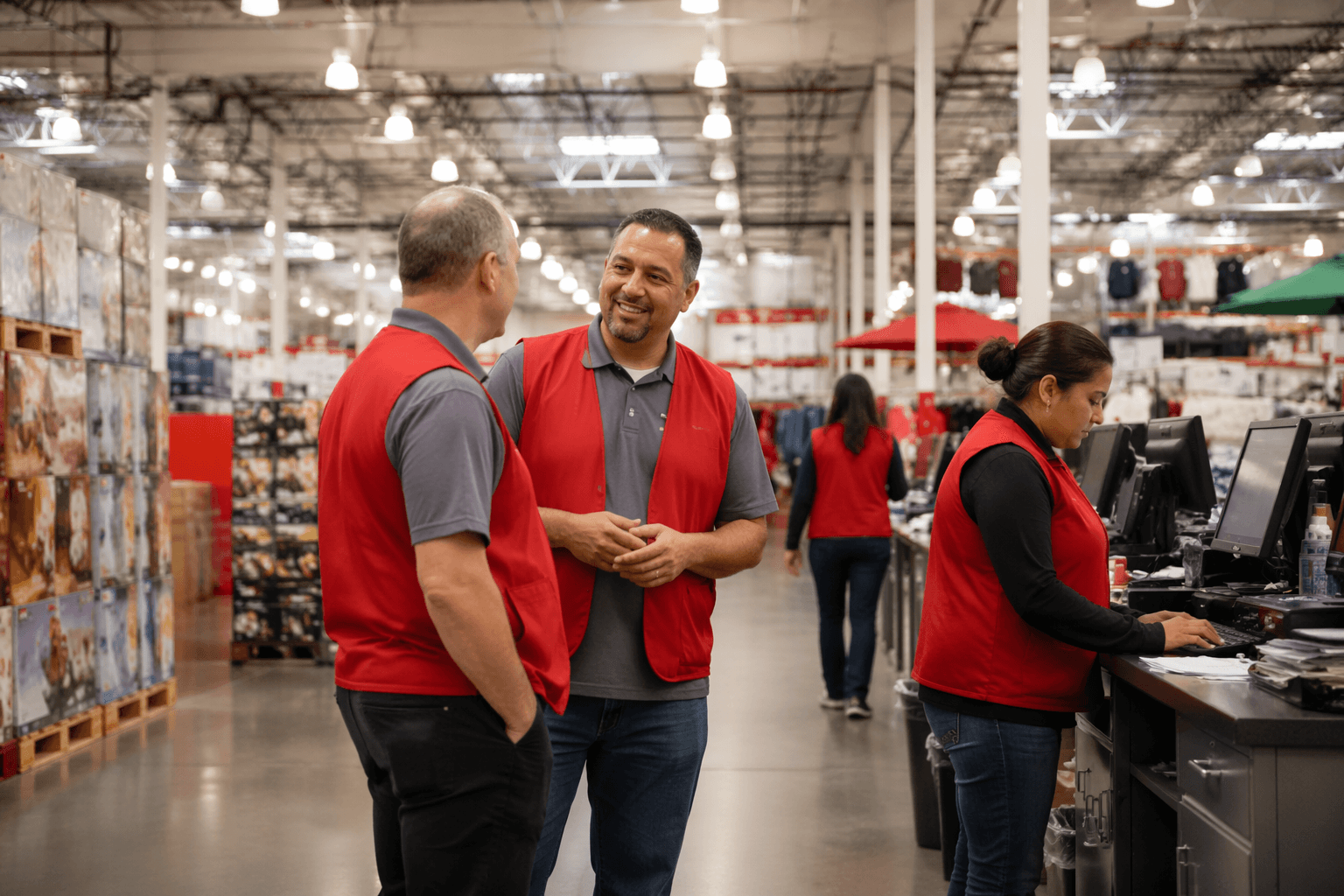
Costco’s employer story works because it is built into the way the company says it operates. The same pages that talk about low prices and tight inventory also insist that employees are central to the business, not an afterthought, and that claim matters on the warehouse floor when pay, scheduling, training and promotion paths shape whether people stay for a few months or a few decades.
A culture message rooted in the operating model
Costco Canada’s About Us page frames the company as an extension of Sol Price’s membership-warehouse idea, and that origin story matters because it links culture to operations instead of separating them. Costco says it carries about 4,000 SKUs, compared with about 30,000 at most supermarkets, and that limited selection helps make the operation manageable while supporting the membership model. For workers, that means the promise of efficiency is not abstract: a tighter assortment changes how much freight moves, how much product has to be learned, and how predictable the day can feel.
The company’s investor materials make the same argument in business terms. Costco says low prices, limited selection, volume purchasing, efficient distribution and reduced overhead produce rapid inventory turnover, which is the financial engine behind the warehouse format. That is the reality check for employees: the company’s celebrated culture is not separate from the hard mechanics of retail, it is part of the same system that keeps the operation profitable.
What the ethics code actually says
Costco’s U.S. code of ethics is unusually direct for a retailer. It says: “Obey the law,” “Take care of our members,” “Take care of our employees,” and “Respect our suppliers.” That language matters because it gives workers a simple standard to measure against, not a vague slogan about teamwork or excellence.
On the floor, “take care of our employees” should mean more than being polite. It sets expectations around how managers handle schedules, staffing, safety and development, and it tells applicants that Costco wants the warehouse to function as a stable workplace rather than a churn machine. The code also ties employee treatment to the broader operating promise, which is why the company can present culture as part of the business model instead of a separate human-resources message.
Why the company says pay and benefits are not just costs
Costco is unusually explicit about compensation. The company says it does not believe in minimizing wages and benefits, and that better compensation helps reduce turnover, improve productivity and raise employee satisfaction. In its 2025 annual report, Costco said compensation and benefits were its largest expense after merchandise, which is a telling line for anyone who has worked retail long enough to know how often labor is treated as the easiest place to cut.
That philosophy shows up in the company’s people pages as well. Costco says it offers competitive wages and benefits in every region where it operates, along with training and development opportunities and an Open Door Policy for feedback. For warehouse employees, that combination is what gives the brand credibility: higher pay is paired with a path to stay, learn and move up, rather than a promise that stops at the paycheck.
The career pitch has to feel real to frontline workers
Costco’s employee-development materials say more than 66,000 employees participate in its education, networking and mentorship program. That detail matters because long-tenured staff do not stay for abstract values alone; they stay when they see that the company is willing to invest in the skills and relationships that help them build a career. For stockers, front-end assistants, forklift operators, meat and bakery employees, optical staff and warehouse managers, that investment translates into whether the job feels like a dead end or a place with a future.
The company’s structure supports that pitch. A smaller SKU base can make training more focused, while a culture built around open-door feedback can help workers raise problems before they turn into turnover. In a warehouse environment, where speed and consistency are everything, a company that says employees are central to success is also making a claim about how it expects managers to lead day to day.
Pay increases and union pressure put the brand to the test
Costco’s wages have helped build its reputation, but the brand has also been tested by labor pressure. In January 2025, the company said most top-of-scale hourly U.S. store workers would be paid $30.20 an hour, with additional $1 raises planned over the next two years. Entry-level hourly wages were set to rise to $20 an hour in the same move, a signal that Costco was trying to keep its pay structure ahead of the retail market while unions were pushing hard in bargaining.
The Teamsters represent about 18,000 Costco employees, roughly 8% of the company’s U.S. workforce, and the union reached a tentative agreement with Costco in early February 2025, averting a threatened strike. For workers, that episode is important because it shows how the company’s employee-first story gets tested under pressure. The message may be strong, but the labor relationship still depends on contract talks, wage progression and whether employees believe the company is living up to its own code.
Why the model resonates with long-timers and applicants
Costco’s history helps explain why this culture message sticks. The company traces its roots to 1976, when Sol Price opened Price Club in San Diego. Britannica notes that Price Club initially served business members before James D. Sinegal helped expand the concept beyond business-only customers, which is a reminder that Costco’s warehouse model has always been about disciplined retailing plus a clear membership promise.
That legacy helps the modern employer brand. Costco can tell applicants that the company values efficiency without sounding anti-worker, because its own materials say people are at the heart of what it does. It can tell long-tenured employees that the warehouse is built for stability, because the company repeatedly links employee treatment to lower turnover, stronger productivity and better service. And it can tell managers that a disciplined floor does not have to be a cold one.
Costco’s culture pages resonate because they do something many retailers struggle to do: they connect pay, training, ethics and operating discipline into one story. For workers, that story only matters if it shows up in raises, benefits, internal mobility and day-to-day respect. At Costco, that is exactly where the brand is strongest, and exactly where it will keep being judged.
This article was produced by Prism’s automated news system from verified source data, official records, and press releases, then run through automated quality and moderation checks before publishing. The system is built and supervised by the people who set the standards it runs under. Read our full AI policy.
Did this article answer your question?