Costco’s June coupon book signals busy weeks for warehouse staff
Costco’s June 15 to July 19 coupon cycle is likely to push traffic onto the floor fast, with front-end questions, resets, and replenishment pressure hitting first.
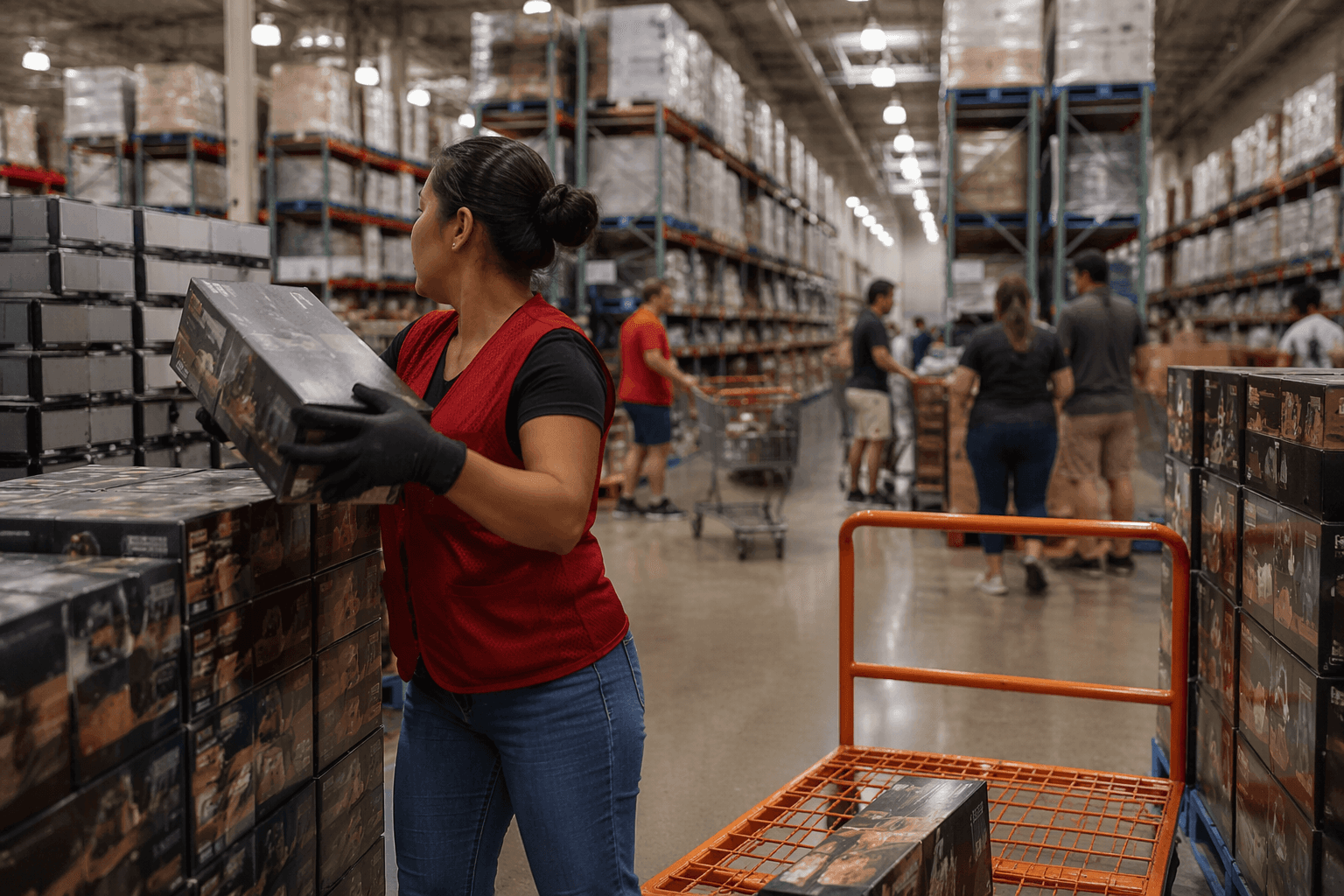
Costco’s latest coupon book is less a shopping perk than a schedule for the floor. The June 15 through July 19 savings window lines up with a month-plus stretch of extra member traffic, and that means more work for front-end assistants, stockers, merch teams, and managers trying to keep a high-volume building moving.
The coupon book as a traffic forecast
The new Warehouse Savings cycle runs from June 15, 2026 through July 19, 2026, and the promotions span a wide mix of departments, including apparel, automotive, appliances, beauty, electronics, furniture, grocery, and health and personal care. Costco also notes that pricing can vary by location in Alaska, Hawaii, Puerto Rico, Costco Business Centers, and online, which turns the coupon book into a map of where customer questions are most likely to pile up.
That matters because Costco’s model depends on limited assortment and fast inventory turnover. With about 4,000 SKUs in its warehouses, far fewer than the roughly 30,000 found in most supermarkets, each featured item carries outsized weight once it lands in the book. A promoted household staple or seasonal item can pull members in quickly, and the warehouse team feels the ripple long before the ad cycle ends.
Where the pressure shows up first
The first strain usually lands at the front end. Members arrive with lists, screenshots, and a very specific question: is the item in the warehouse, only online, or tied to a particular date window? That can slow registers, trigger price checks, and create confusion around limits or regional variations, especially when a deal appears in multiple channels but not in every building.
For front-end assistants, the coupon cycle is not just about scanning faster. It is about explaining why one location has a markdown while another does not, why a Business Center may look different from a standard warehouse, and why an online-only deal does not always match what a member sees on the sales floor. In a building that runs on speed, each of those conversations can add friction to a line that is already building.
What stockers and merch teams have to chase
On the floor, the biggest change is visual and physical. Promoted items need to stay on endcaps, signs need to be swapped on time, and replenishment has to keep pace with the spike in demand. When a coupon cycle spans several weeks, the work is not a one-time reset but a sustained series of adjustments as items sell through, move, and get replaced.
That is where the pressure can spread beyond the featured products. A deal on a pantry staple can send shoppers through the grocery section in waves; a beauty or electronics promo can bring more comparison shopping and more back-and-forth with staff; an apparel or furniture offer can create bigger-cart trips that change how quickly the floor clears. The coupon book may look like a paper ad, but on the warehouse floor it behaves more like a traffic signal.
Why managers watch the calendar so closely
Managers treat the coupon cycle as a staffing clue because promotion-driven traffic does not stop at the register. More carts, longer lines, and extra questions early in the day often turn into returns, corrections, and recovery work later on. If a heavily promoted item sells faster than expected, the warehouse has to decide whether to replenish from the back, pull from another department, or simply ride out the rush.
That is especially important when the sale window lasts from June 15 to July 19. A short markdown might create a brief spike; a five-week cycle asks the building to stay clean, accurate, and customer-friendly for much longer. The hidden labor is not just moving the ad onto the floor. It is keeping the promo alive without letting the warehouse lose its shape.
Why Costco’s scale changes the story
The pressure matters even more because Costco is built for volume. The company said it operated 914 warehouses worldwide as of its fiscal 2025 results announcement on September 25, 2025, including 629 in the United States and Puerto Rico. It also reported that e-commerce sales rose 13.6% in the fourth quarter and 15.6% for the full year, which shows how much demand now moves across both the warehouse and the digital side of the business.
Costco says it has more than 341,000 employees globally, and 55% of them have five or more years of service. That kind of tenure means many workers have seen the rhythm of coupon-book surges before, and they know that the same promotion can create different pressure points depending on the department, the region, and whether the sale is in the building or online.
Membership strength is part of the traffic story
The company’s membership base helps explain why these cycles matter so much. Costco’s 2025 annual report said Executive members represented approximately 73.6% of worldwide net sales in 2025, while its SEC filing said membership fee revenue increased 10% in 2025. Renewal rates remained high, at 92.3% in the U.S. and Canada and 89.8% worldwide.
That level of loyalty means the coupon book does not need to convince members to visit from scratch. It only needs to give them a reason to come in now rather than later. Once that happens, the warehouse team absorbs the workload that follows, from crowded entrances to replenishment pressure to the end-of-night cleanup that keeps the next day from starting behind.
The bottom line for the floor
Costco’s own history helps frame why this system works. The first warehouse opened in Seattle in 1983, and the company is now based in Issaquah, Washington, with a model built for tight assortment, fast turnover, and repeat visits. The June 15 to July 19 coupon book fits that model perfectly, because it does not simply discount products. It organizes traffic.
For workers, that means the real story is not the savings headline. It is the work that follows the savings: the questions at the register, the reset on the endcap, the stock run for a promoted staple, the cart pileup near closing, and the recovery that has to happen before the next wave comes through the door.
This article was produced by Prism’s automated news system from verified source data, official records, and press releases, then run through automated quality and moderation checks before publishing. The system is built and supervised by the people who set the standards it runs under. Read our full AI policy.
Did this article answer your question?