How Costco’s membership model shapes the work on the floor
Costco’s fee-based model turns the warehouse floor into a speed-and-service machine, where fewer items, heavier traffic, and repeat visits shape every shift.

Costco’s membership fee is not just a business detail. It is the reason the warehouse floor is built the way it is, from the way pallets are staged to the way lines are managed and hot items are pushed. When members pay to belong, they expect value, speed, and service in return, and that expectation reaches every department from front end to meat, bakery, optical, and the warehouse aisles.
The membership fee is the operating system

Costco says plainly that it is a membership warehouse club, and its career pages put the point even more sharply: members pay a fee because they trust the company to provide exceptional member service and the best possible prices on quality brand-name merchandise. The company’s own line is that “Member service is Job No. 1,” and that is the simplest way to decode the job on the floor. This is not a traditional store model that tries to win by carrying everything. It is a club model built to make the fee feel worth it every time a member walks in.
That logic explains why the warehouse feels different from other retail jobs. Costco’s mission is to provide members with quality goods and services at the lowest possible prices, and its Code of Ethics says the company will take care of its members, take care of its employees, and respect its suppliers. Those are not separate slogans. Together, they define a business that asks workers to protect value, preserve trust, and keep the member promise visible in every interaction.
Why the floor feels fast, crowded, and coordinated
For employees, the membership model turns the warehouse into a traffic system, not just a sales floor. The job is built around repeat visits, high volume, and quick turns on a relatively slim assortment of goods, so the way inventory lands matters as much as what is sold. High-volume pallets, seasonal items, and crowded hot spots are not side effects. They are the operating reality of a format designed to move a lot of merchandise quickly while keeping members convinced they got a deal.
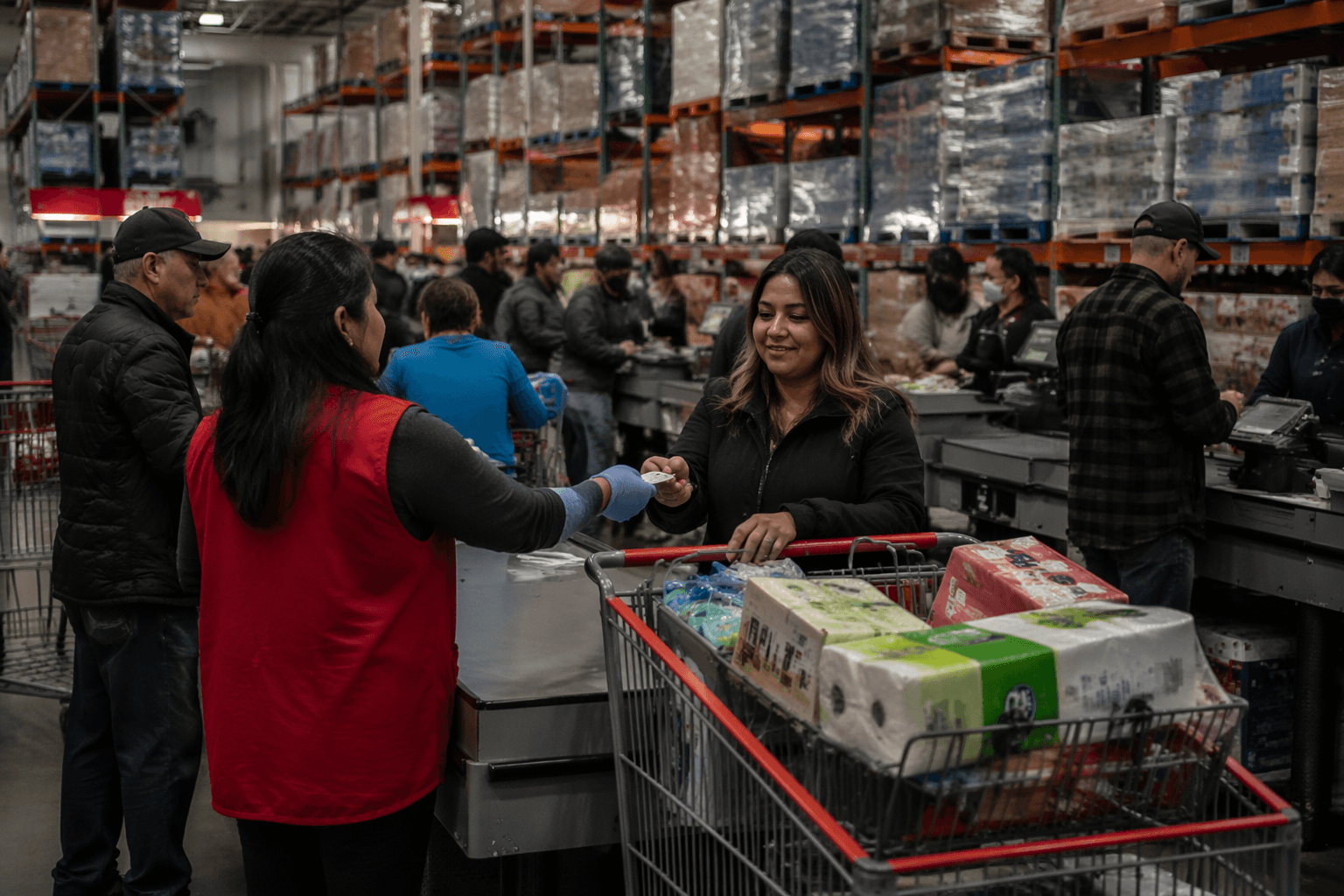
That is why Costco’s warehouse and Business Center employees are described as working in a fast-paced environment, preparing and displaying merchandise, learning the company’s merchandising philosophy, and providing excellent member service while keeping locations clean and safe. The work is challenging because the entire store is connected. If the front end slows, if a feature table sells through unexpectedly, or if a department gets jammed, the whole member experience feels it.
The digital business is now part of the same floor reality
The membership model no longer lives only inside the building. Costco’s SEC filing says e-commerce represented about 7% of total net sales in fiscal 2024, while digitally originated sales represented about 9% of total net sales that year. A later 2025 filing put digitally originated sales at about 10% of total net sales. That growth matters for workers because it shows how the company now blends in-warehouse activity with digitally assisted shopping, pickup behavior, and online influence on what members expect when they arrive.
Costco’s recent quarterly reporting makes the same point from another angle. Comparable sales growth was driven by traffic and ticket gains, while digitally enabled comparable sales grew faster than total sales. In plain floor language, that means more of what happens in the warehouse is tied to how members move, what they buy, and how digital behavior feeds into their trip. The app, the site, and the store are no longer separate stories. They are one operating system, and the people stocking, directing, ringing, and replenishing feel the consequences in real time.
Why Costco leans so hard on consistency and cross-training
A membership club only works if the team can keep pace with demand without letting standards slip. That is one reason Costco’s model rewards workers who can learn quickly, switch tasks, and keep service steady even when traffic spikes. The company says it has been a leader in the warehouse club and retail industry for more than four decades, and that kind of staying power depends on a labor force that can handle volume without losing the discipline that members notice.
Costco’s careers site also makes clear that attracting, developing, and retaining employees is central to the business. Its employee website points to benefits, education, mentoring, and a confidential complaint channel, which underscores a basic truth about the model: the membership promise is only as strong as the people delivering it. When Costco says “It’s challenging work and we accomplish it as a team,” it is describing a system where coordination is not optional. Cross-training, pacing, and consistency are part of the product.
The history behind the warehouse logic
Costco’s floor culture did not appear out of nowhere. The warehouse-club model was already being shaped before Costco itself existed, especially by Price Club, which opened in San Diego in 1976. Costco was founded in 1983 by James Sinegal and Jeffrey Brotman, and the format they helped build kept the core warehouse-club logic intact: concrete floors, pallet displays, a limited assortment, and a membership fee as the entry point.
That history matters because it explains why Costco still looks like a bet on disciplined simplicity rather than endless choice. A narrow assortment and a recurring membership relationship create pressure for every item, every line, and every shift to justify the trip. For the worker on the floor, that means the job is never just about stocking or ringing or zoning. It is about preserving the rhythm that keeps members returning, which is how the warehouse club turns speed, service, and value into one business model.
This article was produced by Prism’s automated news system from verified source data, official records, and press releases, then run through automated quality and moderation checks before publishing. The system is built and supervised by the people who set the standards it runs under. Read our full AI policy.
Did this article answer your question?