California local minimum wage hikes create payroll challenges for Dollar General
July 1 local wage hikes turned California into an address-by-address payroll test for Dollar General, with San Bernardino stores and others facing different rates.
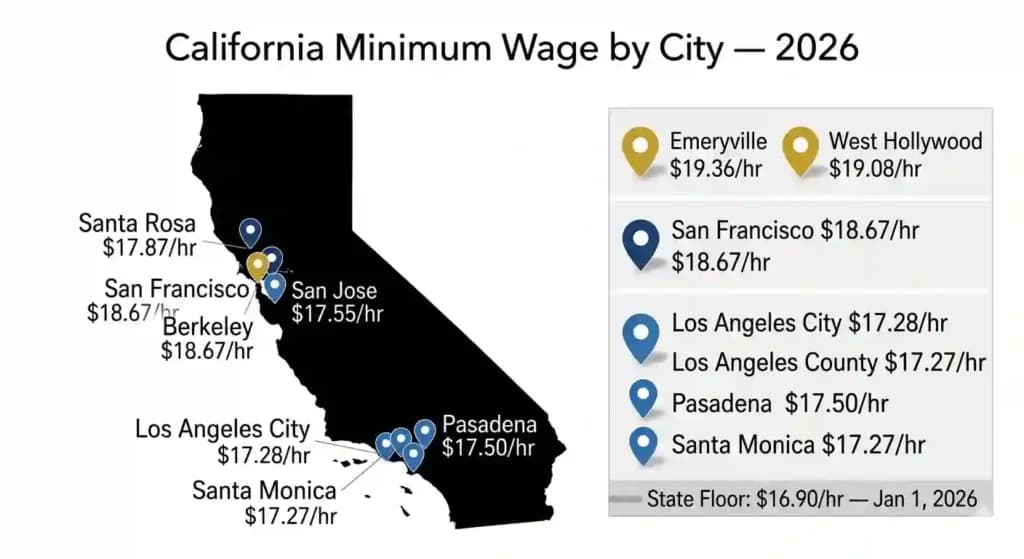
California retailers got a fresh compliance reminder June 29 as a new round of local minimum wage increases took effect July 1, 2026, and Dollar General’s California stores had to match pay to the exact city or county on each address. The state floor was already set at $16.90 an hour on January 1, 2026, but California is not one wage market, and local ordinances pushed some stores higher.
The California Department of Industrial Relations says many cities and counties pay above the state rate, including Alameda, Berkeley, Emeryville, Fremont, Los Angeles, Los Angeles County, Malibu, Milpitas, Pasadena, San Francisco and Santa Monica. Some hotel and hospitality workers also faced separate increases. For a chain like Dollar General, the practical risk was not abstract: one store could sit under one minimum wage while another location a few miles away had to pay a different amount, and the wrong rate could bleed into payroll, job postings, hiring paperwork and required notices.
That meant managers had to check more than hourly base pay. Local increases also affected overtime calculations, shift differentials and the wage used for training time and temporary assignments. The most exposed stores were the ones still leaning on an old statewide figure or onboarding packet after a city ordinance took control. The cleanest fix was simple but unforgiving: verify the rate before the first clock-in on July 1, not after payroll closed.
The compliance burden has grown fast. UC Berkeley’s Labor Center says that before 2012 only five localities had minimum wage laws, but by June 2026 that number had climbed to 66 counties and cities. The labor center keeps a detailed inventory of California city and county ordinances, including a June 22, 2026 table of July 1 wage changes, and the California Department of Industrial Relations points employers to those local rate tables when city and county rules go beyond the state minimum.
Dollar General’s California store directory shows why that matters on the ground. The company operates in many California cities, including multiple stores in San Bernardino, so a district manager cannot assume one wage rate covers an entire region. The California Labor Commissioner’s Office, which enforces the Labor Code and educates employers about wage-and-hour obligations, is the agency watching for the missed poster, the stale payroll code and the store that paid by the state rate after a local ordinance had already moved on.
This article was produced by Prism’s automated news system from verified source data, official records, and press releases, then run through automated quality and moderation checks before publishing. The system is built and supervised by the people who set the standards it runs under. Read our full AI policy.
Did this article answer your question?