Dollar General push to connect pricing, loyalty and private brands
Dollar General’s value push looks like growth on paper, but it can mean tighter pricing, faster replenishment and less room for error on the floor.
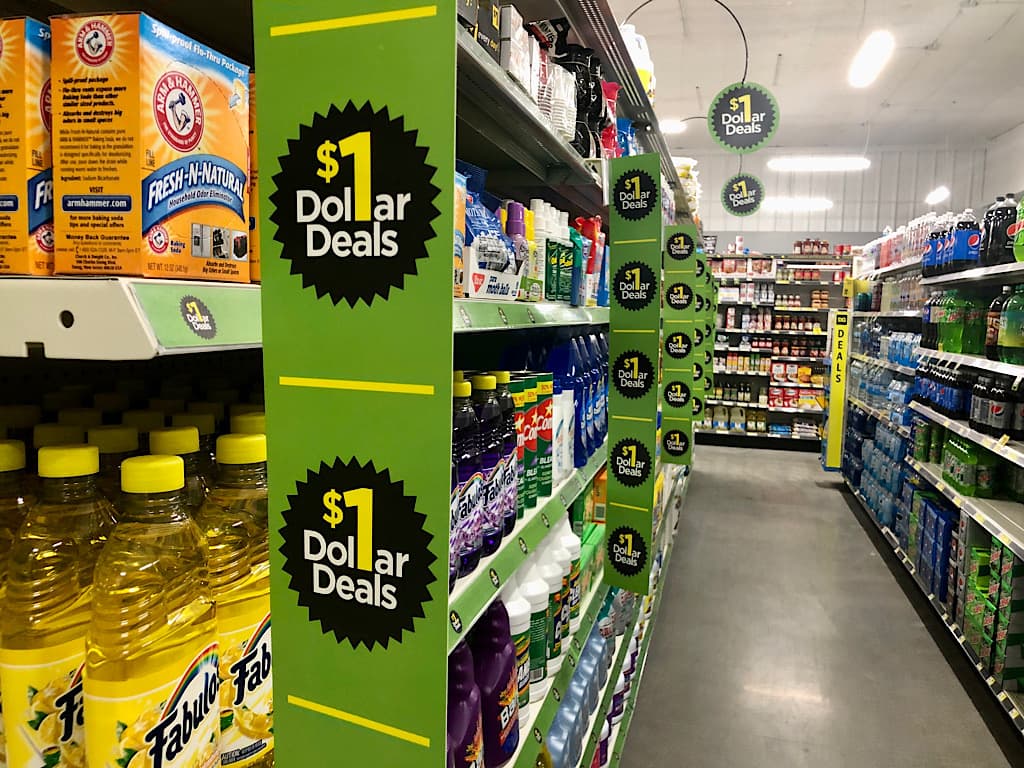
As of January 30, 2026, Dollar General operated 20,893 stores across the United States and Mexico, and its latest push to connect pricing, loyalty and private brands raises what each shift is expected to deliver. The aim is to make every trip feel cheaper, faster and more certain.
The market is rewarding sharper value, not just low price
The grocery picture underneath all of this is less stable than the sales headline suggests. A McKinsey analysis found U.S. grocery sales rose 1.2% in 2025, but that gain came from a 2.2% price lift while volume fell 1%. Shoppers were buying fewer units even as dollar sales held up, which is the kind of environment that rewards precision over broad confidence.
People are shopping more often, trimming basket size, comparing prices more carefully, using promotions and buying more private brands. They are also making trade-offs across brands, pack sizes, categories and retailers. Being a grocery or convenience stop is no longer enough. Retailers have to prove they have a sharper price position, stronger economics and a clearer path to growth.
For Dollar General employees, that changes what “good” looks like. A store is not just trying to ring up traffic. It has to feel like the right answer for a specific mission, whether that mission is a quick household refill, a coupon-driven stock-up or a small-basket trip where the customer is comparing every dollar.
Dollar General is built around that kind of trip
Those stores operate under the Dollar General, DG Market, DGX, pOpshelf and Mi Súper Dollar General banners. Dollar General sells national-brand and private-brand products at everyday low prices, typically $10 or less, in convenient small-box locations.
Dollar General is not betting only on low prices or only on private labels. It is trying to make the whole store feel like a fast, affordable answer to routine needs. In the first quarter of fiscal 2026, that formula produced net sales of $10.8 billion, up 3.4% year over year, with same-store sales up 2.0%. Traffic rose 1.4% and average transaction amount increased 0.5%, while operating profit reached $638.5 million and diluted earnings per share came in at $2.00.
The company also opened 190 new U.S. stores in that quarter. Its fiscal 2026 guidance calls for net sales growth of 3.7% to 4.2%, same-store sales growth of 2.2% to 2.7%, and roughly 4,730 real estate projects, including about 450 new U.S. stores. So even while shoppers are more price-sensitive, the chain is still expanding the footprint it has to manage.
The connected strategy raises the execution bar
The company is treating value as a system, not a single lever. Pricing, key value items, promotions, loyalty, personalization and private brands all have to work together. It changes how a store has to operate hour by hour.
On the floor, that means a shelf tag is not just a tag. An endcap is not just a display. Replenishment is not just backroom work. Each one is part of the value story the customer sees while deciding whether this trip is cheaper, easier and worth repeating. For district managers, the question is not only whether traffic is up. It is whether the store feels credible, quick and low-friction across the kinds of missions Dollar General serves best.
That also explains why a leanly staffed store feels the pressure so quickly. If customers are comparing prices more carefully and shopping in smaller baskets, there is less margin for a bad tag, an empty peg or a slow recovery cycle. In a store where one shift is already covering register, stocking and the next delivery, a more complex value strategy can translate into more tasks without a matching increase in payroll.
Private brands are becoming more than a margin play
Private brands now sit at the center of that pressure. In its annual report, Dollar General identifies private-brand items as an important part of its sales growth and gross profit rate plans; consumer acceptance depends on pricing, quality, customer perception and timely new-product development. Private label is no longer just a cheaper alternative. It has to look and feel credible enough for customers to choose it over familiar national brands.
The company’s new simmer & stir kitchen brand, launched in May 2026, was built around modern style, practical function and value-priced products at $12 or less. Dollar General wants private label to make value visible without making the store feel bare-bones.
For workers, though, more private label means more operational work. The products have to be in stock, signed correctly and easy to find. If a customer is counting on the store for a lower-priced pantry item or a quick kitchen replacement, a missing private-brand item is not just a sales miss. It is a break in the value promise.
Gas prices, trading down and rural trips keep the pressure on
The consumer backdrop helps explain why Dollar General is leaning so hard into this model. On June 2, Dollar General said its core customers remain under pressure from higher gas prices, especially lower- to middle-income households. Some higher-income consumers are trading down into Dollar General and Dollar Tree. In rural communities, where shoppers are limiting travel and trips, that pressure matters even more because the store is often the closest option with enough variety to cover several errands at once.
This article was produced by Prism’s automated news system from verified source data, official records, and press releases, then run through automated quality and moderation checks before publishing. The system is built and supervised by the people who set the standards it runs under. Read our full AI policy.
Know something we missed? Have a correction or additional information?
Submit a Tip