Dollar General store jobs test speed, reliability, and customer service skills
Dollar General interviews are really screening for speed, reliability, and calm under pressure. The first weeks on the floor show quickly who can handle the pace, the freight, and the register.
What Dollar General is really looking for
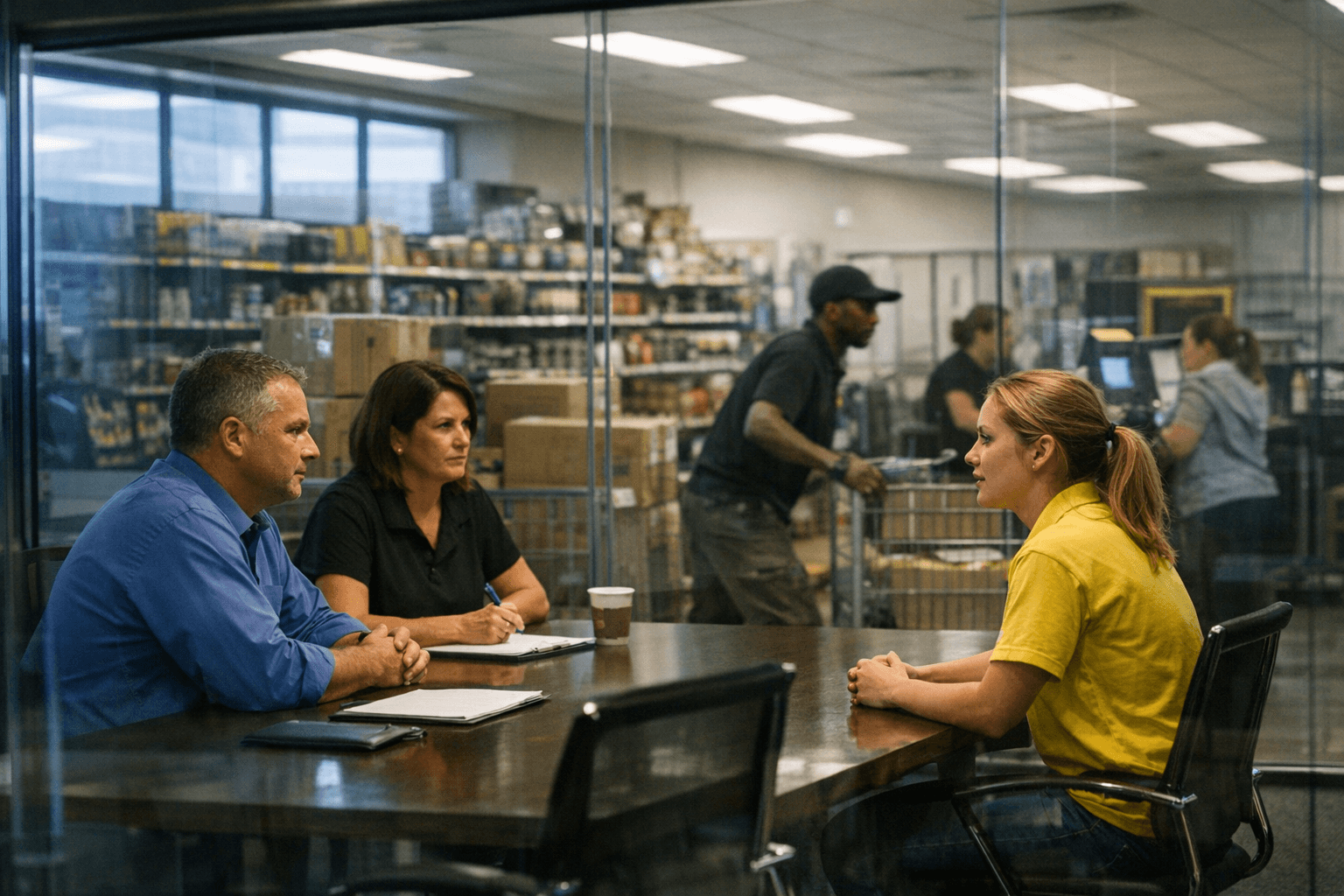
Dollar General interviews are not built around abstract retail theory. They are built around whether you can keep a discount store moving when the truck is late, the line is long, and a customer needs help finding something fast. The Sales Associate posting spells it out in plain terms: stocking merchandise, building displays, rotating product, unloading trucks, operating a cash register, handling cash, assisting customers, cleaning the floor and stockroom, and following company policies.
That mix tells you what interviewers are screening for. They want reliability, pace, cashier accuracy, stocking stamina, schedule flexibility, and the kind of customer-service judgment that holds up when the store is short-staffed. They also want people who can work with basic cash handling and math, understand safety policies, and communicate clearly with coworkers and shoppers.
How to answer the interview without guessing
The strongest answers are the ones that match the job’s actual daily work. If an interviewer asks about past experience, connect your examples to the tasks Dollar General lists: getting freight out quickly, keeping a checkout line moving, staying organized in a cluttered back room, or helping a frustrated customer without letting the interaction slow the whole store down.
Be ready to talk about:
- a time you showed up consistently and covered a busy shift
- a time you worked quickly without losing accuracy at the register
- a time you handled a problem customer or a last-minute change
- a time you worked with a team to finish a task under pressure
Availability matters just as much as skill. Retail managers need people who can cover peak windows, adapt when a truck lands, and keep working when weather or local traffic changes customer flow. If your schedule is narrow, say so honestly. If you can be flexible, say that too, because flexibility is part of the job, not a bonus.
Why the job description reads like a pace test
Dollar General’s own language makes clear that this is not just cashier work. The posting includes plan-o-grams and merchandise presentation, which means a new hire is expected to learn where product belongs, how shelves should look, and how to recover the sales floor quickly after customers have picked through it. In practice, that means speed matters, but speed without order becomes mess.
The job also asks for effective interpersonal skills, which sounds simple until the store is crowded, the register is backed up, and a customer wants help while freight is still on the floor. Interviewers know that the person they hire will have to switch between roles all shift long: cashier, stocker, cleaner, problem-solver, and sometimes the only calm voice in the building.
What the first weeks usually feel like
The first weeks on the floor are often about learning the store’s rhythm more than mastering one single task. New hires usually need to learn where merchandise goes, how to recover the sales floor, how to use the register, how to handle basic customer requests, and when to escalate pricing or safety problems. That learning curve is real, and the stores reward people who pick up the operating rhythm quickly.
In many Dollar General stores, the first weeks also reveal how much the job depends on small habits. You are expected to keep moving without losing track of the details: label checks, shelf placement, register accuracy, and communication with the person running the shift. The people who settle in fastest usually understand that the work is a cycle, not a list: unload, stock, front, recover, clean, help customers, repeat.
The mistakes new hires make fastest
The biggest early mistake is treating the job like it is mostly cashier work. Dollar General’s posting shows the opposite. Register work is only one piece of a store role that also includes freight, stocking, cleaning, displays, and policy compliance. New hires who wait behind the counter instead of learning the floor work often fall behind quickly.
Another common mistake is underestimating how much organization matters. A rushed stocking job can create problems later for the next shift, and a sloppy backroom can slow down the entire store. The same is true at the register: basic cash handling and math are part of the expectation, and small errors become bigger headaches when the store is busy.
Safety is not optional, even in a small-box store
Dollar General’s scale makes safety especially important. The company said in its fiscal 2025 annual report that it had 20,662 stores in 48 U.S. states and Mexico as of February 28, 2025. With that many locations, one store’s habits matter to the whole operation, and OSHA has made clear that the company must keep improving store safety practices.
In a July 11, 2024 settlement, OSHA required Dollar General to correct hazards such as blocked exits, access to fire extinguishers and electrical panels, and improper material storage, generally within 48 hours. For a new hire, that turns into a simple rule with serious consequences: keep aisles clear, store freight correctly, and speak up fast if something looks unsafe. In Dollar General stores, safety is part of the job performance test, not a separate issue for management alone.
Why the company pushes promotion so hard
Dollar General leans hard on its promote-from-within culture, and that message is meant to matter in the interview. The company says it is one of the fastest-growing retail companies in the United States and says employees are the heart of the business. It also says 74% of promotions in 2023 came from within and that it provided 5.5 million training courses to employees in 2023.
That means interviewers are often looking for more than someone who can fill a shift. They are looking for someone who can grow into more responsibility and keep up with the chain’s operating model. For workers, the upside is straightforward: strong early habits can become a path to more hours, more trust, and eventually more responsibility. Weak habits, by contrast, get noticed fast in a store model that runs on consistency.
The company culture behind the badge
Dollar General’s roots help explain why the job feels the way it does. The company traces back to 1939, when Luther Turner and Cal Turner, Sr. each invested $5,000 in J.L. Turner and Son Wholesale Company. The first Dollar General opened in 1955, and the chain’s identity has long been tied to thrift, discipline, and serving working-class communities in places where convenience and value matter.
That history is still visible in the job itself. The work is practical, repetitive, and fast-moving because the stores are built to serve daily needs, not to function like sprawling big-box retailers. That is why interviewers care so much about reliability and pace: in a Dollar General store, one slow shift can ripple into the next one.
Why the first month can decide the rest of the job
The earliest weeks are also where burnout starts to show. The fastest path to frustration is trying to do every task alone, moving too fast to learn the process, or treating repeated cleanup, stocking, and recovery work like busywork. At Dollar General, those jobs are the job.
The better approach is to learn the store’s patterns, ask questions early, and treat every task as part of keeping the store ready for customers. That is the difference between just surviving a shift and building the kind of reputation that leads to more responsibility. In a chain with 20,662 stores, the people who last are usually the ones who understand that speed, safety, and service are linked every hour of the day.
Why this job matters beyond the interview
Dollar General is also a company that points to broader community investment. Its Literacy Foundation said in 2024 that it had awarded more than $250 million to support more than 24,000 organizations and help more than 21.5 million individuals take first steps toward literacy, and the company said its foundation had donated more than $254 million to literacy programs as of fall 2024. That does not change the reality of the stockroom or register, but it does show how the company likes to present its public role.
For workers, the more immediate reality is simpler: the stores need people who can keep shelves moving, customers moving, and problems contained. That is what the interview is really measuring, and that is what the first weeks on the floor quickly confirm.
This article was produced by Prism’s automated news system from verified source data, official records, and press releases, then run through automated quality and moderation checks before publishing. The system is built and supervised by the people who set the standards it runs under. Read our full AI policy.
Did this article answer your question?