Dollar General weekly ads drive traffic, price checks, and store workload
Dollar General’s ad cadence is a workload signal: each promo week brings more price checks, tighter stocking, heavier front-end traffic, and faster recovery demands.
The ad calendar is a workload calendar
Dollar General’s weekly ads are built to move groceries, home goods, craft supplies, snacks, self-care products, makeup, and other everyday items, but on the store floor they function as a weekly stress test. When a deal lands, associates feel it first at the register, then in the aisles, then in the backroom where pallets and recovery work stack up behind the scenes.
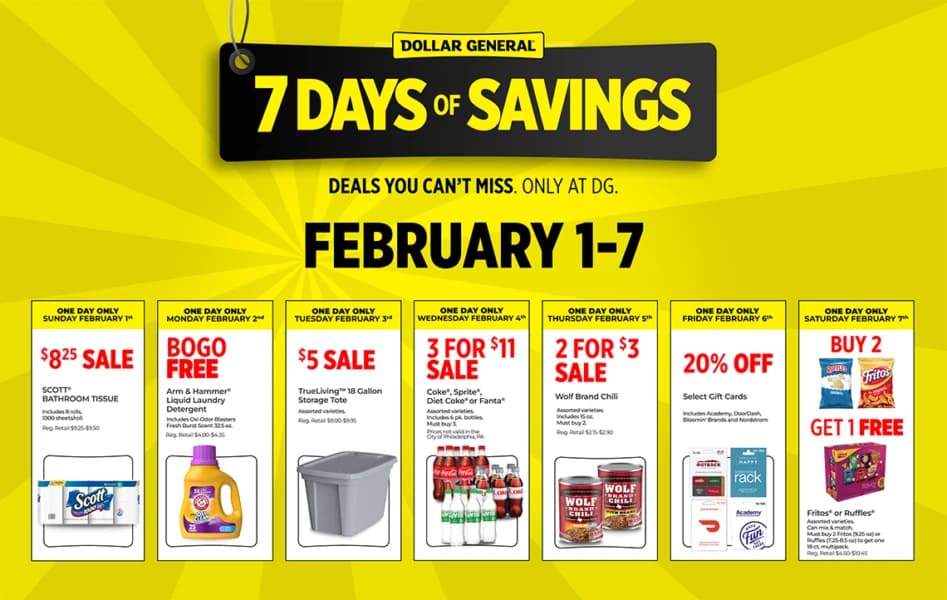
The clearest example is the May 4 offer tied to 7 Days of Savings, when Dollar General promoted 10% off Disney gift cards for one day only. A deal like that does more than draw a shopper looking for a bargain. It creates a rush of price checks, more questions at the front end, and a sharper risk that a featured item runs out before the rush is over.
Why limited-time promotions change the pace of a shift
Dollar General’s January 30 announcement of a winter 7 Days of Savings event, running February 1 through 7, made the operational logic plain. The company said each day would bring one new limited-time deal, and it said the event was designed to deliver more value across more than 20,000 stores nationwide. The same release made another point that matters to store teams: the offers were available while supplies last.
That phrase changes everything on the sales floor. When an advertised item is short-dated and limited, managers have to think about what will sell first, what has to be kept on shelf, and what signs need to be corrected before customers start asking why the deal is missing. For associates, that means the weekly ad is not just a flyer. It is a scheduling cue, a stocking cue, and a recovery cue all at once.
Promo weeks often bring a different kind of customer behavior than a normal week. People come in knowing what they want, they compare prices at the register, and they expect to find the featured item where the ad implied it would be. If that item is out of stock, the complaint lands on the nearest employee, even when the real problem started in the backroom or on the truck.
Where the pressure shows up inside the store
On the floor, a strong ad week usually changes four things at once: traffic, stocking pressure, recovery demands, and front-end workload. The traffic bump is not always dramatic in the sales report, but it is enough to make the same crew feel like it is working a different store.
- More customers check the same featured items over and over.
- More shoppers stop at the register with ad questions.
- More impulse-volume items get touched, moved, and left out of place.
- More shelf-edge signs need to match the promotion exactly.
That last point matters because a mispriced or misplaced ad item creates extra work even when the sale is real. Associates have to stop recovery, confirm pricing, and often explain why the ad only applies to a specific size, brand, or day. In a leanly staffed store, one interrupted task can quickly become three unfinished ones.
The best way to understand a Dollar General ad week is to follow a promoted item through the building. It starts with truck processing and the backroom. It moves to shelf resets and endcaps. Then it hits the register, where front-end questions and price checks slow down the line. By the end of the shift, the same promotion that pulled shoppers in has also created more cleanup, more face-fronting, and more resets.
Delivery makes the ad cycle even tighter
Dollar General’s January 2026 promotion announcement also showed how the company is trying to stretch the same offer across multiple channels. It said myDG Delivery was available at more than 17,000 stores nationwide, and that DoorDash and Uber Eats extended delivery coverage to over 18,000 stores. That means an ad week is no longer only about the people walking through the front door.
When a limited-time deal is visible to in-store customers and delivery customers at the same time, the demand pressure gets harder to predict. The store has to keep the shelf clean for shoppers, but it also has to keep enough inventory moving to meet same-day demand. For workers, that can mean more urgency around restocking featured items before the next wave of customers shows up.
It also explains why missed stocking can turn into immediate disappointment. A customer who sees a deal in the ad, in the store, or on a delivery app expects the item to be there. If it is not, the associate has to absorb the frustration even when the underlying issue is supply, timing, or a lapse in recovery.
The sales numbers show why timing matters
The company’s own results help explain why Dollar General cares so much about promotional rhythm. In first-quarter 2025, same-store sales rose 2.4% from the prior year, but customer traffic fell 0.3%. In second-quarter 2025, same-store sales rose 2.8%, with customer traffic up 1.5% and average transaction amount up 1.2%.
Those numbers suggest the mix matters. A store can post better sales without a big traffic gain if customers spend more per visit, and a strong promotion can help drive either more visits or a bigger basket. For employees, that translates into a simple reality: the ad calendar is not just about what sells, it is about how the store gets used.
That is also where Dollar General’s rotating in-store assortment called Value Valley fits in. In March 2026 earnings-call coverage, management described it as a traffic driver, another sign that low-priced, visible product placement is being used to bring customers into the store and keep them moving through it. It is the same playbook as weekly ads, only with a different shelf strategy.
What this means for the workweek
For district managers and store managers, the practical lesson is to treat promotional weeks like operational peak periods, not just selling periods. Ad sets need to be ready, featured items need to be tracked, and front-end coverage has to match the likely wave of questions. If the store runs light on staff, the ad week exposes that quickly because every price check, every out-of-stock item, and every abandoned cart adds friction.
For associates, the weekly ad is often the best clue for why a store suddenly feels busier than it did yesterday. When the deals are tight, the backroom is full, and the front end is crowded, the ad is driving the whole day. That is why Dollar General’s promo cycle belongs in workplace coverage, not just shopping coverage, because it shapes the rhythm of the store long before the last customer leaves.
This article was produced by Prism’s automated news system from verified source data, official records, and press releases, then run through automated quality and moderation checks before publishing. The system is built and supervised by the people who set the standards it runs under. Read our full AI policy.
Know something we missed? Have a correction or additional information?
Submit a Tip