Why Dollar General workers must master inventory control
Inventory control is where Dollar General’s store standards meet the P&L, and sloppy counts, damages, or markdowns can turn into more pressure on every shift.
Why inventory control is frontline work
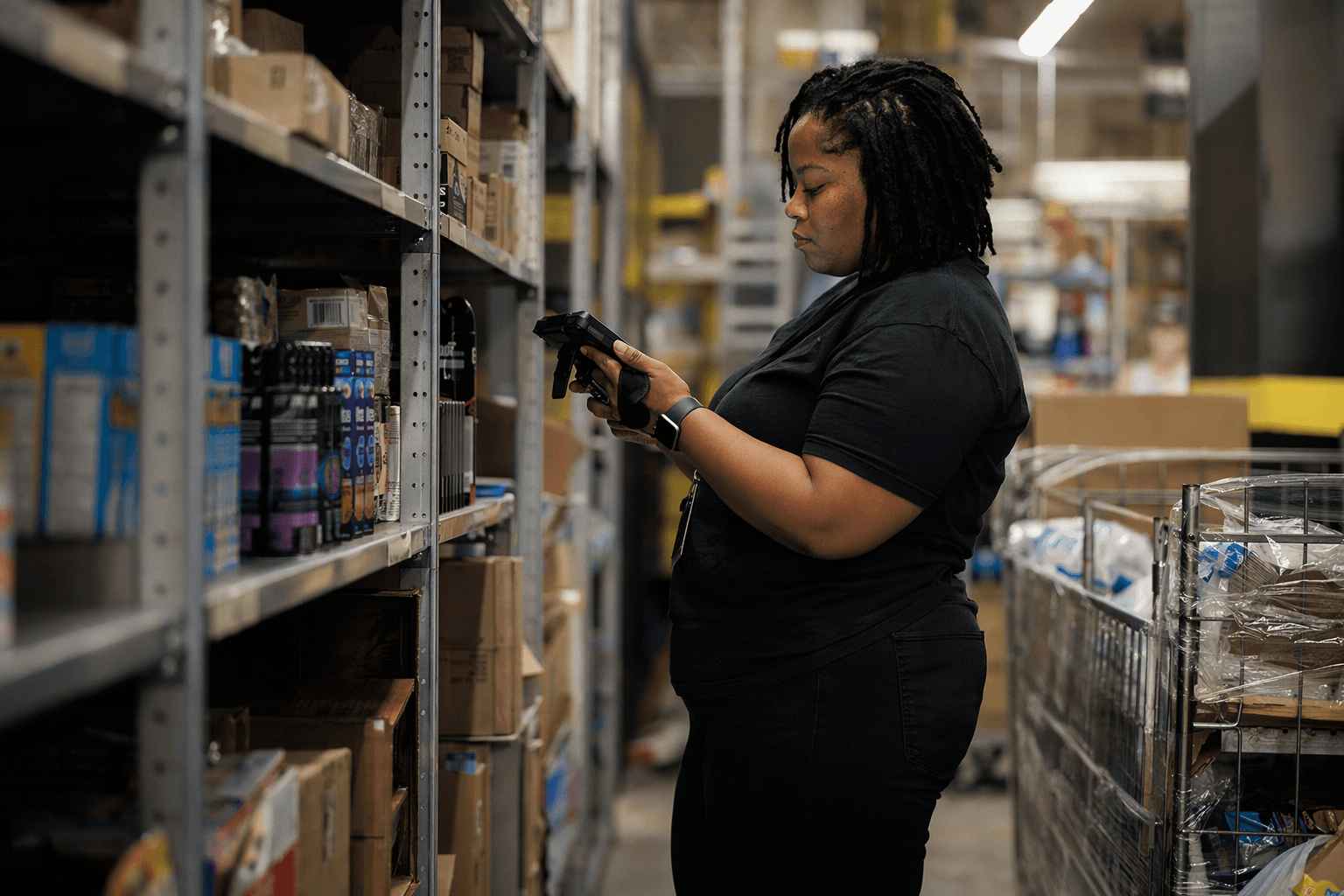
At Dollar General, inventory control is not backroom bookkeeping. It is the work that decides whether a store feels calm and shoppable or cramped, behind, and one missed task away from a bad day. When product is scanned correctly, counted honestly, and marked down on time, the floor stays easier to run, the backroom stays more usable, and employees spend less time chasing problems that should never have reached the sales floor.
That matters in a chain as large as Dollar General. The company said it had 20,594 stores across the United States and Mexico as of January 31, 2025, and it has been operating since 1939, marking its 85th anniversary in 2024. In a format built on tight labor and fast turns, small errors in inventory control can ripple quickly into customer complaints, recovery work, and pressure on store results.
Shrink is measured after the damage is already done
The National Retail Federation describes shrink as a trailing indicator of inventory loss. In plain terms, that means shrink does not show up in real time on a sales floor. It is measured after the fact, usually during a full physical inventory, and often only once a year or twice a year depending on the retailer. By the time shrink shows up in the numbers, the missed scan, the misplaced case, or the unhandled damage has already cost the store something.
That lag is exactly why inventory discipline matters on ordinary shifts. Every item that is not faced correctly, every seasonal package left too long, every missing sign or price tag, and every damaged item left in limbo makes the store harder to manage. The National Retail Federation has also described shrink as a major industry problem, and its September 22, 2023 blog said retail crime, violence, and theft were worsening across the industry. Trade reporting in October 2024 added another wrinkle: the NRF would not publish its annual shrink report that year while it reevaluated its tracking tools. That is a useful reminder that shrink is both a store-level reality and a measurement problem the industry still argues about.
What Dollar General expects from store workers
Dollar General’s own careers pages make the point that inventory work is part of the job, even at entry level. Store roles include stocking shelves, managing inventory, and providing customer service. That means inventory control is not a specialty task reserved for one backroom lead. It is built into the everyday job of keeping product moving and the store presentable.
The company’s assistant store manager and store manager postings go further. They explicitly mention controlling damages, markdowns, scanning, paperwork, facility controls, preparing inventories, and meeting in-stock targets. Those are not cosmetic duties. They are the operating habits that keep a store from drifting into chaos, especially when a location has a lot of freight, limited space, and customers who expect fast answers about what is in stock and what is not.
What workers can control on the floor
A lot of inventory loss is out of the hands of store staff. But a lot of the damage to store performance is not. Associates and managers control the basics every day, and those basics are where pressure either builds or eases.
- Scan merchandise accurately. Bad scans distort counts, hide errors, and create false confidence that product is on hand when it is not.
- Keep counts current. Physical inventory is where shrink is measured, but the habits that shape it are set long before the count begins.
- Pull and process damaged goods quickly. The longer damaged items sit in the wrong place, the more likely they are to create confusion, bad replenishment, or wasted time.
- Mark down items on time. Seasonal goods that linger too long can tie up space, distort in-stock planning, and make the sales floor look behind.
- Keep signs and price tags in place. Missing tags do not just frustrate customers. They slow recovery and make the store harder to shop and easier to misread.
These are simple tasks only on paper. In practice, they determine whether the next shift inherits a manageable floor or a trail of preventable fixes.
Why damages and markdowns hit harder than they look
Dollar General’s filings make clear that some shrinkage and damages are an unavoidable cost of doing business. The company also says higher shrink, higher damages, or higher security costs to combat theft can hurt results of operations and financial condition. That is not corporate language for accountants only. It is the warning label for store teams whose daily habits affect how much product can actually be sold.
The company’s results show how much these issues move the numbers. In fiscal 2024, Dollar General said its gross profit rate decline was driven primarily by increases in markdowns, inventory damages, and distribution costs, partly offset by lower shrink and higher inventory markups. In fiscal 2025, the story improved: the company said gross profit rate rose primarily because of lower shrink, higher inventory markups, and lower inventory damages. Dollar General said gross profit as a percentage of net sales was 30.4% in fiscal 2025, and by March 12, 2026, it said the fourth quarter and fiscal year 2025 gross profit rate increase was driven primarily by the same three factors.
That shift matters on the ground because it shows which behaviors help stores and which ones add drag. Fewer damages, cleaner markdown execution, and tighter shrink control do not just help the balance sheet. They reduce the amount of product that has to be chased, written off, or explained away.
Why managers care so much about the backroom
For store leaders, inventory control is also a labor issue. A backroom that is organized, counts that are accurate, and paperwork that is current save time that would otherwise be spent searching for missing product or reworking a bad recovery plan. That means a smoother day for the team and less pressure to make up for errors with overtime-like effort from people who are already stretched thin.
It also shapes morale. A store with poor stock discipline tends to create more customer complaints, more rushed recovery, and more time spent looking for product that should have been available in the first place. A store that keeps inventory tight is easier to open, easier to recover, and easier to defend when performance is reviewed.
The bigger lesson for Dollar General workers
Dollar General’s January 30, 2026 annual report said inventory shrink had significantly improved from prior elevated levels and that the company was continuing actions to improve shrink and damages. That is the clearest sign yet that inventory control is not a side project. It is one of the operating levers that can move store conditions, profitability, and the daily burden on the people working the floor.
For a retailer with more than 20,000 stores, the lesson is simple: the work of scanning, counting, marking down, and handling damaged goods is how a store protects its sales, its standards, and its team’s time. When inventory control slips, everything downstream gets harder. When it is done well, the store is easier to run, the floor looks better, and workers spend more of the shift serving customers instead of cleaning up avoidable mistakes.
This article was produced by Prism’s automated news system from verified source data, official records, and press releases, then run through automated quality and moderation checks before publishing. The system is built and supervised by the people who set the standards it runs under. Read our full AI policy.
Know something we missed? Have a correction or additional information?
Submit a Tip