Dollar General workers, federal wage rules cover pre- and post-shift tasks
Pre-shift setup, closing work, and required waiting can all affect a Dollar General paycheck. If your hours and paystub do not match, federal rules say document it fast.
What counts as paid time at Dollar General
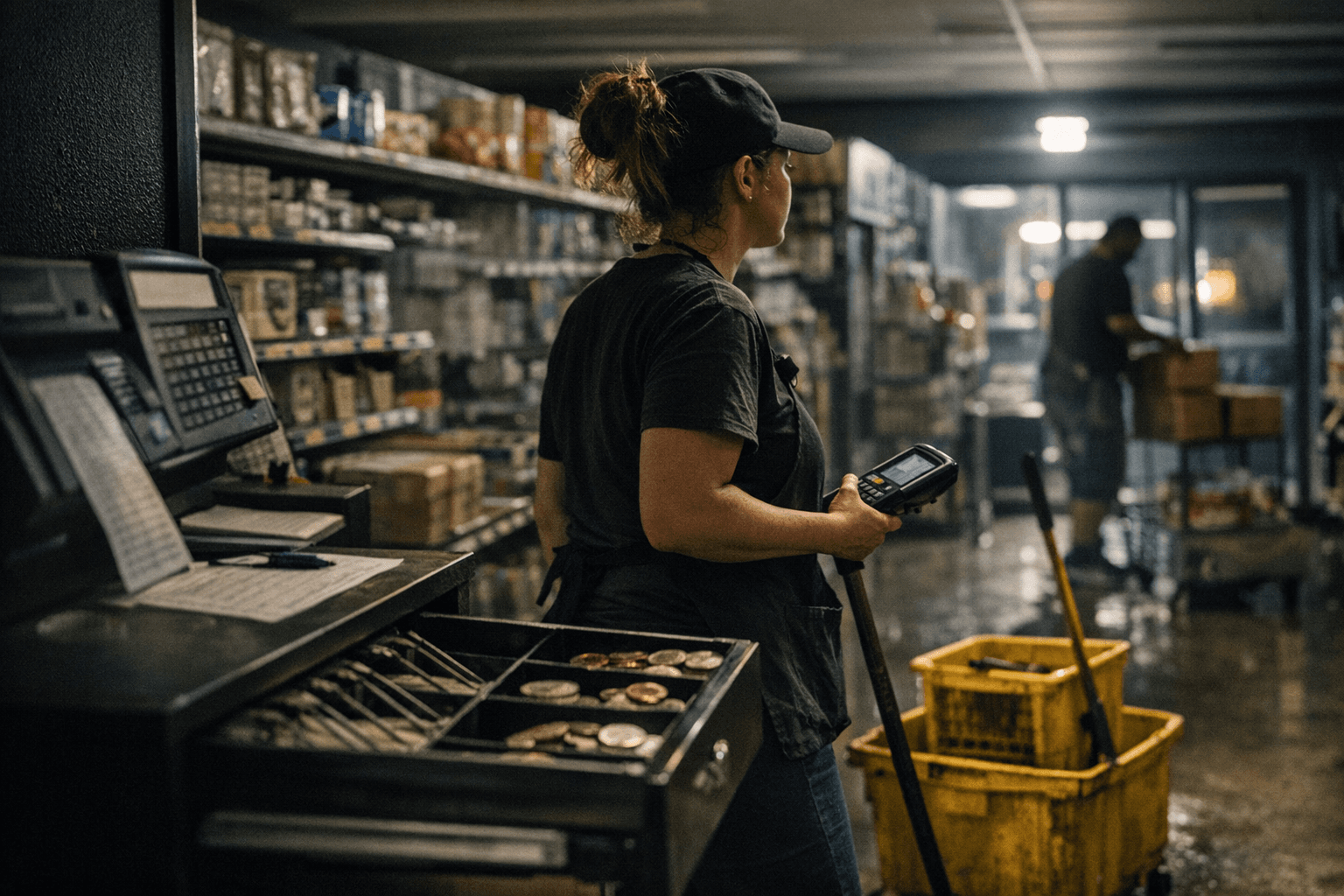
If Dollar General requires you to work before opening, stay after close, or remain on site waiting for direction, those minutes may belong on the clock. Under the Fair Labor Standards Act, covered nonexempt workers are owed at least the federal minimum wage and overtime at not less than one and one-half times the regular rate after 40 hours in a workweek. The Labor Department also says the amount owed cannot be figured without knowing how many hours were actually worked.
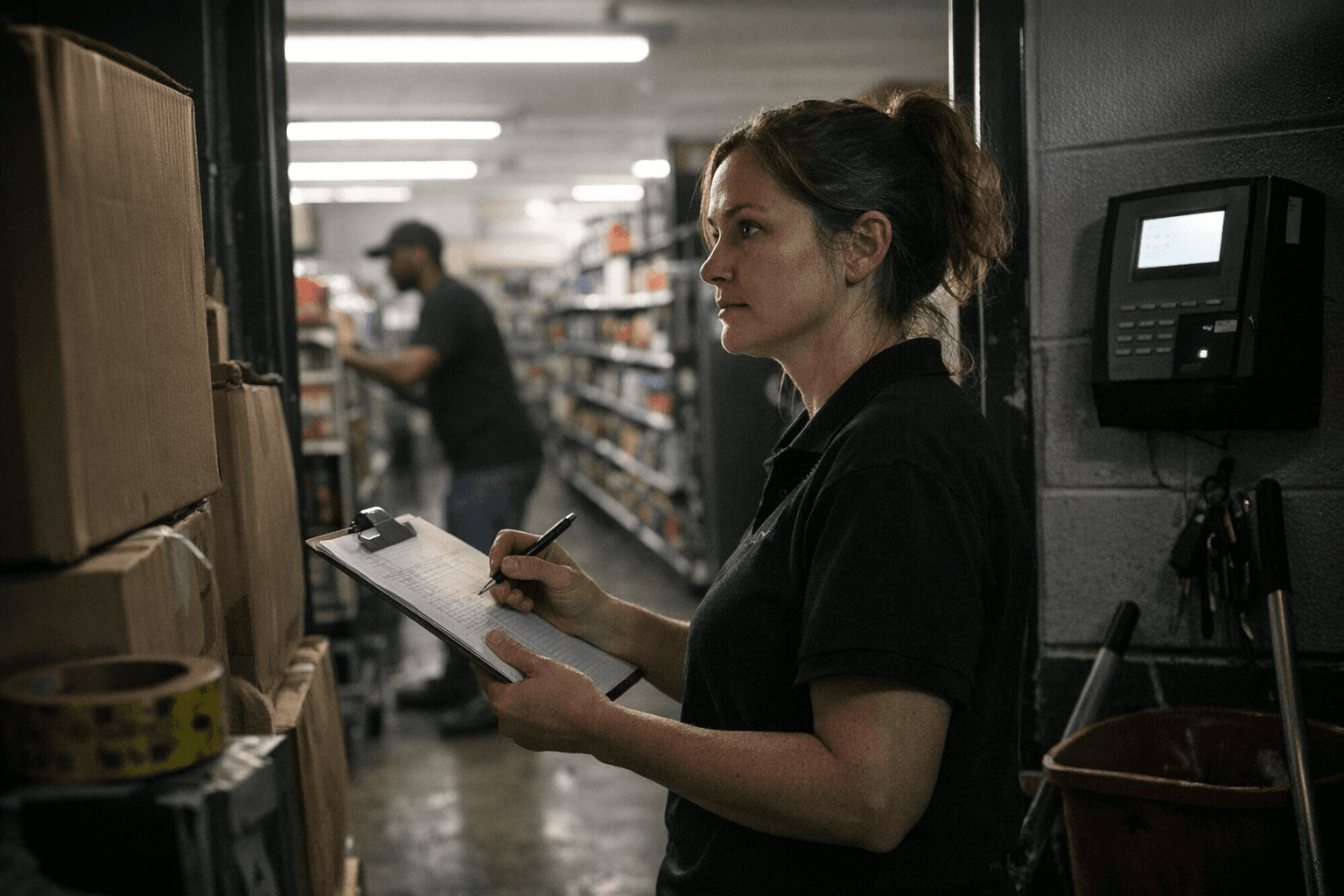
For retail workers, the baseline is the same. The department’s retail guidance says retail establishments are covered by the same wage rules, with only narrow exemptions for some commission-based employees. That matters in stores where work can spill outside a neat shift window: setting up the register, counting down, stocking, cleaning after close, helping with a delivery, or staying in the building because a manager has not arrived yet can all change whether the week was paid correctly.
The key question is not whether the task felt routine. It is whether Dollar General required it. Time on duty, time on the employer’s premises, and time at other required work locations generally count as hours worked. The Labor Department’s off-the-clock guidance also says waiting time can be compensable when workers are effectively engaged to wait. In plain terms, if you cannot leave, cannot use the time freely, and are being held for the store’s needs, that time may be work time.
- opening setup before the first customer arrives
- closing duties after the last sale is rung up
- required bag checks or security checks before leaving
- mandatory training, meetings, or refreshers
- waiting on site for a manager, a lockup, or a handoff that the store requires
That is why common retail tasks deserve attention even when they take only a few minutes:
At a chain where understaffing is a recurring complaint, those short stretches can add up fast. In a single-associate store or a shift stretched thin by call-outs, it is easy for extra work to happen before the punch-in or after the punch-out. The law does not treat those minutes as invisible just because the store is busy.
What to do if your paystub does not match your hours
The first step is to compare your own records with the hours on the stub. Write down your start and stop times, any required work done before clock-in or after clock-out, and any instruction to stay on site or keep working while waiting. If the schedule says one thing and the paycheck says another, the paper trail can make the difference between a corrected check and a lost wage claim.
A simple order helps: 1. Match the paystub against your schedule, punches, and any manager instructions. 2. Note every unpaid task, even if it was only a few minutes. 3. Raise the problem with your store manager, key holder chain, or payroll contact as soon as you spot it. 4. If the issue is not fixed, compare it with federal rules and then check your state law, because some states offer stronger protections than the federal floor.
That last point matters because federal law sets the minimum. A missed punch can be a clerical error, but repeated unpaid closing work, pre-shift setup, or off-the-clock assignments can be a real wage issue. For a cashier, stocker, or keyholder, the practical test is straightforward: if the company required the work, it should be reflected in the hours paid.
Why Dollar General workers are especially alert to pay problems
The pay issue does not sit in isolation. Dollar General, based in Goodlettsville, Tennessee, has spent years under labor scrutiny, and that history shapes how workers view every short pay period. In July 2024, OSHA announced a corporate-wide settlement with Dollar General and its retail subsidiaries that called for workplace safety improvements across more than 19,000 stores nationwide and carried $12 million in penalties. Federal officials said the goal was to improve safety for thousands of workers.
That settlement followed an even sharper warning. In July 2023, the Labor Department said Dollar General faced nearly $10 million in proposed penalties after more than 30 investigations in Alabama, Florida, and Georgia alone. OSHA said the company had already accumulated more than 200 failed inspections in those states by that point. When a company is repeatedly cited for safety problems, workers tend to look harder at everything else that happens on the clock, including whether labor is being captured and paid correctly.
The pressure has not stayed in the regulatory lane. In May 2024, more than 200 Dollar General workers and customers protested at the company’s annual shareholder meeting in Middle Tennessee to demand better safety and pay. Step Up Louisiana, a labor advocacy group based in New Orleans, has also said workers should not expect Dollar General’s stock to recover unless the company invests more in pay and safety. That kind of public pressure reflects a basic frustration many associates already know: low staffing and tight schedules can push unpaid work into the margins of a shift.
The legal history runs deeper still. Federal court records and class-action materials show a long-running pattern of overtime fights involving Dollar General store managers and other workers. A class action over unpaid overtime ended in an $8.3 million settlement approved in 2014, and later suits have alleged misclassification, unpaid overtime, and required off-the-clock meal breaks for some store workers, including key holders and assistant store managers. That history makes today’s pay questions less like isolated mistakes and more like part of a recurring workplace problem.
For Dollar General employees, the lesson is simple and immediate: keep track of every minute the store requires, especially the minutes before the shift starts and after it should have ended. In a company with a long record of safety fights, overtime disputes, and worker pressure, the safest assumption is that time worked should be time paid.
This article was produced by Prism’s automated news system from verified source data, official records, and press releases, then run through automated quality and moderation checks before publishing. The system is built and supervised by the people who set the standards it runs under. Read our full AI policy.
Did this article answer your question?