March spending holds up, but shoppers keep hunting for value at Dollar General
Shoppers are still buying, but they are doing it with a calculator in hand, which should show up in bigger value-seeking baskets and tighter trade-downs at Dollar General.
Shoppers are still buying, but they are doing it with a calculator in hand
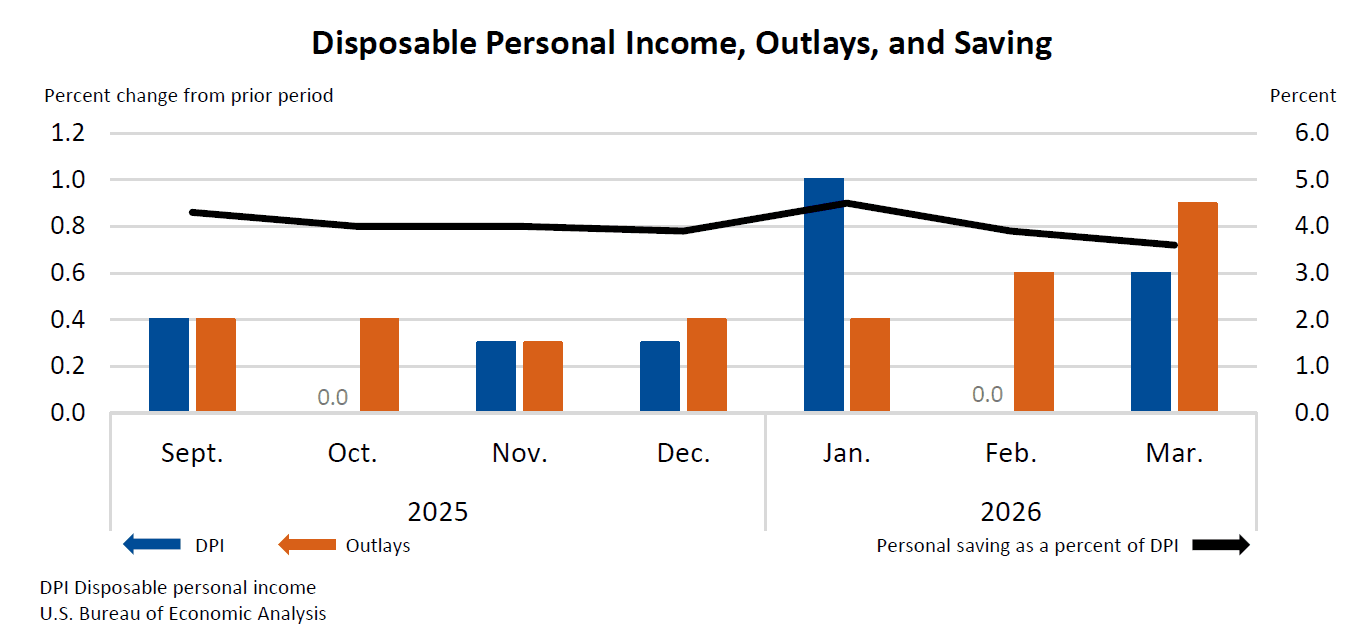
The clearest read from March is not that households have loosened up. It is that they are still spending while staying defensive. The Bureau of Economic Analysis said personal income rose $149.2 billion, or 0.6%, disposable income increased $142.5 billion, or 0.6%, and personal consumption expenditures climbed $195.4 billion, or 0.9%. For Dollar General workers, that combination points to customers who are walking in, but still scanning the shelf for the cheapest acceptable option.
That is the key shift to watch on the sales floor. When spending holds up but inflation is still running in the background, shoppers often do not abandon the basket, they reshape it. They swap brand names for private labels, choose smaller packs, and make more deliberate choices about which basics can wait until next trip. For a store built around everyday necessities, that means demand can remain steady even when customers are under pressure.
What the March BEA report is really signaling
The BEA’s March report showed more than just a pickup in spending. Personal outlays rose $198.6 billion, while the personal saving rate sat at 3.6%, with personal saving at $857.3 billion. That is a household picture that still has some resilience in it, but not much slack. People are buying, yet they are also keeping a buffer, which usually shows up as caution at the register.
The income side matters too. BEA said the March increase in current-dollar personal income primarily reflected higher compensation and farm proprietors’ income, partly offset by lower other government social benefits. That is important for Dollar General’s core markets, including rural communities in the United States, because paychecks and farm income often determine whether a week’s shopping trip includes the full basket or just the most urgent items.
The broader economy was not collapsing either. BEA’s advance estimate for first-quarter 2026 real GDP showed growth at a 2.0% annual rate, with consumer spending among the contributors. For store teams, that means the demand picture is still alive, but uneven. People are participating in the economy, yet they are doing it cautiously, and that caution is visible in what goes into the cart first.
How that shows up in a Dollar General aisle
If you spend enough time on a Dollar General floor, you can see this pattern before it shows up in a spreadsheet. Shoppers under pressure usually start with the essentials: paper goods, cleaning supplies, pantry staples, snacks, and personal care items that cannot be skipped for long. Then they start comparing price tags more carefully, and the transaction becomes less about brand loyalty and more about immediate value.
That is why the March report matters for basket-building. A 0.9% increase in spending, combined with 3.5% year-over-year PCE inflation and 3.2% core PCE inflation, tells you shoppers are still paying up in parts of the basket even while looking for relief elsewhere. In practical terms, that can mean a customer leaves with the toothpaste and the dish soap, but trades down on the cereal, buys a smaller detergent bottle, or grabs the value pack only if the unit price is clearly better.
Associates will notice the questions first. Customers ask which version is cheaper per ounce, whether a private brand tastes or works the same, and whether a digital coupon can shave enough off to justify buying one more item. That is not a sign of carefree spending. It is a sign of disciplined spending, and it rewards stores that keep shelf labels clear and prices easy to compare.
Why Dollar General’s own results fit the same story
Dollar General’s latest fourth-quarter fiscal 2025 results line up with the BEA’s picture of cautious but persistent demand. The company said net sales rose 5.9% to $10.9 billion, same-store sales increased 4.3%, customer traffic was up 2.6%, and average transaction amount rose 1.7%. Those are not numbers that suggest shoppers disappeared. They suggest shoppers came in more often and spent a little more when they did.
The category detail matters just as much. Dollar General said same-store sales grew in consumables, seasonal, home products, and apparel. That mix fits the kind of trade-down environment store managers know well: people keep buying basic goods, but they are selective about discretionary extras. Seasonal and impulse items can still move, but only when they feel timely, affordable, and easy to justify alongside essentials.
CEO Todd Vasos also framed the business around Dollar General’s value and convenience role, especially in rural communities. That matters because in many of those markets, the store is not just competing against another chain down the road. It is competing against limited time, limited transportation, and a shopper who wants to finish a week’s shopping trip in one stop. In that environment, “value” is not marketing language, it is the first filter customers use.
What workers should expect in the next few weeks
For store associates, the most likely pattern is not a sudden rush or a collapse, but a steady stream of careful shopping. Expect more price checks, more questions about digital coupons, and more customers comparing private brands with national labels. That tends to reward clean shelves, clear signage, and fast answers from staff who know where the savings are hiding.
For district managers, the report suggests demand can stay stable even when inflation is still squeezing households. The trade-off is that the mix may keep shifting toward essentials, smaller package sizes, and whatever looks like the lowest visible price on the shelf. That makes execution matter more than ever, because a store that is out of stock on a key consumable can lose a whole basket to a competitor or to a delayed purchase.
Dollar General has already been leaning into the tools that fit this environment: private brands, digital coupons, and its Value Valley offering. Those tactics matter because they give shoppers a way to stretch weekly food and household budgets without feeling like they are abandoning quality entirely. In a defensive spending cycle, that can be the difference between a full basket and an empty trip.
Why March is a useful checkpoint for the rest of 2026
March also looks stronger than February, which helps explain why the quarter still felt solid. BEA said February PCE rose 0.5%, while March PCE rose 0.9%, with February spending gains reflecting $58.7 billion more on goods and $44.5 billion more on services. March was the faster month, and that acceleration is worth watching because it suggests households were still active, not simply hanging on.
For Dollar General, that kind of momentum is especially relevant in stores that serve rural and suburban communities where value matters every day. The company’s March 12 announcement that it would release fiscal 2025 fourth-quarter and full-year results drew attention for a reason: investors wanted to know whether budget-conscious shoppers were still trading down into discount retail, or whether pressure was finally forcing them to cut back more sharply.
The March data argues for a middle view. Households are still spending, but they are shopping defensively. That is good news for a chain like Dollar General only if stores stay disciplined on in-stock, pricing clarity, and the basics customers need first. In this market, the winning basket is not the biggest one. It is the one that feels worth every dollar.
Know something we missed? Have a correction or additional information?
Submit a Tip