OSHA Updates Heat Safety Program, Raising Stakes for Dollar General Stores
OSHA renewed its indoor heat enforcement program April 10. Dollar General, which settled $12 million in safety violations in 2024, is already in the agency's sights.
OSHA updated its National Emphasis Program on April 10, directing agency inspection resources toward indoor and outdoor heat hazards and expanding a program that has already placed Dollar General stores squarely in federal enforcement crosshairs.
The program, which OSHA first launched in April 2022, gives federal inspectors explicit authority to conduct targeted outreach and inspections in industries and workplaces where heat stress risks are highest. The April 10 update comes days after the previous extension expired and signals that heat enforcement, including indoor heat in retail environments, will remain an active federal priority heading into summer.
For Dollar General, the timing is pointed. The company agreed in July 2024 to a $12 million OSHA settlement resolving a backlog of contested safety citations, and remains enrolled in the agency's Severe Violator Enforcement Program, a designation OSHA reserves for employers it says have "demonstrated indifference" through repeated or willful violations. That settlement addressed blocked emergency exits, blocked electrical panels, and unsafe storage conditions at stores nationwide. Heat exposure was not cited in that agreement, but the underlying dynamic, stores with physical hazard risks that go unaddressed, is precisely what the updated NEP is designed to surface.
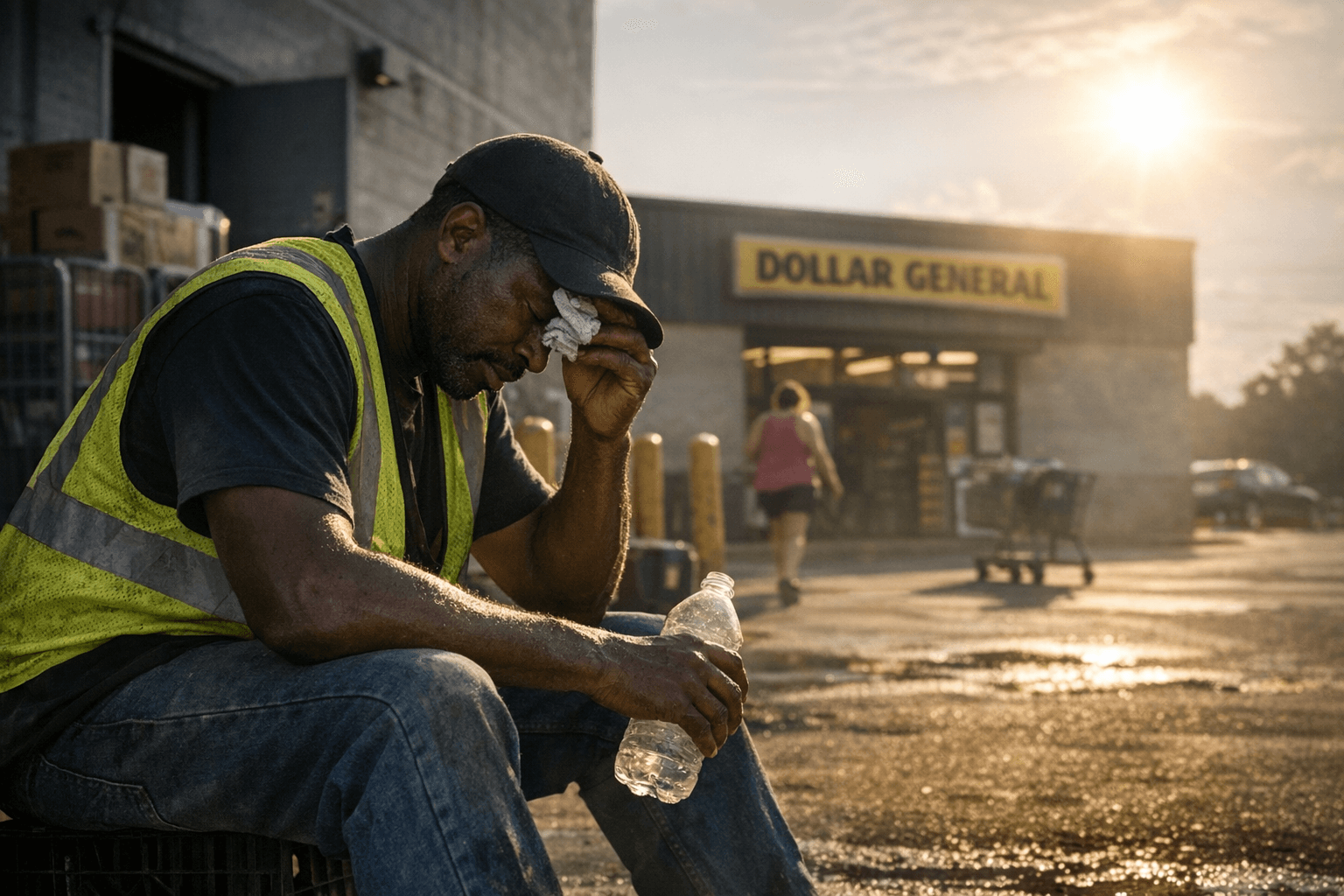
Dollar General's store footprint creates specific heat exposure risk. The chain's small-format locations, many of them staffed by a single associate during evenings and overnight shifts, often have limited HVAC capacity and back rooms where merchandise is stacked in close quarters near refrigeration units that generate ambient heat. A malfunctioning cooling system in a rural store with one person on shift is not a theoretical scenario. It is a condition that can escalate quickly when there is no clear reporting mechanism, no backup coverage, and no contingency plan.
OSHA's April 10 release identified the core compliance requirements employers must demonstrate: accessible hydration, rest breaks, cooling mechanisms, and documented heat-stress training. Managers who remember the settlement's 48-hour abatement standard should apply the same urgency here. Pull HVAC service records before peak summer temperatures arrive. Confirm break room postings include heat-stress guidance. Establish a clear protocol for what happens when an associate reports the store is getting hot and the air conditioning is not responding.
Associates working solo shifts carry the most direct risk. The updated NEP strengthens the regulatory basis for reporting heat problems without fear of retaliation, and logging temperature readings or filing through company incident channels creates documentation that protects workers and also shields good-faith managers if an inspector arrives.
A company that has logged more than 240 federal inspections and a $21 million penalty record since 2017 understands how enforcement cycles operate. OSHA's renewed attention to indoor heat is not a warning shot directed at some distant future; it is the program running. The question for Dollar General's store teams this summer is whether heat hazards get managed before an inspector identifies them, or after.
This article was produced by Prism’s automated news system from verified source data, official records, and press releases, then run through automated quality and moderation checks before publishing. The system is built and supervised by the people who set the standards it runs under. Read our full AI policy.
Did this article answer your question?