OSHA warns cramped stockroom stacking can strain Dollar General workers
Cramped stockrooms can turn routine stocking into strains, falls and blocked exits. OSHA’s Dollar General settlement shows why the safest fix starts with how product is stacked.
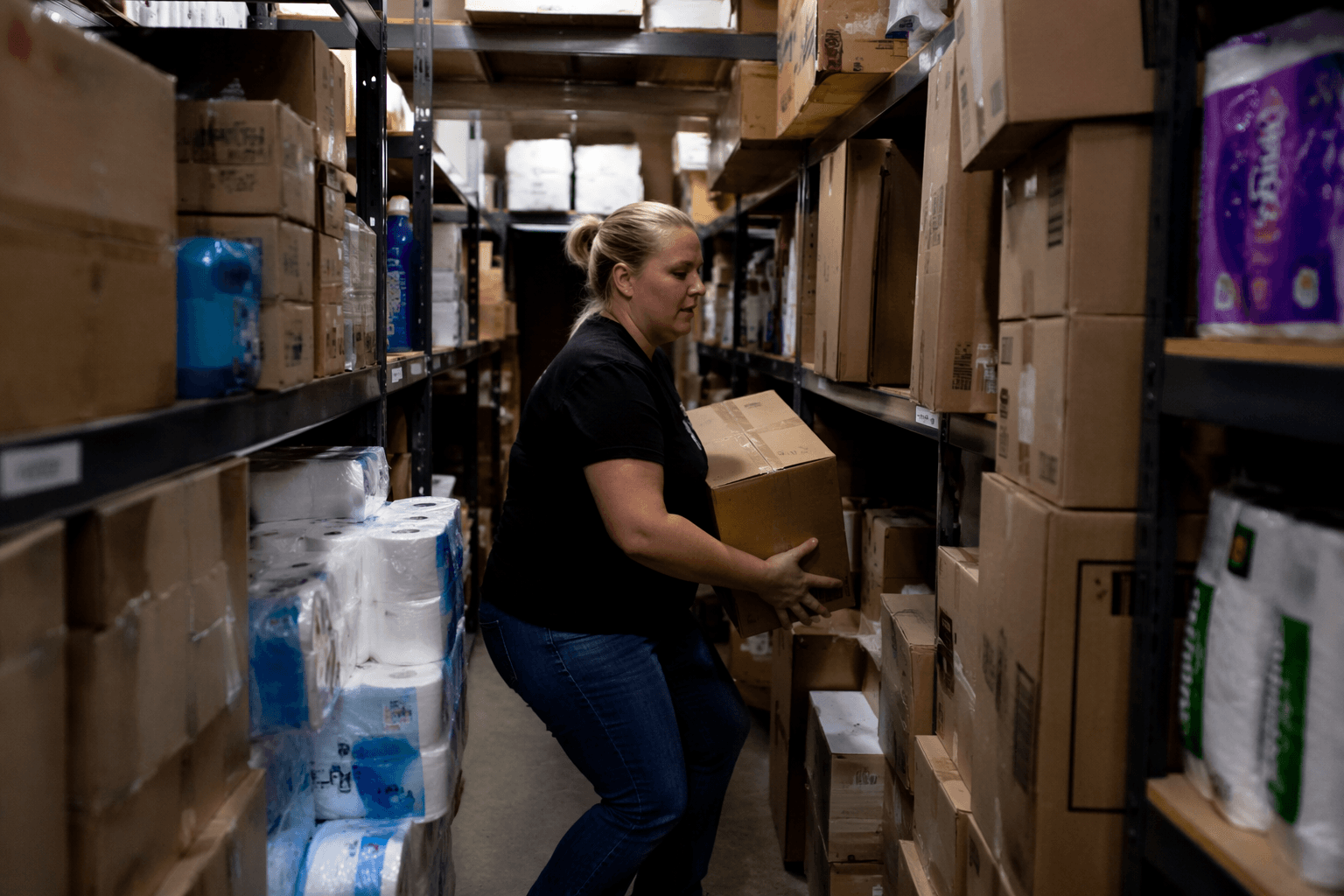
In a Dollar General stockroom, the fastest way to save space can be the easiest way to get hurt. OSHA’s storage guidance turns that everyday pressure into a simple test: if the stack forces bending, reaching, or twisting, the setup needs to change before someone gets strained or a box comes down on a worker.
Spot the risk before the shift gets busy
OSHA’s grocery-warehousing guidance is blunt about the body mechanics that cause trouble. Low racking can force employees to bend at the waist, heavy product should not be stacked so high that it has to be lifted above mid-chest, and double or triple slotting can add more bending and reaching than a backroom can safely absorb. The practical warning for store teams is straightforward: what looks efficient on a crowded shelf may quietly turn into back, shoulder, and wrist pain after enough repetitions.
That is why the small setup choices matter so much. OSHA recommends lowering pallets to more appropriate heights before selection and using tools like pick sticks or hooks to bring lighter product closer to the edge before lifting. In a discount-retail stockroom, where space is limited and dense stacking is common, those are not just warehouse tricks; they are the difference between a clean pick and a lift that puts weight, visibility, and balance all in the wrong place.
Why Dollar General’s scale makes this a worker issue, not just a housekeeping issue
Dollar General’s footprint makes these storage decisions consequential across far more than one location. As of January 31, 2025, the company reported 20,594 Dollar General, DG Market, DGX and pOpshelf stores across the United States and Mexico, and said it had more than 180,000 employees. The chain, founded in 1939, reported net sales of $40.6 billion and operating profit of $1.7 billion for fiscal 2024, a scale that makes backroom habits a broad labor and safety issue rather than an isolated store problem.
That scale also matters because stockroom practices are often set by habit. If a store is routinely using every inch of backroom space, the pressure to stack higher, slot deeper, and keep product moving can become normal even when it is not safe. OSHA’s guidance is useful precisely because it gives workers and managers a way to look at the room, not just the sales floor, and ask whether the layout is forcing bad body positions all day long.
What OSHA’s settlement changed for Dollar General
The company’s recent OSHA settlement put a price tag and a deadline on those risks. On July 11, 2024, OSHA announced a corporate-wide settlement with Dollar General that required $12 million in penalties and storewide safety changes. The agreement required the company to reduce inventory and increase stocking efficiency to prevent blocked exits and unsafe material storage, and it also called for a safety and health committee with employee participation plus training for both leadership and non-managerial employees.
The settlement also made the cleanup clock explicit. Future hazards such as blocked exits, blocked access to fire extinguishers, blocked access to electrical panels, and improper material storage generally had to be corrected within 48 hours, with daily monetary assessments for failures to comply. For workers, that means the backroom is not just an operations space anymore; it is an area where a bad stack can become a reportable hazard quickly if management does not move on it.
A shift-level checklist for safer stacking
The easiest way to use OSHA’s guidance on the next shift is to focus on reach, weight, and visibility. If the setup is making any one of those worse, it is time to reset the pallet or the slot before the work continues.
- Keep heavy product below the point where it must be lifted above mid-chest.
- Lower pallets to more appropriate heights before selecting product.
- Avoid low racking that forces repeated bending at the waist.
- Limit double or triple slotting when it creates extra reaching and twisting.
- Use pick sticks or hooks for lighter product that sits too far back to grab cleanly.
- Leave aisles, exits, fire extinguishers, and electrical panels clear before more freight goes up.
That checklist sounds basic because the hazards are basic. A cramped stockroom does not need to collapse for it to hurt somebody. Repeated awkward lifts and short, hurried reaches are enough to create the nagging injuries that build over time, especially when the room is packed to the edge and the day is moving faster than the layout can handle.
Why the broader enforcement record matters
Dollar General’s settlement followed a long enforcement history. OSHA said in January 2023 that the company had been fined more than $15 million since 2017 after more than 180 inspections nationwide. That release pointed to 19 store inspections in Alabama, Florida and Georgia in the prior 11 months, underscoring that the same kinds of hazards kept appearing across different stores and different states.
The broader policy backdrop shows why ergonomic risk can be overlooked even when it is common. OSHA’s general ergonomics guidance says grocery workers commonly experience musculoskeletal disorders such as back injuries, and it tells employers to reduce bending, twisting, and overhead reaching. OSHA also says it will consider whether an ergonomic hazard is recognized, whether it is likely to cause serious physical harm, and whether a feasible means exists to reduce it, which is why daily layout choices and training matter so much in discount retail.
A Government Accountability Office report reinforces the point. It found that OSHA cited warehouse and last-mile delivery employers for more than 2,500 workplace violations from fiscal 2018 through fiscal 2023, but only 11 involved ergonomic hazards. That gap suggests the injuries that build slowly in backrooms and storerooms can be easier to ignore than the hazards that stop a store cold, even when they are just as real for the people doing the lifting.
For Dollar General teams, the lesson is practical: cramped storage is not a neutral space, and efficiency is not safe unless the setup protects the worker doing the pick. When stacks stay below mid-chest, aisles stay open, and product is stored with reach and weight in mind, the backroom becomes easier to run and harder to get hurt in.
This article was produced by Prism’s automated news system from verified source data, official records, and press releases, then run through automated quality and moderation checks before publishing. The system is built and supervised by the people who set the standards it runs under. Read our full AI policy.
Know something we missed? Have a correction or additional information?
Submit a Tip