Blankfein Discusses Iran Oil Shock as Goldman Raises Price Forecasts
Lloyd Blankfein said the Iran shock could linger even as Goldman lifted oil forecasts, showing how markets can stay calm until supply assumptions break.

Lloyd Blankfein’s message on the Iran oil shock was simple, and uncomfortable for traders: the market can look composed right up until the supply math changes. The former Goldman Sachs chairman and chief executive used a January 18 interview on CNN’s Fareed Zakaria GPS to talk through geopolitics, his memoir Streetwise: Getting To and Through Goldman Sachs, and the market’s ability to absorb a shock that has looked increasingly severe.
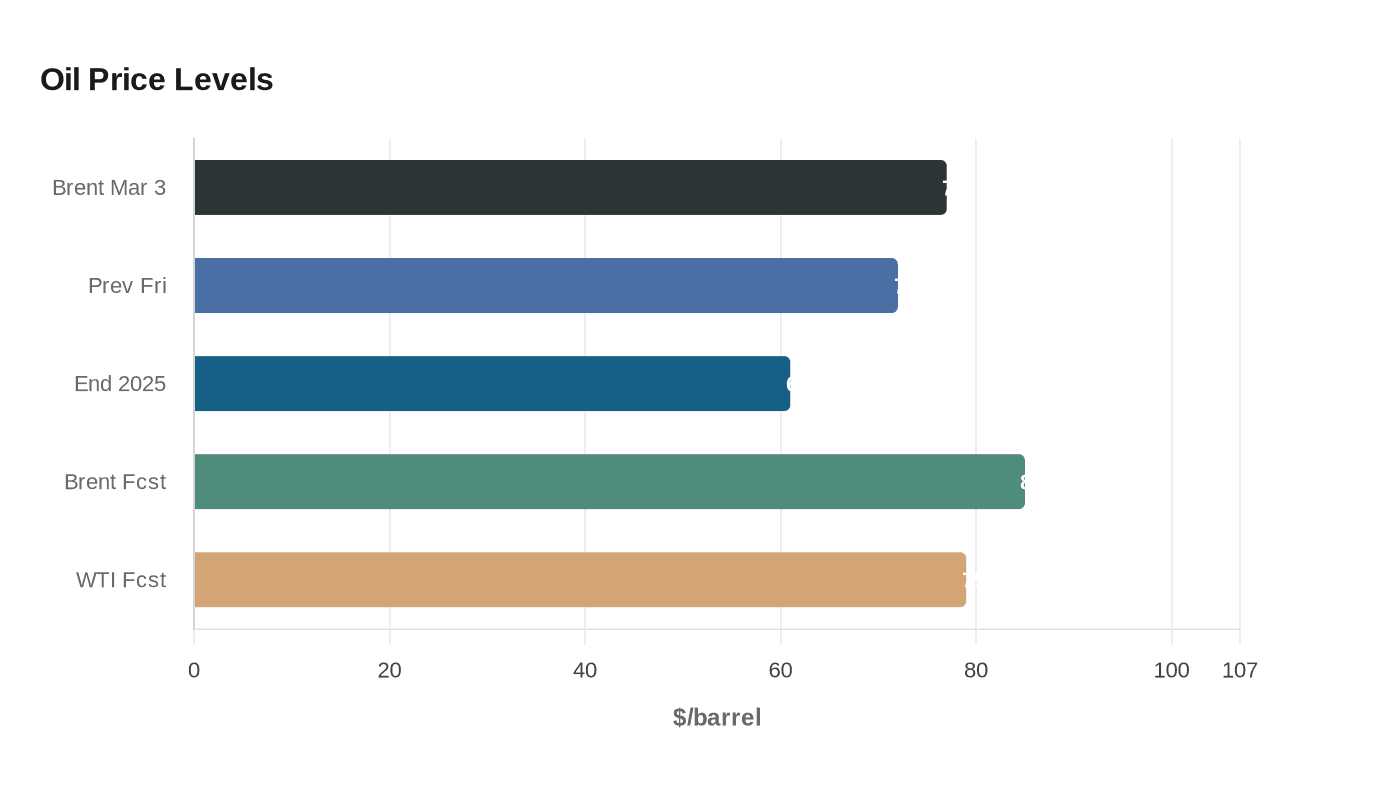
Goldman’s own oil desk later put numbers on that calm. On March 3, the firm said traders were already paying about $14 a barrel in conflict-related risk premium, with Brent at $77, up from $72 the prior Friday and $61 at the end of 2025. The bank said a full four-week closure of the Strait of Hormuz could lift oil prices by as much as $15 a barrel without offsets, a reminder of how much hinges on a shipping lane that normally carries around one-fifth of global oil and LNG supply.
That is the logic behind the apparent contradiction Blankfein was describing. Markets are often willing to price a temporary disruption rather than assume a permanent collapse in supply. Goldman’s analysis said that expectation can unwind fast if investors conclude actual barrels will not be taken offline. The problem now is that the longer the closure and shipping disruptions persist, the harder that assumption is to defend.
The scale of the shock is not abstract. Goldman said Iran produced about 3.5 million barrels a day of crude oil and 0.8 million barrels a day of condensate in 2025, roughly 4% of global oil supply. By March 22 and 23, Goldman had raised its 2026 Brent forecast to $85 a barrel from $77 and its WTI forecast to $79 from $72, calling the Strait of Hormuz disruption the largest-ever supply shock for the global crude market.
Blankfein, who led Goldman from 2006 to 2018, tied that market view to the lesson investors keep relearning in geopolitical crises: plan for contingencies before the headline risk becomes a balance-sheet risk. In later comments around the war, he said the fallout was likely to last, even if a resolution arrived tomorrow, while arguing the war itself would not last long because it was too costly for all sides. That mix of short war, long damage and volatile pricing has already shown up across markets, with CNBC noting sharp moves in stocks, bonds, currencies and commodities and Reuters reporting oil briefly above $126 a barrel as supply fears intensified.
Know something we missed? Have a correction or additional information?
Submit a Tip