FDIC says U.S. banks remain profitable, stable amid volatility
U.S. banks are still printing profits and gathering deposits, but that does not automatically translate into easier bonuses or hiring at Goldman.
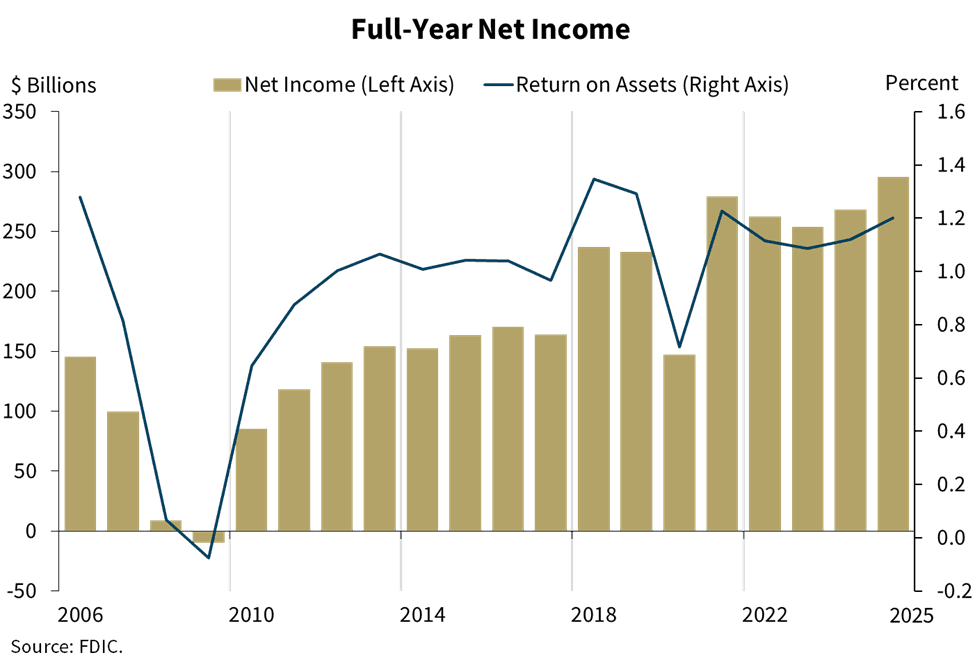
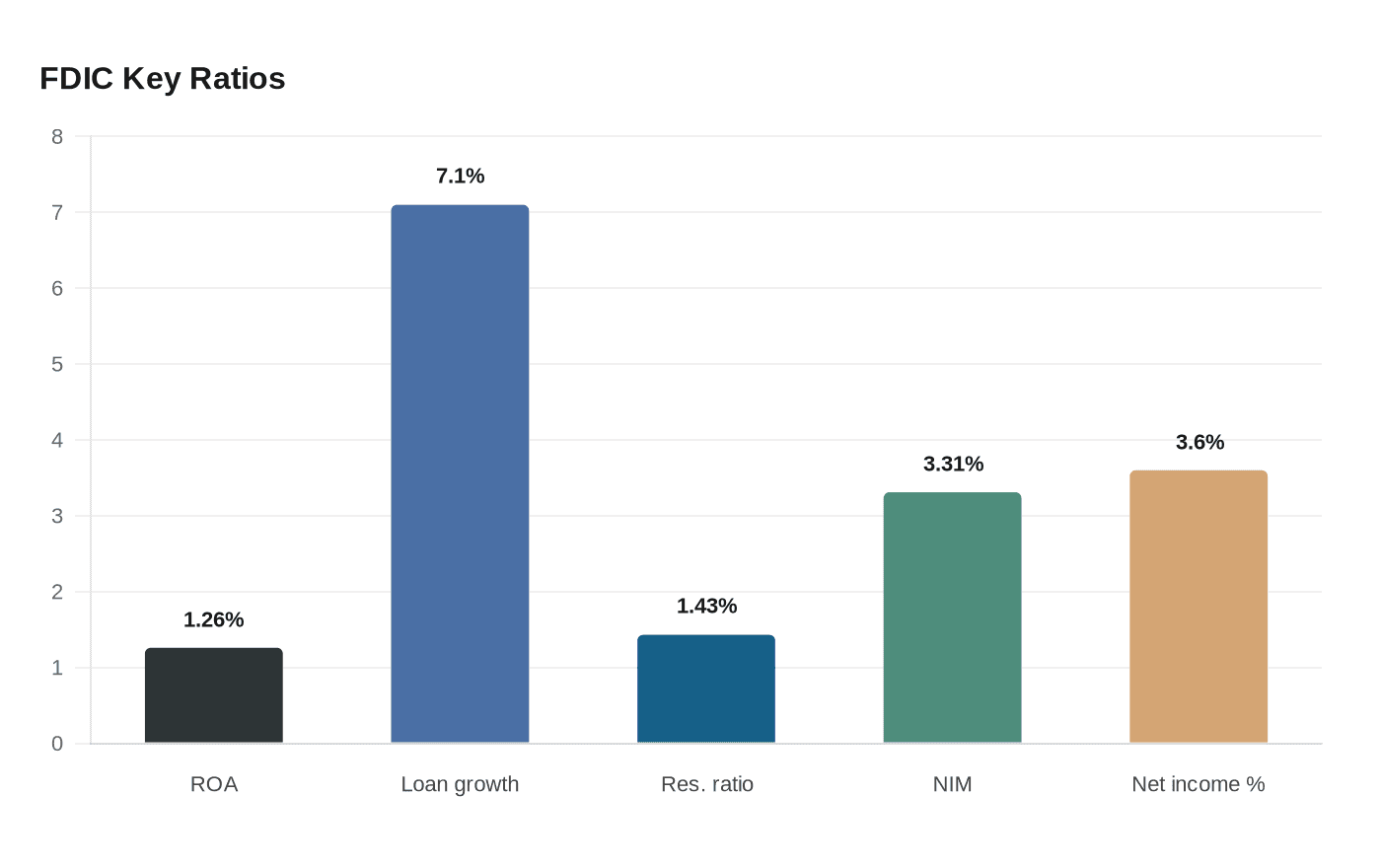
Goldman Sachs employees looking for a clean read on bonus season should not mistake the FDIC’s latest banking snapshot for a blanket tailwind. U.S. insured banks stayed profitable and liquid in the first quarter, posting a 1.26% return on assets and $80.5 billion in aggregate net income, but the message for an investment bank is narrower: the system looks stable, not slack.
The Federal Deposit Insurance Corporation said net income rose $2.8 billion, or 3.6%, from the prior quarter, while domestic deposits increased for the seventh straight quarter. Loan growth rose 7.1% from a year earlier, net operating revenue climbed to $282.7 billion, and the Deposit Insurance Fund reserve ratio rose to 1.43%. The industry’s net interest margin did fall 8 basis points to 3.31%, a reminder that even healthy banks are still managing margin pressure as rates and competition shift. The report covered 4,278 insured commercial banks and savings institutions, and the FDIC said the number of banks on its Problem Bank List fell by a net six to 54.

For Goldman bankers, the takeaway is not that clients are suddenly flush in a way that guarantees more underwriting or M&A. It is that the backdrop is sturdy enough to keep conversations moving. Stable deposits and solid liquidity make it easier for corporates and institutions to finance investment, roll debt and consider transactions. That can support fee pools in lending, capital markets and treasury services. But it also means competitors are not under siege. When the industry is healthy, rivals can price aggressively, hire selectively and fight harder for wallet share. In practice, that puts more pressure on Goldman coverage teams and product specialists to prove why the firm deserves the mandate, not just assume it will get one.
Goldman’s own first-quarter numbers show why employees should read the FDIC report as context, not prophecy. The firm reported $17.23 billion in net revenues, $5.63 billion in net earnings, earnings per share of $17.55 and an annualized return on equity of 19.8%. Equity financing revenue hit a record $2.6 billion, up 59% year over year, while assets under supervision reached a record $3.7 trillion and long-term net inflows totaled $62 billion. David Solomon said clients kept leaning on the firm in a more volatile market and pointed to disciplined risk management.
That is the real split to watch. The FDIC data suggest the banking system is not flashing stress, which helps confidence and keeps financing open. But Goldman’s pay, promotions and headcount decisions will still depend on how much of that stable backdrop turns into revenue, and how much of it gets competed away before year-end.
This article was produced by Prism’s automated news system from verified source data, official records, and press releases, then run through automated quality and moderation checks before publishing. The system is built and supervised by the people who set the standards it runs under. Read our full AI policy.
Did this article answer your question?