Fed keeps Goldman Sachs capital buffer unchanged until 2027
Goldman’s 3.4% stress buffer stays fixed through September 2027, giving desks a steadier read on capital for lending, trading and payouts.
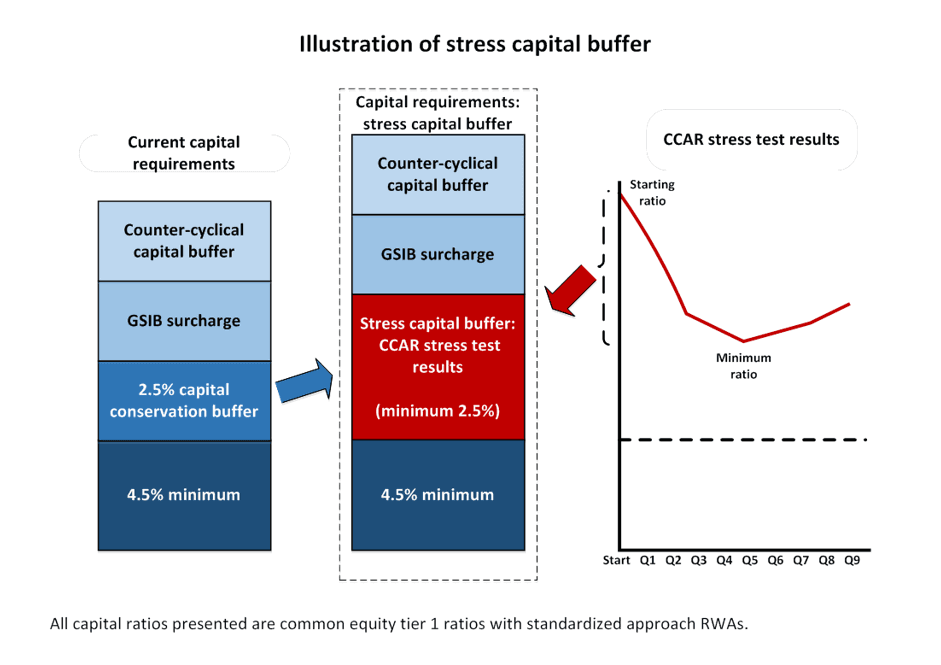
Goldman Sachs will keep its stress capital buffer at 3.4% through September 30, 2027 after the Federal Reserve Board voted in February to hold current requirements unchanged until 2027. For people inside the firm, the practical effect is less drama in balance-sheet planning: trading desks, bankers, and product teams can map out staffing, client commitments, and capital use against a known requirement instead of a moving target.
The Federal Reserve’s June 2026 large-bank capital requirements document said the rules in that publication stayed the same as the requirements disclosed in 2025. The standard framework still starts with a 4.5% minimum common-equity tier 1 ratio, adds a stress capital buffer of at least 2.5%, and, for global systemically important banks, layers on a surcharge of at least 1.0%. Goldman’s standardized CET1 requirement under the 2026 action is 11.4%, and that figure matters far beyond compliance staff in New York and Washington. It affects how much risk the firm can warehouse, how much lending it can extend in different products, and how aggressively management can fund shareholder returns and internal investment.

The Fed’s June 24 stress-test results said large banks were still well positioned to weather a severe recession and continue lending to households and businesses. That message gives Goldman a steadier operating backdrop, even if it does not remove capital discipline from day-to-day decisions. In practice, a stable buffer gives finance, treasury, and business heads more room to plan around the same constraints for another cycle, which can make it easier to set revenue targets, allocate headcount, and decide where to push growth without worrying that a fresh capital reset will land in the middle of budgeting season.
Goldman’s own disclosures show why the buffer matters to its strategy. The firm said in July 2025 that its SCB would be 3.4%, producing a 10.9% standardized CET1 requirement effective October 1, 2025, before later updates lifted that requirement to 11.4%. The Fed had also cut Goldman’s preliminary 2024 SCB from 6.4% to 6.2% after the firm’s reconsideration request, a rare adjustment that underscored how closely Goldman manages its capital math.

The policy freeze also landed amid a split at the Fed. Michael S. Barr opposed locking stress-capital buffers at prior levels, arguing that the tests would stagnate, while Michelle W. Bowman said the extension would support a more credible testing program as models and scenarios were revised. For Goldman, the result is a clearer runway: 2025 net revenues of $58.3 billion, EPS of $51.32, and ROE of 15.0% now feed into planning with a capital rulebook that is not changing again until 2027. The firm’s Capital Solutions Group, created in 2025, sits squarely in that environment, where capital availability is part of the product itself.
This article was produced by Prism’s automated news system from verified source data, official records, and press releases, then run through automated quality and moderation checks before publishing. The system is built and supervised by the people who set the standards it runs under. Read our full AI policy.
Did this article answer your question?