Goldman economist says K-shaped economy fears overblown, warns 2026 divide could widen
David Mericle says Goldman’s K-shape scare is overblown for now, but 2026 could split the economy more sharply by income and job security.

Goldman Sachs chief U.S. economist David Mericle says the market’s K-shaped economy obsession has been exaggerated so far. The bigger issue for 2026, he warned, is whether a still-healthy headline economy masks a worsening split underneath, with lower-income households, weaker workers and credit-sensitive businesses feeling the strain first.
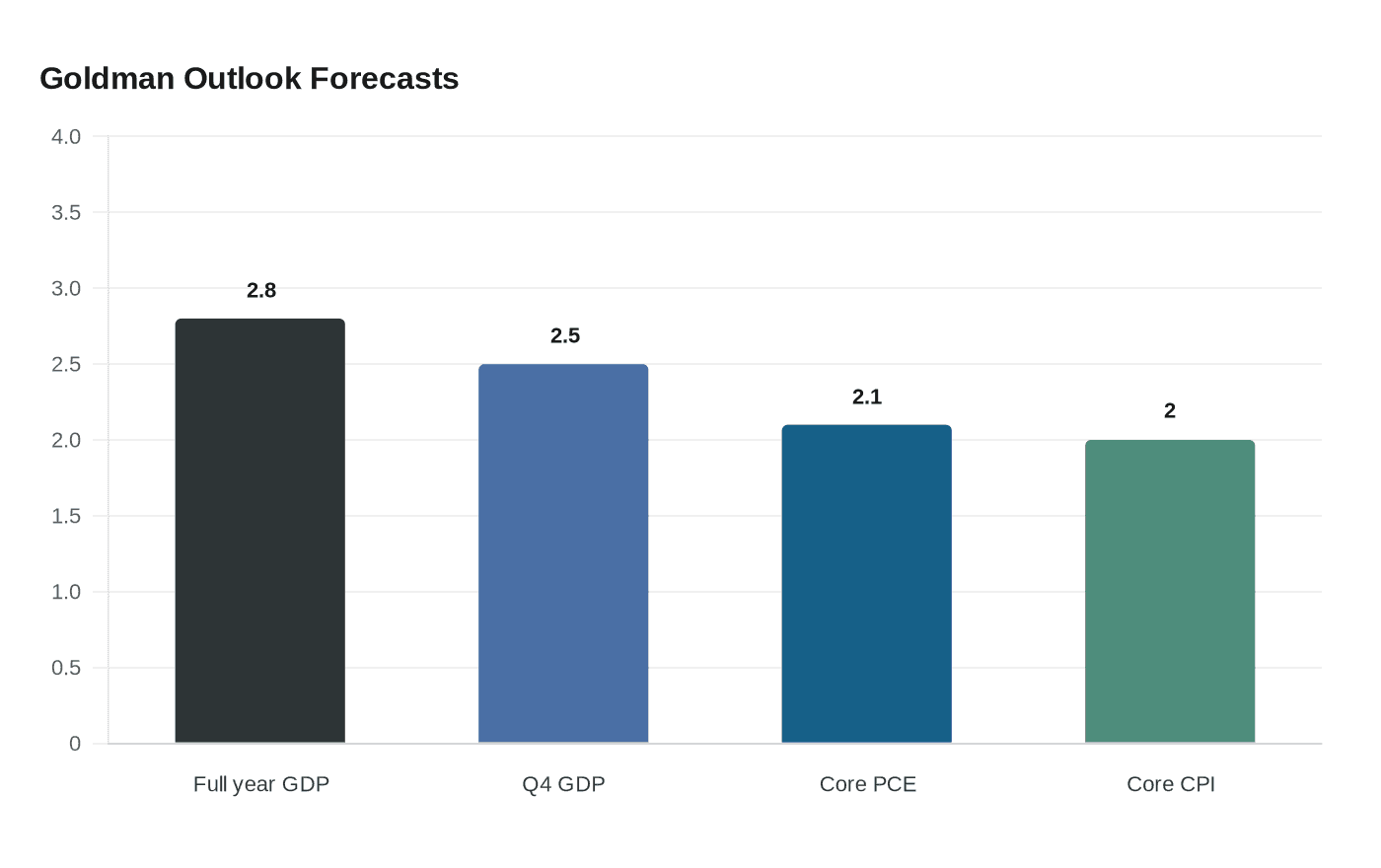
Goldman’s January 11 outlook painted a sturdier macro picture than many economists expected. The firm forecast U.S. GDP growth of 2.8% for the full year and 2.5% year over year in the fourth quarter, cut its 12-month recession probability from 30% to 20%, and said core PCE inflation should fall to 2.1% by December and core CPI to 2.0%. Mericle said his strongest conviction views were above-consensus growth and below-consensus inflation, even as he stressed that the labor market remained the key risk.
That labor warning matters more than the GDP print for Goldman clients trying to read the year ahead. Mericle said companies are increasingly talking about layoffs and using artificial intelligence to cut labor costs, making jobless growth a plausible alternative, much like the early 2000s recovery. Goldman also expects lower immigration to reduce labor-supply growth, which would weigh on job and income growth at the low end even if output holds up. For employees across Goldman’s client base, that is the signal to watch first: hiring plans, layoff chatter, and whether AI is showing up as productivity or headcount reduction.
The divide is likely to show up unevenly across consumers and corporate deal flow. Goldman said tax cuts, real wage gains, rising wealth, easier financial conditions and reduced policy uncertainty should support spending and business investment, while the drag from tariffs in 2025 should give way to a fiscal boost from business and personal tax cuts in 2026. That combination helps explain who wins first: higher-income households, asset owners and companies with access to capital, while lower-income households face weaker job growth, reduced benefits and higher fuel costs later in the year. The Minneapolis Fed has said the K-shaped economy label became ubiquitous in 2025, often used to describe diverging consumption patterns.
For Goldman bankers and analysts, that means watching consumer strength, credit quality and deal activity together rather than in isolation. Stronger affluent spending can keep parts of retail, travel and wealth-management flows intact, but softer job growth at the low end could pressure delinquency trends, narrow demand for discretionary goods and make lower-quality borrowers more cautious. If AI lifts productivity as Goldman expects, it could support margins and investment spending, but it also raises the odds that growth comes with fewer jobs, not more. In that kind of 2026, the economy may still expand, but the spread between winners and losers could become impossible to miss.
This article was produced by Prism’s automated news system from verified source data, official records, and press releases, then run through automated quality and moderation checks before publishing. The system is built and supervised by the people who set the standards it runs under. Read our full AI policy.
Did this article answer your question?