Goldman Sachs and JPMorgan explore futures for AI compute costs
Goldman Sachs and JPMorgan are testing a market for AI compute costs, as GPU rentals and power demand turn into hedgeable assets.

Goldman Sachs and JPMorgan are exploring a market that barely existed a year ago: futures tied to the cost of computing power, including GPU rental prices. For Goldman employees, that is more than a product experiment. It is an early sign that AI infrastructure is being pulled into the same financial machinery that already prices oil, power, chips and other hard constraints.
The idea matters because compute has become a bottleneck that can move real money. Data-center operators need a way to hedge volatile GPU costs, while investors want exposure to a market where pricing is still forming. Industry data providers already track rental prices for chips such as Nvidia’s H100 and H200, and Ornn’s Compute Price Index now follows live-traded spot prices for GPU compute across major hardware types. That kind of benchmarking is what usually comes before a tradable derivative market.
The exchanges are moving first. CME Group said on May 12, 2026, that it plans to launch a first-in-class compute futures market later this year, pending regulatory review, in partnership with Silicon Data, a GPU market-intelligence and benchmarking firm backed by DRW. Intercontinental Exchange later said it plans GPU compute futures based on Ornn’s index. Goldman and JPMorgan are exploring the same terrain, which suggests the bank views compute not as a one-off thematic trade, but as a market structure opportunity with room for derivatives, hedging and client flow.
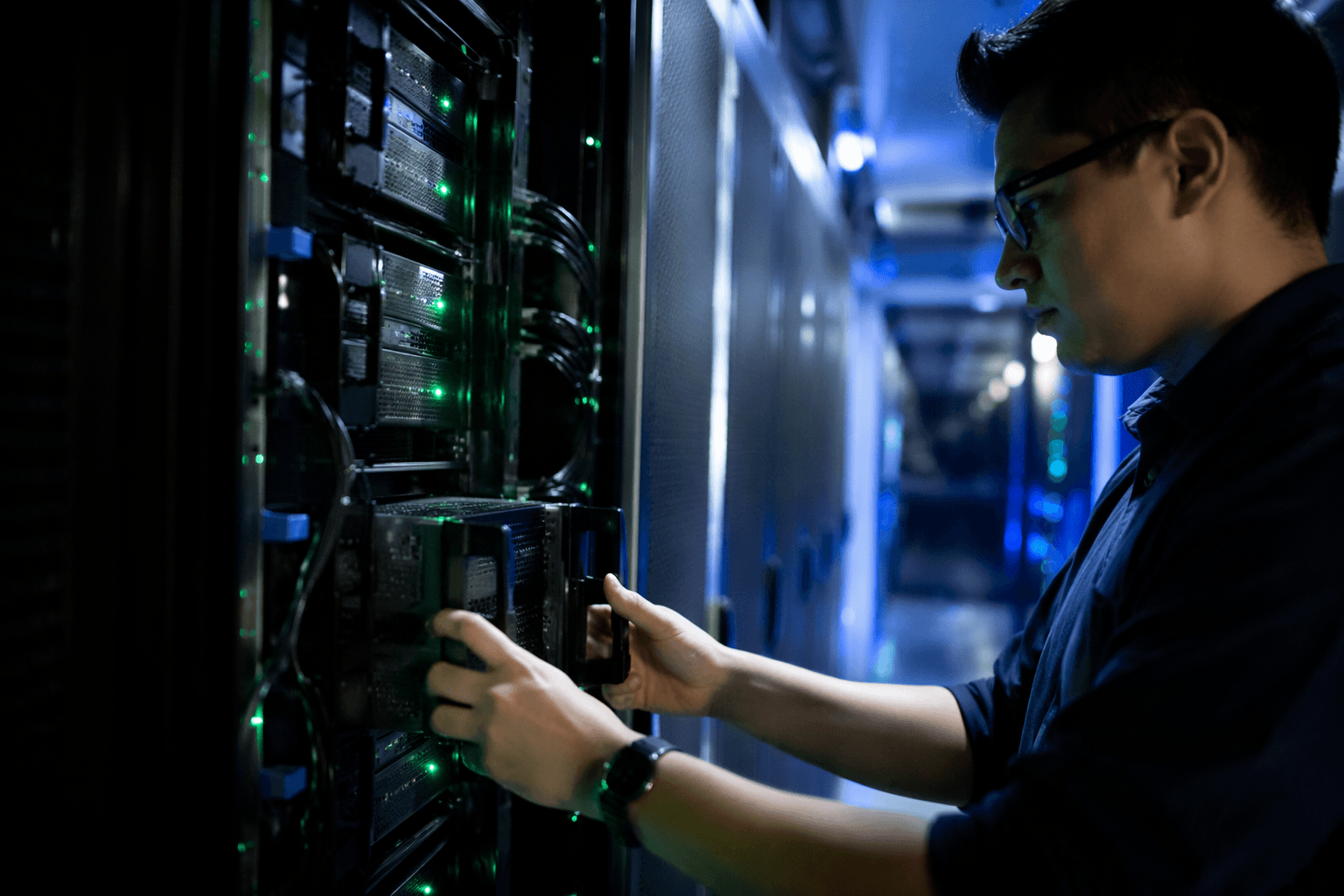
Goldman’s own research helps explain why this is showing up now. Goldman Sachs Research projects data center power demand will surge 175% by 2030 versus 2023 levels. Goldman has also said U.S. data center power demand is on track to more than double by 2027, with data centers’ share of U.S. peak summer power demand rising to 8.5% in 2027 from 4.1% in 2025. The bank has estimated roughly $7.6 trillion of capital could flow into AI infrastructure from 2026 to 2031 across compute, data centers and power.
That scale is why the people with the most to gain inside Goldman may not be only the obvious semis and technology bankers. Commodities and power traders, data-center specialists, structured products desks, and the research teams that translate physical shortages into priceable risk could all matter more if compute futures catch on. The same is true for bankers covering energy, infrastructure and hardware supply chains, because the market is converging around one question: who gets paid when AI demand collides with electricity limits and scarce chips.
This article was produced by Prism’s automated news system from verified source data, official records, and press releases, then run through automated quality and moderation checks before publishing. The system is built and supervised by the people who set the standards it runs under. Read our full AI policy.
Did this article answer your question?