Goldman Sachs CEO says AI job apocalypse is overblown
Solomon told investors and peers the AI fear trade is overdone, but Goldman’s own numbers still point to a real workload and headcount squeeze inside the bank.
David Solomon is trying to draw a bright line between AI hype and the kind of workforce disruption Goldman Sachs employees actually face. In a New York Times guest essay published May 22, 2026, the Goldman chief argued that fears of a mass unemployment wave from artificial intelligence were overblown, a message aimed as much at anxious bankers as at the broader executive class weighing how fast to automate.
Solomon said he had been in conversations with hundreds of business leaders over the past few months, giving the piece the feel of a CEO-to-CEO reality check rather than a pep talk for staff. The central claim is familiar to anyone inside a large investment bank: new technology usually changes the mix of work before it destroys the work itself. That framing matters for analysts and associates trying to build judgment, for vice presidents trying to stay indispensable in increasingly automated deal teams, and for managing directors deciding which work should be delegated, redesigned, or cut.

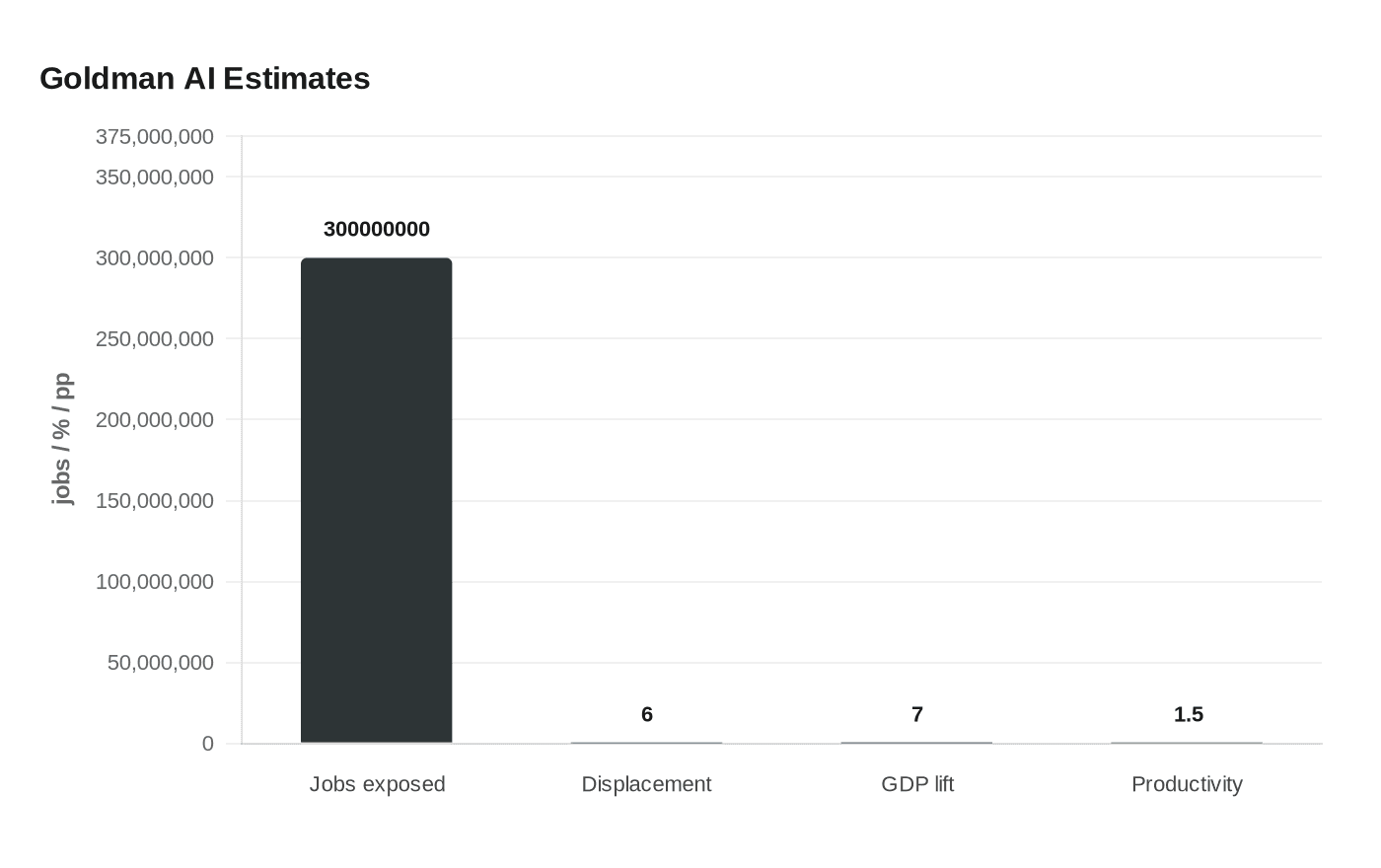
Goldman’s own research gives the argument both support and tension. In March 2026, the firm said 300 million jobs globally are exposed to automation by AI, but it also said displacement is likely to be temporary and could be offset by new job creation. Its baseline estimate pegs AI-driven displacement at 6% to 7%, with a wider range of 3% to 14% depending on assumptions. At the same time, Goldman has estimated that generative AI could raise global GDP by 7% and lift productivity growth by 1.5 percentage points over a 10-year period. For employees, that is less a promise of safety than a warning that the bank will expect more output from fewer routine tasks.
Goldman is already building its case around that shift. Its 2025 annual report says the firm launched One Goldman Sachs 3.0, an operating model propelled by AI, with the goal of building a more modern, digital, and automated firm that can scale operational capacity and effectiveness. Chief information officer Marco Argenti also said in January 2026 that AI models are becoming more than chatbots and will have repercussions for the global economy in 2026 and beyond. Taken together, the message is clear: Goldman wants AI seen as an augmentation story, but augmentation at this scale still changes who does the work, how fast it gets done, and how many people are needed to do it.
That context helps explain why the bank’s recent results matter. Goldman reported first-quarter 2026 earnings on April 13, 2026, with earnings per common share of $17.55 and annualized return on common equity of 19.8%. Strong profitability gives management more room to sell AI as a growth and efficiency play rather than a defensive cutback. Inside Goldman, the credibility test is not whether AI will eliminate every job. It is whether the firm can redefine roles gradually enough to avoid a blunt workforce squeeze dressed up in softer language.
This article was produced by Prism’s automated news system from verified source data, official records, and press releases, then run through automated quality and moderation checks before publishing. The system is built and supervised by the people who set the standards it runs under. Read our full AI policy.
Did this article answer your question?