Goldman Sachs engineer shares how conference talks shaped her career
Ria’s story shows Goldman engineering can be a platform, not just a codebase. Conference talks helped her build influence, belonging, and a broader professional voice.
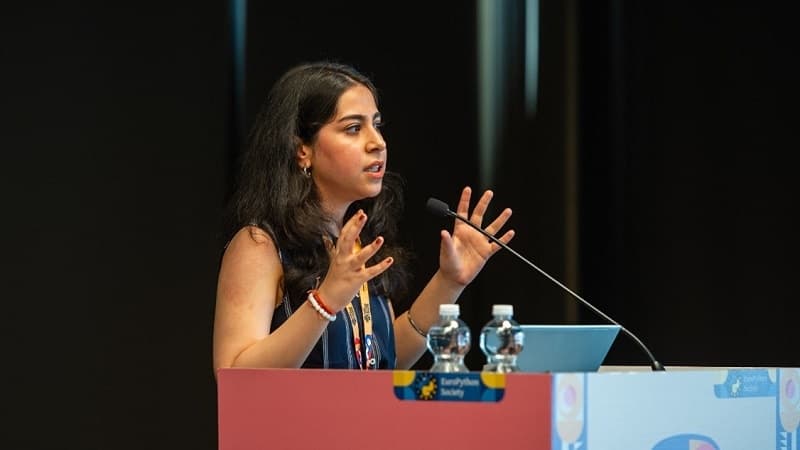
Goldman Sachs engineer Ria’s career path points to something technologists at the firm often want but do not always get: room to grow beyond the ticket queue and the immediate team. As an associate in SecDb Platform, she joined in 2020 through the New Analyst Program expecting hard technical problems and steep growth. What changed her perspective was how much the role also shaped her personally, by pushing her to build connections, share knowledge more broadly, and carry those lessons back into the firm.
Conference talks as career capital
Ria’s experience shows that external speaking is not just a vanity project or a line on a resume. She spoke at PyCascades, PyOhio, Women Tech Network, and EuroPython, and those appearances became a way to extend her reach beyond Goldman’s walls. In practice, that kind of visibility can matter as much as raw technical output because it turns a developer into a recognized voice, not just someone who ships code.
For people in financial services, that distinction has real workplace value. When a technologist can explain work clearly in public, they are often better positioned to influence peers, earn trust across teams, and be remembered when stretch assignments or leadership opportunities come up. Ria’s story suggests that Goldman’s engineering environment can reward people who build both technical depth and a public-facing professional identity.
What it says about belonging inside Goldman
The strongest part of Ria’s profile is not the list of conferences, but what those talks seem to have unlocked: a broader sense of connection. She describes the experience as one that helped her engage with the wider tech community while bringing those lessons back to Goldman, which matters in a large institution where engineers can otherwise feel siloed inside a single platform or delivery lane.
That is especially relevant at a firm like Goldman, where prestige can sometimes mask how isolated many knowledge workers feel day to day. Building belonging through communities outside the immediate codebase gives technologists another source of confidence and context. It also creates a path for employees to see themselves as contributors to a larger professional ecosystem, not only as support for internal business lines.
Why this matters for advancement
The career lesson here is straightforward: visibility compounds. An engineer who speaks at major conferences is doing more than representing the firm, they are building a reputation that can travel with them across teams, products, and future roles. In a high-pressure environment where compensation, promotions, and access to more strategic work often depend on perceived influence as much as execution, that matters.
Ria’s profile is useful because it shows how a technical career can expand beyond delivery into thought leadership. That does not eliminate the grind of engineering work, but it can change how colleagues view your potential. For Goldman technologists who want an exit option someday, public speaking can also broaden the market for their skills, which is especially valuable in a labor market that prizes engineers who can translate complexity for nontechnical audiences.
What managers can learn from the example
There is also a management lesson buried in the profile. If a firm wants technologists to grow, it has to make room for people to teach, present, and represent the organization outside their core assignments. Those opportunities are not cosmetic. They can accelerate learning, deepen expertise, and give employees a stronger sense of ownership over their careers.
The risk, of course, is that companies praise this kind of development while still rewarding only visible delivery work inside the team. Ria’s story suggests the better model is one where conference speaking and knowledge-sharing are treated as part of the job, not an extracurricular bonus. For managers, that means recognizing that a developer who spends time mentoring, presenting, and reconnecting insights from the outside world may be adding long-term value even if the impact is not captured in a sprint dashboard.
What candidates should take from it
For candidates evaluating Goldman engineering, the signal is broader than “good problems, good scale.” The profile suggests a place where strong technologists can build a real voice, not just a stack of completed tasks. That combination matters for people who care about impact and identity at the same time, especially in a market where many engineers want more than a paycheck and a prestige name on a resume.
It also hints at what kind of employee may thrive there. Goldman can appeal to technologists who want the intensity of a large financial firm but do not want to be boxed into a purely internal role. If you want to deepen technical expertise, build credibility across a large institution, and stay connected to the broader tech world, that is a meaningful proposition.
The bigger workplace takeaway
Ria’s story lands because it treats engineering as a people story, not just a systems story. Conference talks became a tool for belonging, a channel for influence, and a way to bring outside lessons into a highly structured workplace. In a firm where career progression can feel tied to quiet execution, that kind of visibility can become a real advantage.
For Goldman technologists, the message is clear: the path forward is not only about what you build, but about how you show up, who you learn from, and who gets to know your work.
This article was produced by Prism’s automated news system from verified source data, official records, and press releases, then run through automated quality and moderation checks before publishing. The system is built and supervised by the people who set the standards it runs under. Read our full AI policy.
Know something we missed? Have a correction or additional information?
Submit a Tip