Goldman Sachs Experts Weigh Iran Conflict Duration, Energy Supply Risks
Three geopolitical experts on Goldman's Exchanges podcast see no quick end to Iran's Hormuz blockade, the largest energy disruption in history, as the firm raises recession odds to 30%.
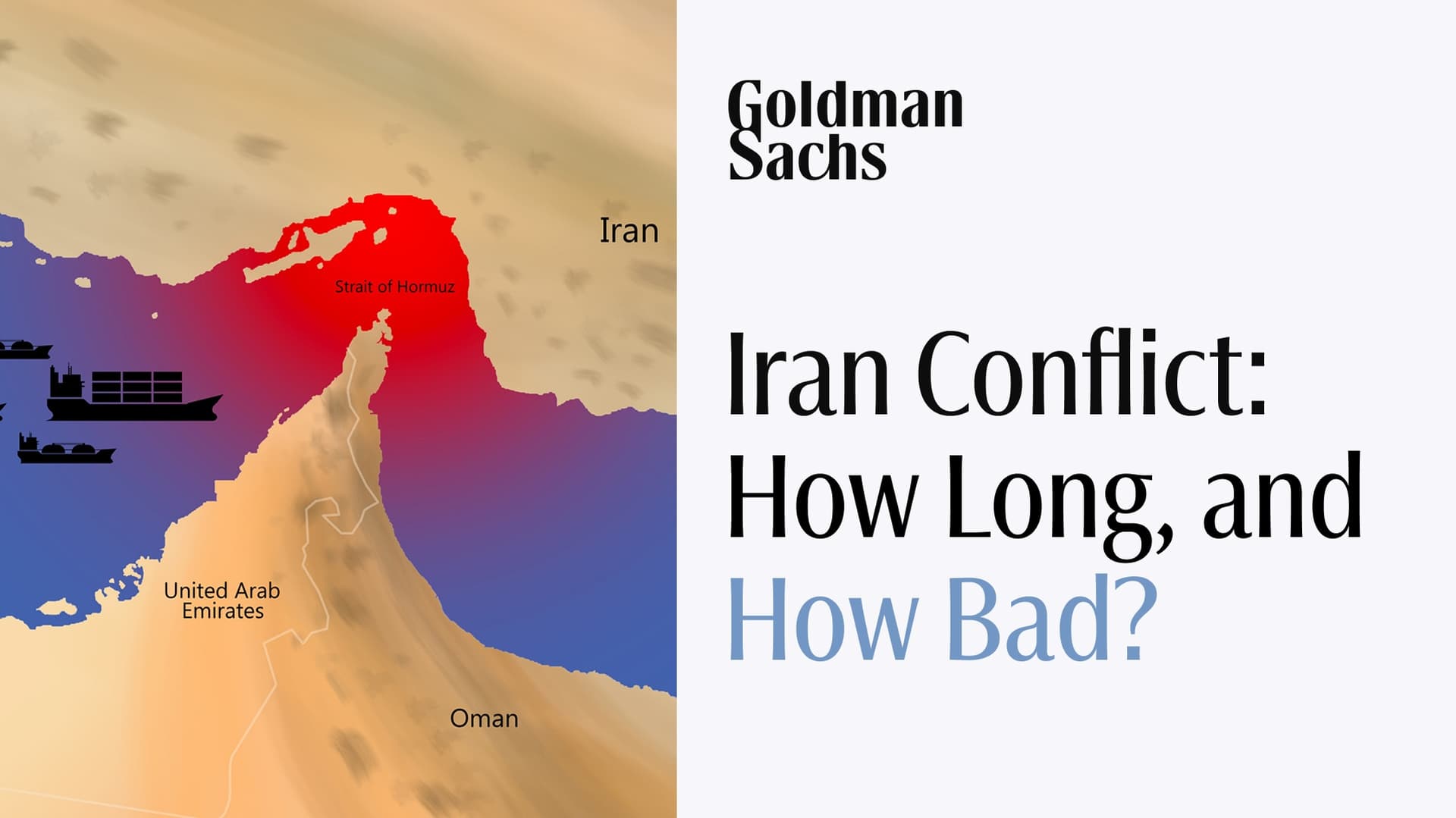
The Iran conflict has produced what Goldman Sachs is calling the largest energy supply disruption in history, with shipping traffic through the Strait of Hormuz nearly at a standstill and regional energy infrastructure under sustained fire. The firm convened three outside experts on its Exchanges podcast to answer the question markets most want resolved: how long does this last, and how bad does it get?
The answer, across all three voices, was unsatisfying for anyone positioning for a quick resolution. Sanam Vakil, director of the Middle East and North Africa Programme at Chatham House, Dennis Ross, the veteran U.S. Middle East envoy, and Vice Admiral Kevin Donegan, the retired commander of the U.S. Fifth Fleet, each addressed a different layer of the stalemate in an episode tied to Goldman's "Top of Mind" report, released March 20.
Vakil argued that Tehran is not looking for an exit. Iran drew a hard lesson from the 12-Day War of June 2025, when premature concessions exposed critical vulnerabilities. The Islamic Revolutionary Guard Corps has since adapted through a decentralized "mosaic command structure" that continues to function despite U.S. and Israeli strikes on Iran's conventional forces and nuclear program. "Iran has no incentive to end the war until it sees a reliable path to these guarantees," Vakil said, referring to Tehran's demand for sanctions relief and long-term survival assurances for the Islamic Republic.
Ross identified the bind keeping Washington equally stuck. The Trump administration, he argued, would likely have declared victory already had Iran not retained control of the strait. The Hormuz chokepoint carries nearly 20 million barrels per day of global oil production, giving Tehran leverage that military degradation alone has not neutralized. Ross flagged Putin-brokered mediation as the fastest available diplomatic path, but assessed the conditions for those talks as absent, particularly following the assassination of Ali Larijani, the Iranian figure best positioned to coordinate across IRGC factions.
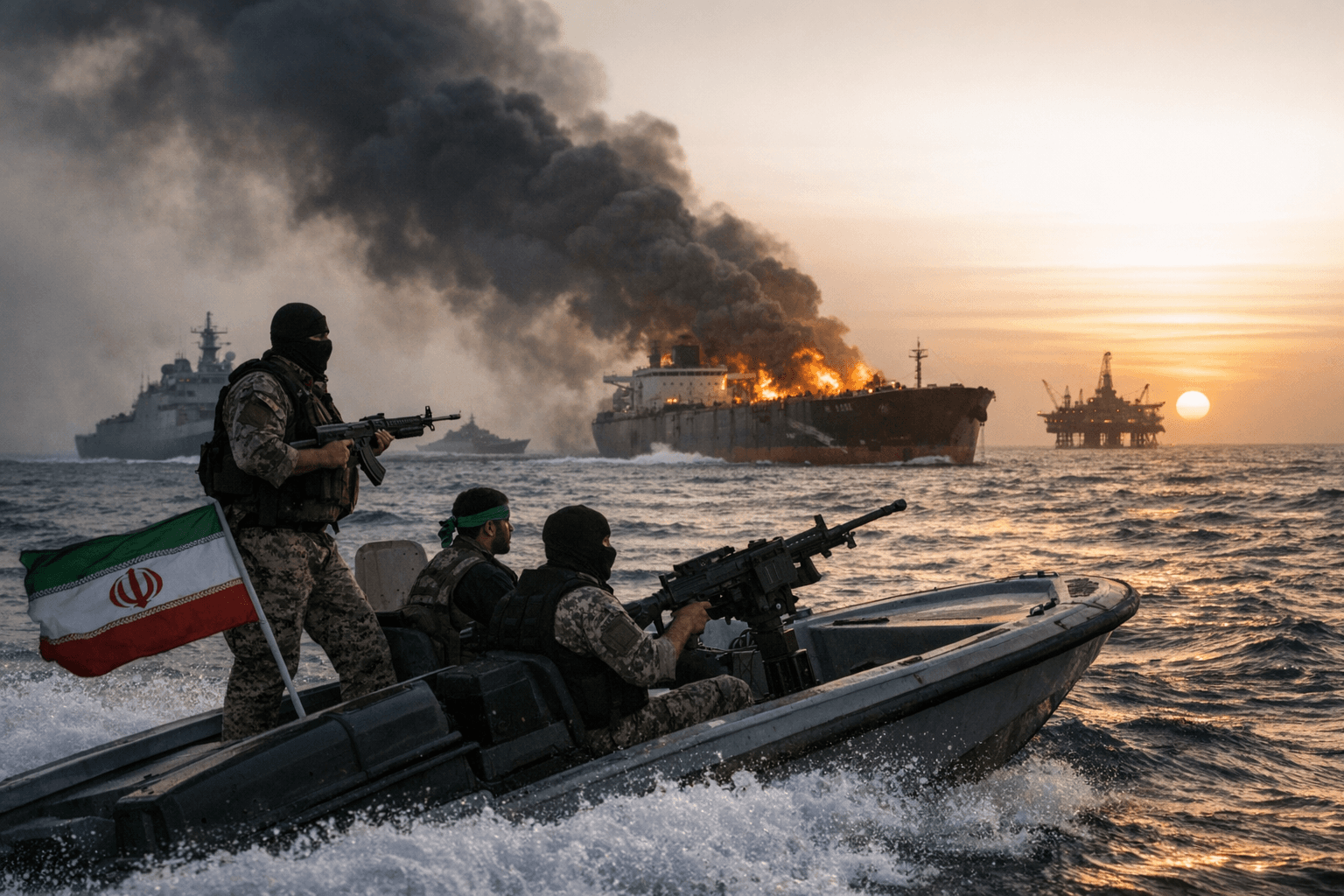
Donegan, drawing on his experience commanding the U.S. Fifth Fleet, offered a distinction with direct consequences for energy traders: U.S. and allied forces, including the UK, France, Germany, Italy, and Japan, have the capability to escort individual vessels through the strait but not the capacity to restore normal commercial flow. Iran had made 21 confirmed attacks on merchant ships as of March 12.
Markets have not yet fully priced what a prolonged disruption means. The "Top of Mind" report warned that global assets are trading only an inflationary shock while ignoring the growth consequences of sustained energy cost pressure. UK gilt yields have surged to an 18-year high, with two-year yields up roughly 100 basis points since the conflict escalated; Germany's equivalent move was about 64 basis points. Goldman equity analysts Dominic Wilson and Vickie Chang pushed back on the hawkish rate repricing, writing that "we think the market is mispricing the policy distribution now," noting that historical oil shocks have typically produced rate cuts within six to nine months, not hikes.
Goldman has raised its 12-month recession probability to 30% and now expects Brent crude to average $115 per barrel in April before retreating, on the assumption that Hormuz disruptions last roughly six weeks. Whether that assumption holds depends on conditions Vakil, Ross, and Donegan assessed with a shared conclusion: not anytime soon.
Know something we missed? Have a correction or additional information?
Submit a Tip