Goldman Sachs Forecasts 57% Higher Asian LNG Prices by 2028, Citing Iran War
Goldman projects Asian LNG 57% pricier by 2028 from the Iran war; a single month of Hormuz disruption could spike spot prices 130% to $25/MMBtu.
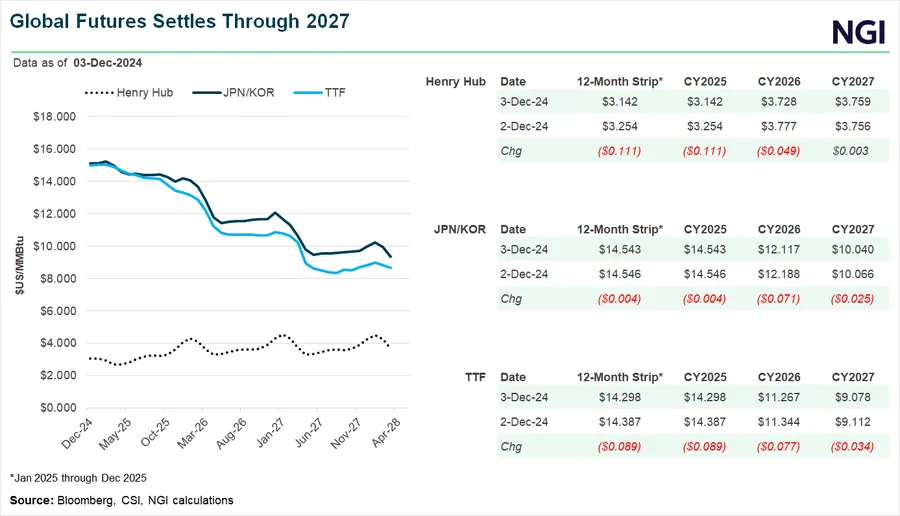
Goldman Sachs projected that Asian LNG prices will be 57% higher by 2028 as a direct consequence of the US-Israeli war on Iran, warning that a single month of halted flows through the Strait of Hormuz could spike Asia's spot price by 130% to $25 per million British thermal units.
The bank's analysts, including Samantha Dart and Frederik Witzemann, raised their April forecast for the Dutch TTF, Europe's regional gas benchmark, to 55 euros per megawatt-hour from 36 euros, and lifted their average second-quarter TTF forecast to 45 euros/MWh from an initial 36 euros/MWh outlook. In early March, the TTF had surged more than 31% to 58.60 euros/MWh, its highest level since 2023, with Goldman warning it could climb a further 130% from those levels, potentially reaching territory last seen after Russia's 2022 invasion of Ukraine.
The immediate supply shock driving those revisions was QatarEnergy's announcement that it would halt LNG output and related products following strikes on two of its gas facilities, effectively choking off a major source of the world's fuel. Asia's JKM benchmark surged to $25.39/MMBtu in early March, a 68.5% increase from pre-conflict levels, and had risen 143% since the end of February.
Compounding the disruption is the effective paralysis at the Strait of Hormuz, the narrow lane between Iran and Oman through which a fifth of global oil and LNG flows. The strait was not formally closed, but major shipping operators, oil and gas companies, and traders effectively halted shipments. Bloomberg vessel-tracking data recorded at least a dozen empty tankers on the eastern side of the strait diverting in recent hours; Iranian officials vowed to attack any ship attempting to traverse it.
Goldman analysts, including Daan Struyven, who laid out the bank's scenarios on Squawk Box Asia on March 3, saw no swift price correction even if the conflict wound down. The bank conservatively estimated it could take three to five years for global LNG supply affected by damaged Middle Eastern production capacity to recover, keeping the market tight for a prolonged period. Supply recovery, Goldman argued, would lag far behind any demand contraction, leaving Europe and Asia locked in a drawn-out bidding war for Atlantic Basin cargoes.

ING commodities strategists Warren Patterson and Ewa Manthey reinforced that view. "For gas markets, the real impact will be on European and Asian LNG prices," they wrote in a note. "While there's been a ramp-up in LNG export capacity and more to come, particularly from the US, this would not come soon enough to offset potential losses from the Persian Gulf." Europe, which imports around 5% of its gas from the Middle East and was already contending with muted storage levels, faced additional pressure even after QatarEnergy eventually restarts output.
On the equities side, Goldman recommended buying Cheniere, Venture Global, and Golar LNG during pullbacks, raising 12-month price targets on all three. Cheniere's target moved from $276 to $312 against a Wednesday close of $284.39, implying roughly 10% upside. Venture Global's target went from $15 to $18.50, with shares at $16.71. Golar LNG's target rose from $55 to $60, with the stock at $53.09. All three had already delivered outsized returns: Cheniere and Golar each surged more than 40% since January, while Venture Global more than doubled year-to-date. Both Cheniere and Golar pulled back about 3% Wednesday as energy shares broadly lost ground, even as wider markets gained on reported signs of progress in US-Iran diplomatic talks.
That diplomatic optimism is precisely where Goldman's analysis lands hardest: the bank argued that lasting damage to Middle Eastern production infrastructure will keep LNG prices elevated long after any ceasefire, making the duration of a resolution far less relevant than the structural supply gap it leaves behind.
Know something we missed? Have a correction or additional information?
Submit a Tip