Goldman Sachs lifts Brent forecast to $90 as Gulf disruptions squeeze supply
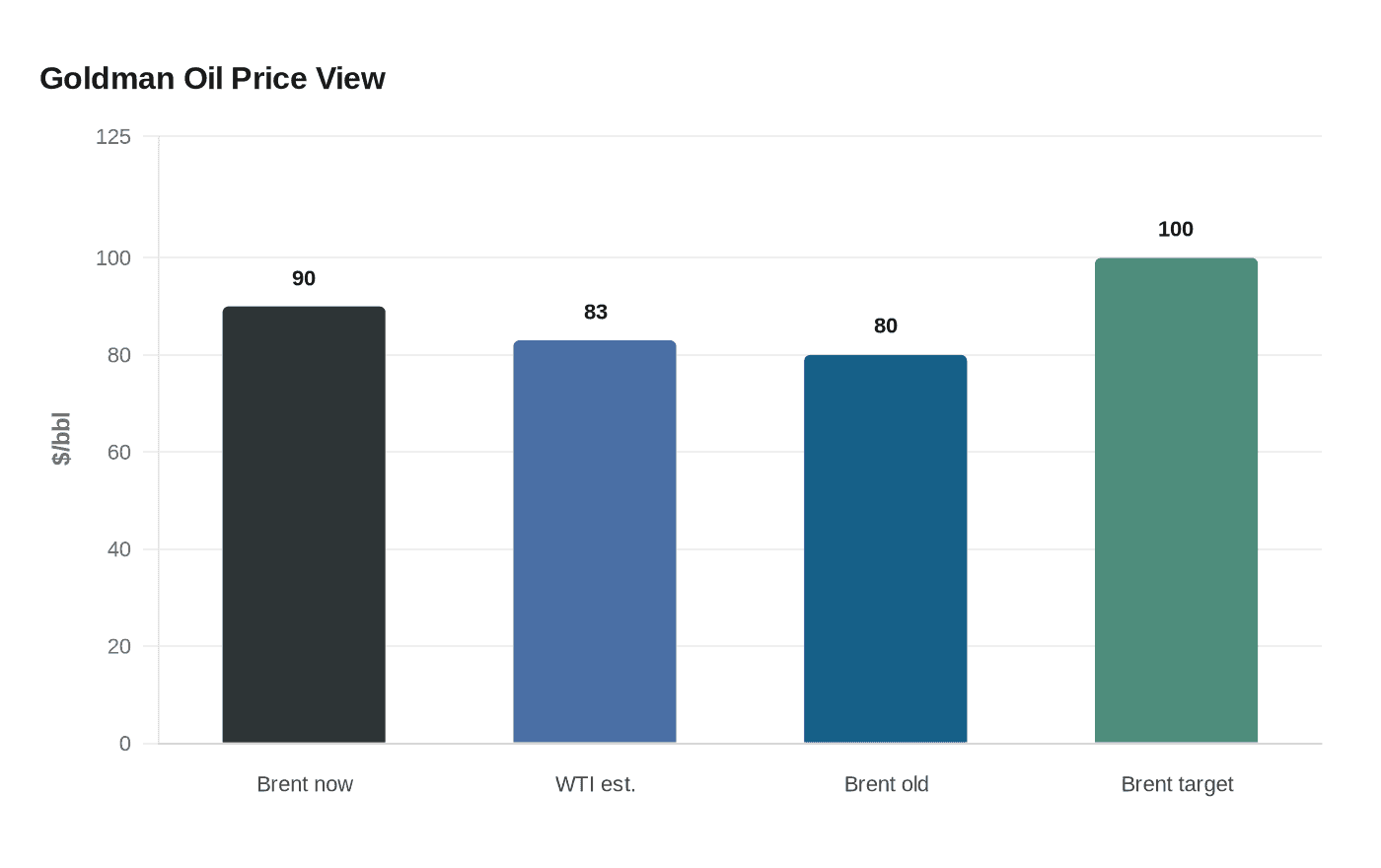
Goldman now sees Brent at $90 in Q4, with $100 possible if Hormuz flows stay choked, as record inventory draws hit prices and inflation expectations.
Goldman Sachs has pushed its fourth-quarter Brent forecast to $90 a barrel from $80, and the bank is warning that prices could reach $100 if traffic through the Strait of Hormuz does not normalize soon. For traders, analysts and clients alike, the move turns a Gulf shipping crisis into a broader cost story, with implications that reach from refinery margins and freight rates to gasoline bills and inflation expectations.
The new call, laid out in an April 27 note, also lifts Goldman’s West Texas Intermediate estimate to $83. The bank said it now assumes Gulf exports through Hormuz will normalize by the end of June, later than its earlier mid-May view. Bloomberg reported that the new fourth-quarter Brent forecast was nearly $30 higher than Goldman’s pre-shock outlook, underscoring how quickly the war-driven disruption has changed the bank’s price deck.
Goldman’s models are built around a severe supply squeeze. It estimated that 14.5 million barrels a day of Middle East crude production losses are driving global inventories to draw at a record pace of 11 million to 12 million barrels a day in April. The bank expects the global oil market to swing from a 1.8 million barrel-a-day surplus in 2025 to a 9.6 million barrel-a-day deficit in the second quarter of 2026. Goldman said the economic risks are larger than its single-scenario baseline because refined-product prices are unusually high and shortages of diesel, gasoline and other products could spread before crude balances fully recover.
The stakes are bigger than one bank’s model. The Strait of Hormuz handled about 20 million barrels a day of crude oil and petroleum products in 2025, roughly a quarter of world seaborne oil trade. A complete stoppage would remove close to 20% of global oil supply from the market, and about 80% of the Gulf oil that moves through the passage is bound for Asia. The Dallas Federal Reserve said this is the first time the strait has been closed, and it compared the shock with the oil crises of 1973, 1979, 1980 and 1990.
Governments have already moved to cushion the hit. On March 19, the United Kingdom, France, Germany, Italy, Japan, Canada and other allies condemned attacks on commercial vessels and backed the International Energy Agency’s reserve release. The IEA said member countries would release 400 million barrels, the largest coordinated draw in its history, after conflict that began on Feb. 28 cut flows through Hormuz to less than 10% of pre-conflict levels. Reuters reported on April 27 that oil prices rose about 3% as U.S.-Iran peace talks stalled and shipments through the strait remained limited. For Goldman’s market teams, that means the volatility is not fading yet, and for everyone else it means the shock is moving from geopolitics straight into daily life.
Know something we missed? Have a correction or additional information?
Submit a Tip