Goldman Sachs lifts data center power demand forecast to 1,350 TWh by 2030
Goldman now sees data-center electricity use hitting 1,350 TWh by 2030, with the U.S. carrying about 750 TWh and up to $720 billion in grid spending.
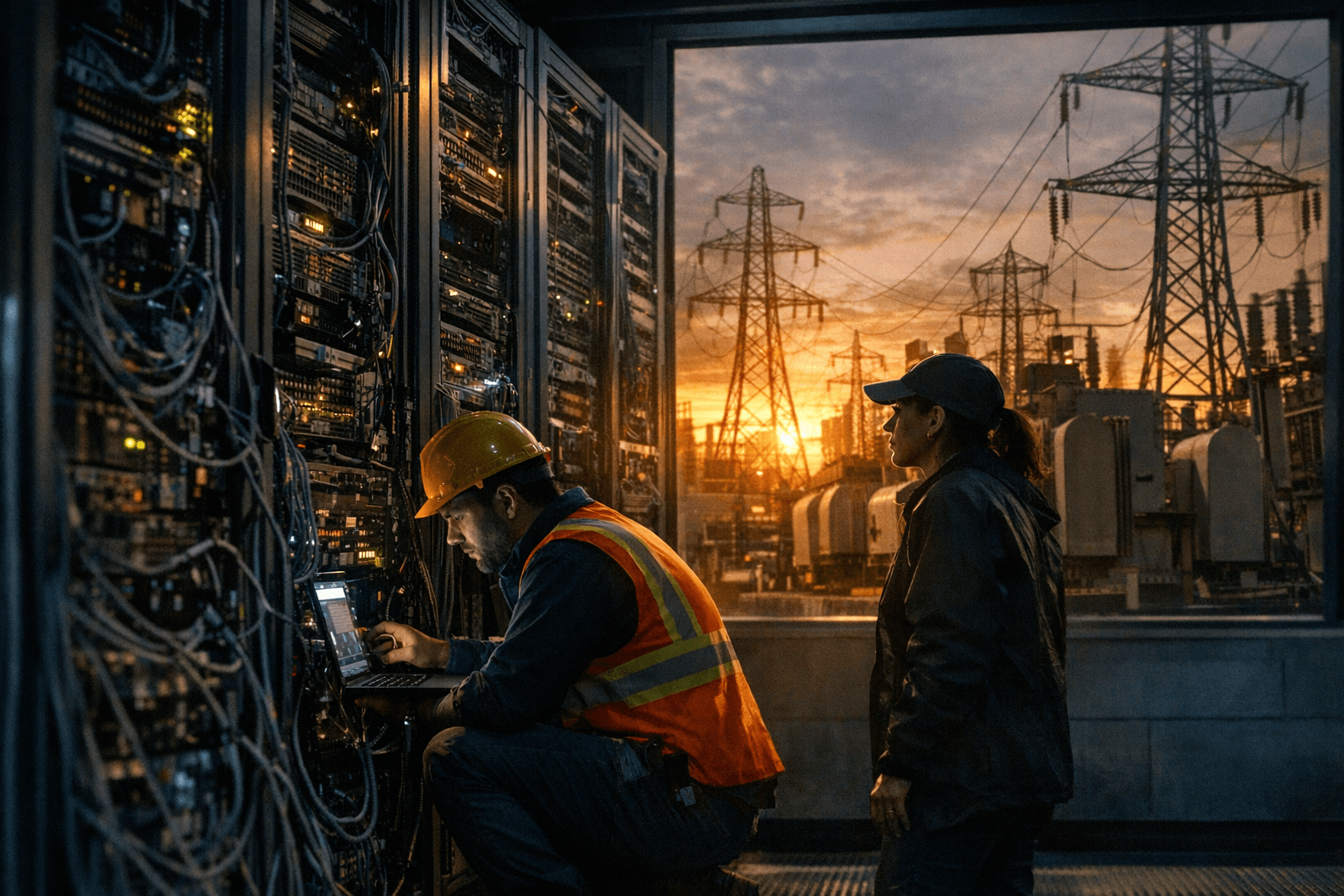
Goldman Sachs lifted its forecast for data-center electricity demand to 1,350 TWh by 2030, a 220% surge that turns AI expansion into a question of power bills, grid buildouts and permitting speed. With the U.S. expected to account for about 750 TWh of that increase, the bank’s latest call implies a much heavier burden on utilities, transmission owners and policymakers than many investors had priced in.
The revision sharpens a theme Goldman has been building toward for more than a year. In February 2025, Goldman said global data-center power demand would rise 165% by 2030 from 2023 levels, with usage around 55 GW at the time and a baseline path to 84 GW by 2027. The bank also warned then that about $720 billion of grid spending through 2030 may be needed, and that transmission projects can take several years to permit and several more to build. In its November 2025 GS SUSTAIN report, Goldman raised the 2030 growth forecast again, to 175% versus 2023, and said the outlook hinged on six forces: AI pervasiveness, server and compute productivity, electricity prices, policy initiatives, parts availability and people availability.
The new forecast implies that the physical limits of the grid may become as important as the economics of AI itself. Goldman has said reliability of power and water is becoming a multi-year investment theme because of aging infrastructure and extreme weather, and that U.S. power-demand growth could return to levels not seen since the 1990s. The bank’s earlier April 2024 work said global data-center demand was poised to more than double by 2030 after being flat from 2015 to 2020, while U.S. electricity demand growth could accelerate to a 2.4% compound annual rate through the end of the decade. It also estimated that supporting data-center load growth would require about $50 billion in new generation capacity, with roughly 3.3 bcf/d of incremental natural gas demand by 2030.
For hyperscalers, the picture is mixed. Goldman has argued that strong balance sheets, free cash flow and corporate returns could make rising power-supply costs less of a constraint than feared, and that future capacity additions will likely draw on renewables, natural gas peaking plants, combined-cycle gas and eventually nuclear. But the bank has also warned that China’s larger power-buildout could give it an edge in scaling AI infrastructure, especially as recent Chinese AI developments, including DeepSeek, have raised questions about returns on current and planned AI investment. The market now has to decide whether Goldman’s latest jump in demand is a temporary stretch of optimism or the start of a longer scramble for electrons, permits and land.
Know something we missed? Have a correction or additional information?
Submit a Tip