Goldman Sachs outlines workplace health, safety commitments across global offices
Goldman Sachs is turning workplace safety into an everyday operating standard, with security, ergonomics, crisis planning, and mental health support built into office life.

What this means in the office
Goldman Sachs is framing workplace health and safety as part of how the firm runs, not as a side policy for facilities teams. The company says it is committed to safeguarding the health, safety, and welfare of everyone in its offices, including employees, contractors, vendors, and other visitors, while continually trying to reduce occupational illness, accidents, and incidents.
For workers, that matters because it sets an expectation that the basics of office life are supposed to be controlled with discipline: building safety, emergency readiness, visitor management, security protocols, ergonomics, and the coordination that keeps a high-intensity office functioning without avoidable risk. At a firm with 46K+ people around the world, and offices in all major financial centers, those safeguards are not cosmetic. They are part of the operating model.
Safety is treated like governance, not just facilities
Goldman Sachs says health and safety is a key element of its Corporate Governance and Social Responsibility agenda, and a prerequisite to achieving business objectives. That language is important because it puts safety alongside execution, reputation, and continuity, rather than treating it as a compliance box to check after the fact.
In practical terms, that means office safety is meant to be woven into how managers plan work, how offices are run, and how disruptions are handled. A client event, an offsite, a late-night close, or a rush of external visitors is not just an operations issue. It is also a safety and resilience issue, especially in an environment where teams may already be working long hours and juggling sensitive information.
The teams behind the system
Goldman’s Corporate and Workplace Solutions division gives a clearer picture of how that system is structured. It includes Physical Security & Investigations, Executive Protection, Fire Safety, Crisis Management, and Health and Safety teams. Together, those groups are responsible for protecting people and assets, delivering fire and life safety protocols, and leading crisis-management preparation, implementation, and recovery.
That is the unseen infrastructure that sits behind a modern investment bank’s daily routine. If a site has a security concern, a fire-safety issue, or a broader operational disruption, the firm says there are dedicated teams meant to respond. For employees, the practical takeaway is that safety at Goldman is not supposed to be improvised by line managers alone.
What employees can expect day to day
The simplest way to read Goldman’s workplace safety commitments is as a daily checklist of what the firm says should already be in place:
- secure offices and managed access for people and visitors
- fire safety procedures and crisis planning
- ergonomic support for desk-based work
- health and safety oversight inside larger workplace operations
- coordination around business continuity and emergency preparedness
That matters in a finance environment where the pace can be relentless. The firm is effectively saying that intense work should not come at the cost of unnecessary operational risk, and that the office itself needs to be structured to support long stretches of concentrated work, late changes, and sudden demands from clients or senior leadership.
The vendor chain is part of the workplace too
Goldman also extends this framework beyond its own employees. Its Vendor Code of Conduct, first published in 2017, covers labor and human rights, inclusive workforce practices, business continuity, resiliency, and emergency preparedness. That means the people supporting the office, from suppliers to service providers, are supposed to meet standards that help keep the environment stable and safe.
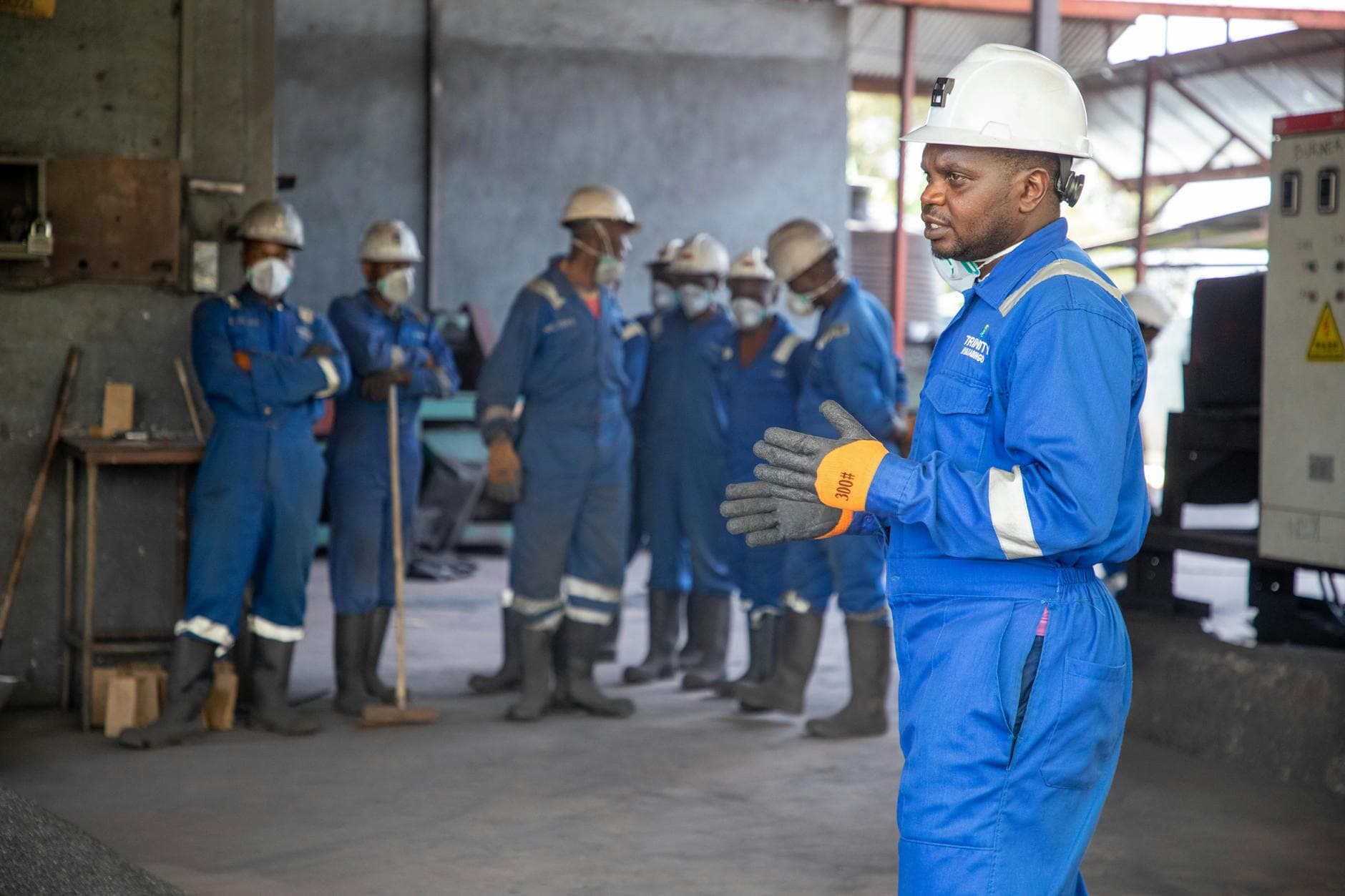
That broader lens is easy to miss, but it matters in a large financial institution that works with thousands of vendors in over 160 cities. Office safety is not just about the floor plan or the front desk. It also depends on how vendors are selected, how they operate, and whether they can keep critical services running when something goes wrong.
Mental health support is part of the package
Goldman’s benefits page shows that the firm is trying to connect physical safety with mental health and practical support. It offers an Employee Assistance Program with virtual counseling, on-site counseling in larger locations, Global Medical, Security and Travel Assistance, a Workplace Ergonomics Program, and on-site health centers in certain offices.
The firm’s Mental Health First Aid program, launched in 2019, had 500 globally certified MHFAiders by September 19, 2023. Goldman also launched new manager training in 2024 to help leaders support team members facing mental health challenges, and rolled that training out again in 2025. For employees, that means the firm is signaling that mental health is not meant to sit outside normal management conversations, especially in a culture where pressure, deadlines, and long hours are part of the job.
Why managers should pay attention
For managers, the useful lesson is that health and safety is not only a workplace-services issue. It is part of team management, especially when coordinating travel, events, offsites, and high-traffic client visits. A manager at Goldman is expected to think not just about staffing and deliverables, but also about the physical and emotional conditions that keep a team functioning.
That is especially relevant in a firm where prestige and compensation often come with a heavy workload, and where the difference between a smooth quarter and a chaotic one can depend on how well the office is managed behind the scenes. A strong safety culture helps reduce friction before it turns into lost time, avoidable stress, or a bigger operational problem.
The firm is also tying safety to sustainability
Goldman’s operational-impact strategy shows that it sees office safety alongside broader stewardship goals. The firm says it works each year to minimize its operational impact through energy management, workplace footprint consolidation, emissions reduction, renewable energy and carbon credit procurement, water and waste management, small business engagement, and responsible sourcing and supply-chain management.
That approach has shown up in public milestones. Goldman says it has sourced electricity equivalent to 100% of its global consumption from renewable sources since 2020. It says it achieved the WELL Health-Safety Rating for its global workspaces in 2021, opened a LEED Platinum and WELL Platinum certified Hyderabad campus in 2023, and opened a BREEAM Outstanding certified Birmingham office in 2024. Those are not just badges for sustainability reports. They point to an office strategy that is increasingly built around healthier space, better planning, and more controlled operations.
A long-term headquarters story
Goldman’s safety framing also fits its history of concentrating people in purpose-built space. The firm broke ground on 200 West Street in Lower Manhattan on November 29, 2005, to consolidate all of its New York City people in one building. By 2008, the tower had become the firm’s LEED Gold certified global headquarters.
That history helps explain why office standards matter so much at Goldman. The firm has long treated its physical footprint as an operating asset, and that is even more true now, with offices spread across major financial centers and thousands of vendors supporting the work. In a business built on speed, confidentiality, and coordination, the promise of a safe and healthy workplace is also a promise of continuity.
This article was produced by Prism’s automated news system from verified source data, official records, and press releases, then run through automated quality and moderation checks before publishing. The system is built and supervised by the people who set the standards it runs under. Read our full AI policy.
Did this article answer your question?