Goldman Sachs raises dividend 11% after Fed stress test results
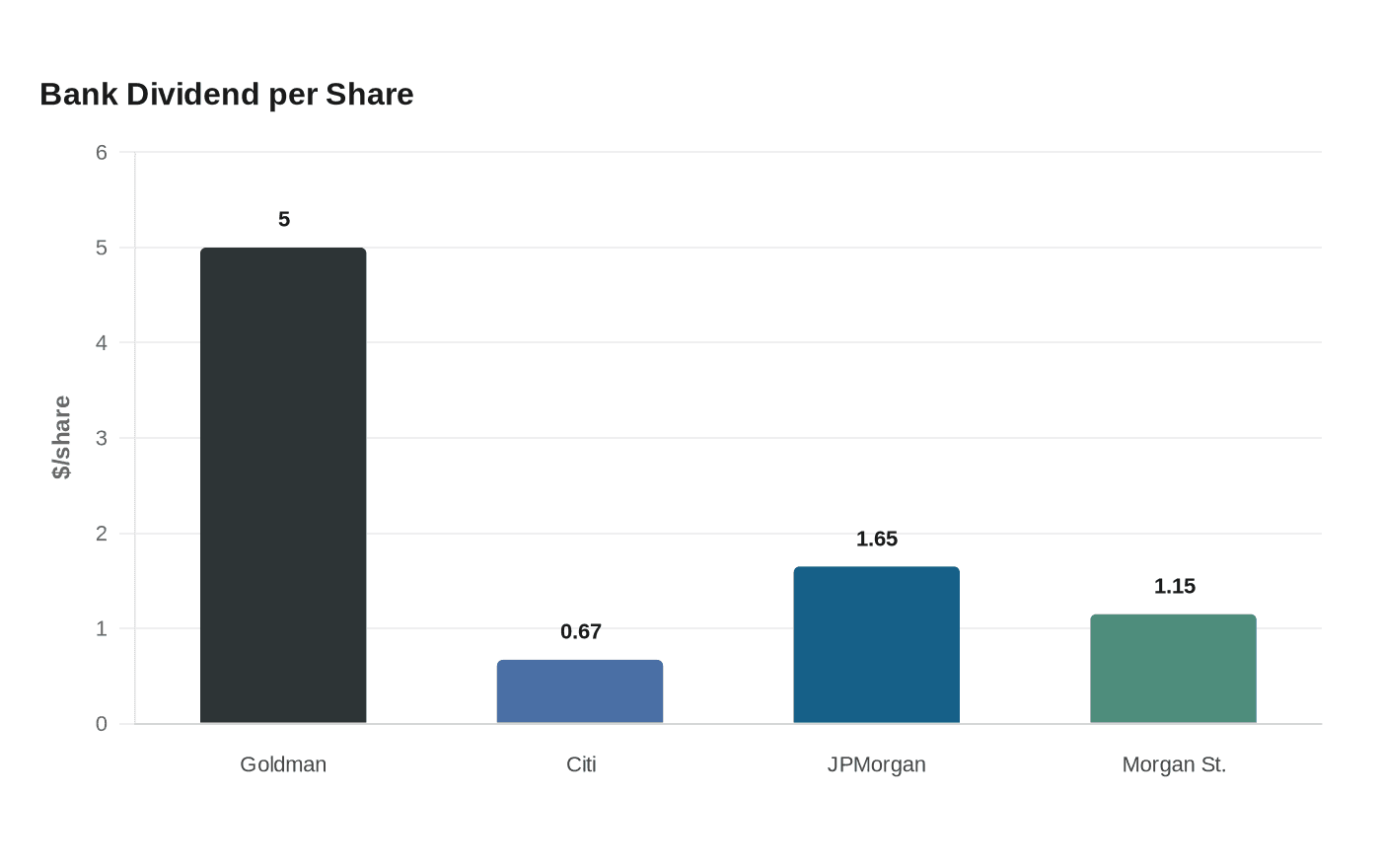
Goldman lifted its dividend 11% to $5 a share as stress tests left capital rules unchanged, a sign bonus season may open on firmer footing.
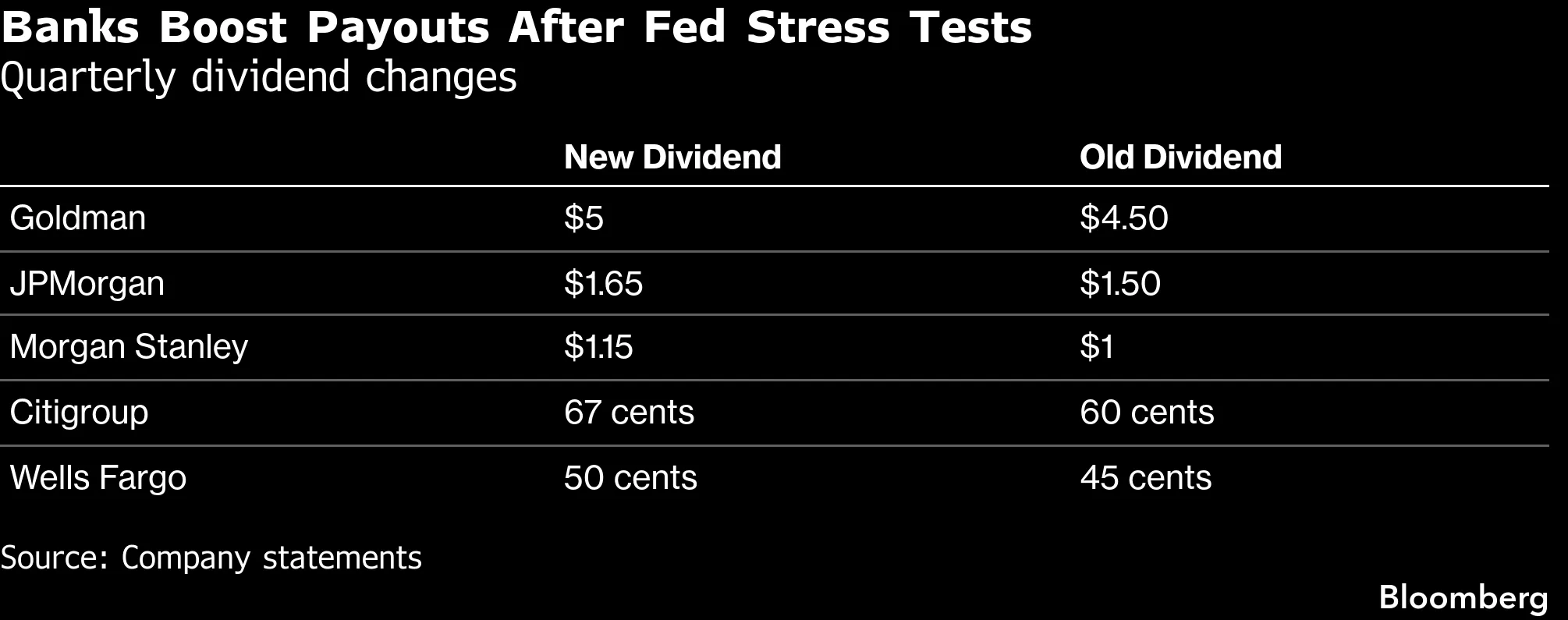
Goldman Sachs lifted its common dividend 11% to $5.00 a share, starting July 1, after the Federal Reserve’s annual stress test kept all 32 large U.S. banks above minimum capital requirements. The increase still needs approval at Goldman’s scheduled third-quarter board meeting, but it adds to the sense that the firm has enough capital to pay shareholders and keep its business engine running.
That matters inside Goldman as much as it matters on Wall Street. Citigroup raised its quarterly dividend 12% to 67 cents and kept a $30 billion repurchase program in place. JPMorgan Chase announced a new $50 billion buyback and lifted its dividend to $1.65 a share. Morgan Stanley increased its dividend 15% to $1.15 and authorized a multi-year $20 billion repurchase program. For analysts, associates and bankers watching bonus planning, those moves are a signal that the industry is entering the second half of the year with less pressure on capital and more confidence in earnings quality, which tends to support compensation budgets, hiring plans and retention efforts across trading, advisory and financing businesses.

The Federal Reserve’s 2026 stress test projected more than $708 billion in losses across the industry in a severe recession scenario, yet the biggest banks still cleared the minimum capital bar. Goldman said its stress capital buffer will stay at 3.4% through September 30, 2027, and its standardized CET1 requirement will remain 11.4%. Goldman also said the dividend increase takes its payout from $4.50 to $5.00 a share, 25% above the prior year’s level, extending a run of higher cash returns that has become part of the firm’s capital story.
That capital story has been building for several years. Goldman’s 2025 annual report said net revenues rose 9% to $58.3 billion, earnings per share climbed 27% to $51.32 and return on equity improved to 15.0%. The firm also said its stress capital buffer has been reduced by a cumulative 320 basis points since 2020, while historical principal investments fell by more than 90% from roughly $64 billion to $6 billion. In Goldman’s own telling, the leaner balance sheet has helped create room for both reinvestment and payouts.
David Solomon said the higher dividend reflected Goldman’s earnings and capital strength and its confidence in supporting clients, investing for the long term and delivering sustainable returns to shareholders. For employees, the immediate read is simpler: a stronger capital position usually gives management more flexibility when it decides how hard to press on pay, staffing and risk-taking into the next bonus cycle.
This article was produced by Prism’s automated news system from verified source data, official records, and press releases, then run through automated quality and moderation checks before publishing. The system is built and supervised by the people who set the standards it runs under. Read our full AI policy.
Did this article answer your question?