Goldman Sachs Says Iran War Unlikely to Trigger Global Supply Chain Crisis
Goldman Sachs said non-energy trade with Gulf economies is just 1% of global trade, far from the 20%-plus disruption seen after pandemic-era China shutdowns.

With Brent crude touching $105 a barrel and West Texas Intermediate near $99.50, the oil shock from the Iran conflict has been impossible to ignore. But Goldman Sachs economists argued the damage will stop there, concluding that the war is unlikely to produce the kind of sprawling supply chain crisis that hammered the global economy in 2021 and 2022.
The core of Goldman's argument is a trade exposure gap that dwarfs any comparison. Non-energy trade with Gulf economies accounts for roughly 1% of global trade, the firm's economists noted. When post-pandemic shutdowns rippled through China and East Asia, they affected more than 20% of global trade. The scale difference, Goldman argued, means the Iran conflict's supply chain footprint will be fundamentally narrower.
"A key difference between 2021-2022 and today, however, is that today's shock is more narrowly concentrated in the energy sector, whereas the energy price increases in 2022 were only one aspect of a much broader global supply chain crisis and inflation surge," the Goldman Sachs economists wrote.
Crude oil futures have climbed more than 70% this year following US and Israeli strikes on Iran, and those higher energy costs will ripple through consumer prices. But Goldman sees the contagion stopping well short of the supply paralysis that defined the pandemic era, projecting only a modest GDP hit and little risk of pandemic-style chaos across broader supply networks.
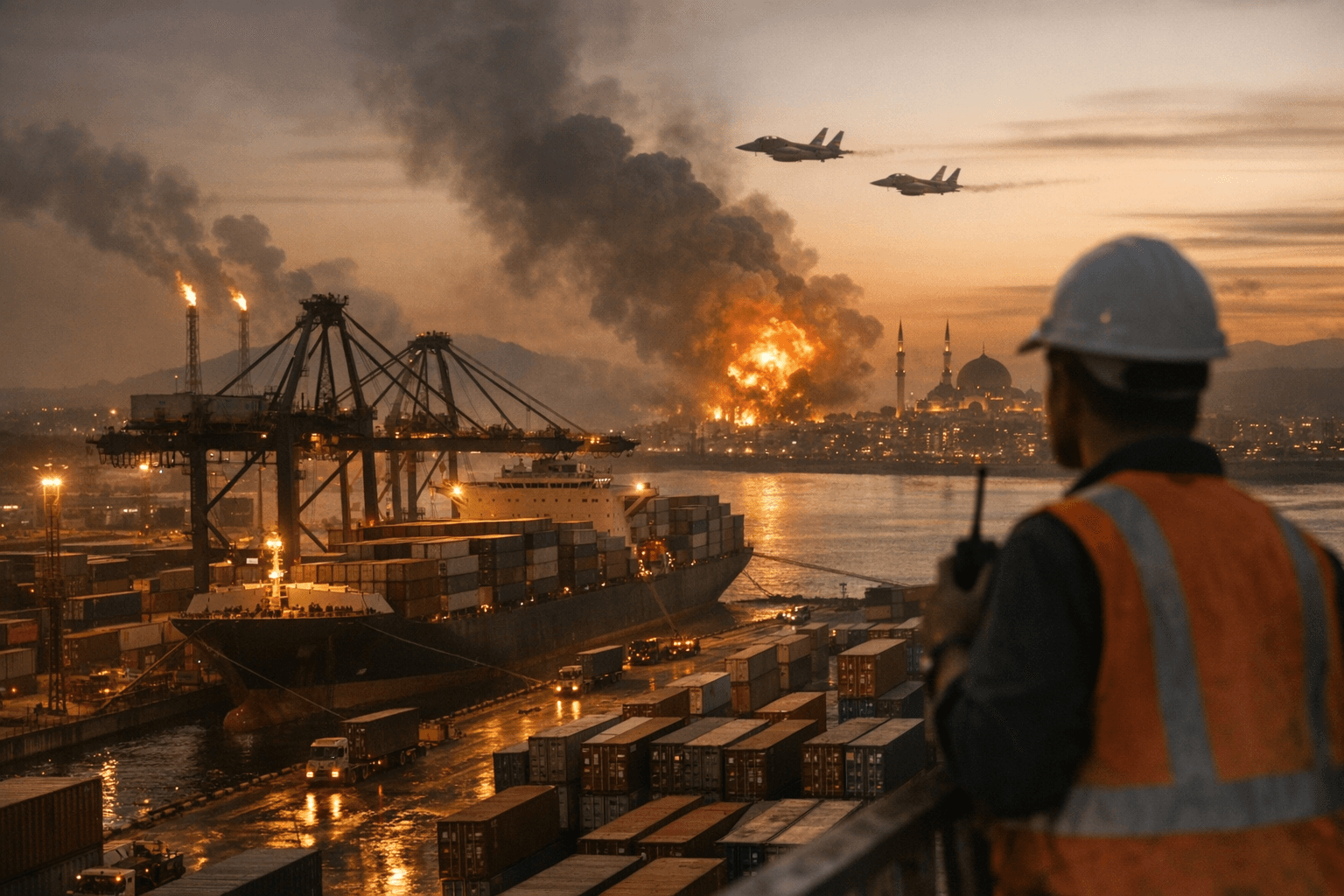
The firm acknowledged that Gulf countries hold dominant positions in certain chemicals and metals exports. Those products, however, account for a small share of the global economy and are not typically critical chokepoints for global manufacturing. Among non-energy commodities, Goldman identified methanol as the most likely source of production disruptions. Methanol is used in making acetic acid, which in turn helps produce industrial adhesives, solvents and paints, a supply chain with real but limited downstream exposure.
"In summary, our analysis suggests that the major risk to global supply and inflation is mostly confined to energy, which limits the risk that the severe supply chain disruptions (and associated surge in inflation) and large second-round inflation effects observed in 2021-2022 will re-emerge," the Goldman Sachs economists said.
One structural factor reinforcing that view: most developed economies carry limited non-energy trade exposure to the Middle East, which reduces the transmission channels through which an energy shock could become something broader. That asymmetry between energy vulnerability and non-energy resilience is central to Goldman's case that this shock, however painful at the pump, does not replicate the conditions that made 2021 and 2022 so damaging for global manufacturers and consumers alike.
Know something we missed? Have a correction or additional information?
Submit a Tip