Goldman Sachs Sees Iran War Inflation Risk Centered on Energy, Not Supply Chains
Goldman economists said the Iran war's inflation hit looks nothing like 2022, with oil up 70% this year but supply chains so far holding.
Goldman Sachs economists drew a sharp distinction between the current oil shock and the pandemic-era inflation surge, arguing that the inflationary damage from the Iran war is concentrated in energy rather than spreading through the broader global supply chain.
"Today's shock is more narrowly concentrated in the energy sector, whereas the energy price increases in 2022 were only one aspect of a much broader global supply chain crisis and inflation surge," Goldman's economists wrote. The bank revised its global growth forecast down to 2.6% from 2.9% before the war, and now expects headline inflation of 2.9% on a fourth-quarter basis. Goldman estimates the oil price surge could reduce global GDP by roughly 0.3% and raise headline inflation by 0.5 to 0.6 percentage points over the next year.
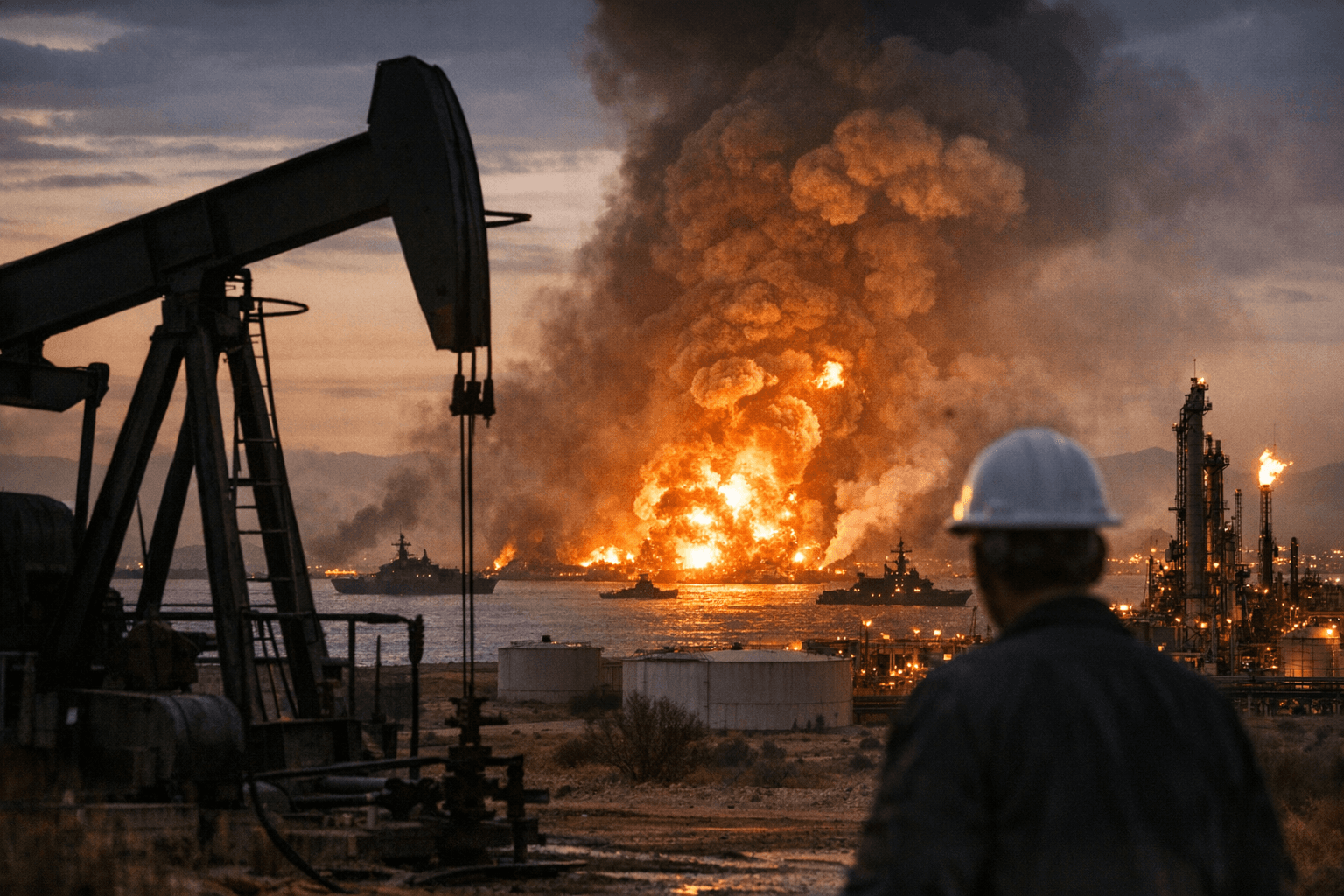
The scale of the supply disruption is historically unprecedented. Goldman's commodity desk, in a note by Michael Struyven and colleagues dated March 1, put the hit to Persian Gulf exports at 16.2 million barrels per day on a four-day moving average basis, which the bank described as the largest supply shock on record, exceeding production losses from the 1973 oil embargo, the 1980 Iran-Iraq War, and the 1990 Iraqi invasion of Kuwait. Crude oil futures climbed more than 70% this year following U.S. and Israeli strikes on Iran, with Brent trading around $105 per barrel and West Texas Intermediate near $99.50 in early trade.
"Due to uncertainty around the duration of the largest oil supply shock on record... oil prices are likely to trend higher over that period until the market gains confidence a lengthy disruption is unlikely," Struyven said. Goldman's base case assumes the Strait of Hormuz begins recovering on March 21, but the bank noted that every additional day of depressed flows adds non-linear upside to prices. If Strait flows remain at current levels through the end of March, Goldman estimated daily oil prices could exceed the 2008 peak of $145 per barrel.
The U.S. inflation picture reflected the pressure directly. Goldman revised its forecast for the December 2026 Personal Consumption Expenditure index to 2.9%, up from a prior estimate of 2.1%, directly citing rising crude oil prices. The bank's sensitivity analysis found that a sustained 10% increase in oil prices raises headline PCE inflation by roughly 0.2 percentage points while shaving 0.1 percentage points from GDP growth, a combination that creates difficult conditions for monetary policy. Higher crude-driven inflation could force the Federal Reserve to delay further rate cuts if price pressures persist.
Goldman CEO David Solomon acknowledged the market's response had been "more benign, given the magnitude of this" than expected. The relatively contained financial reaction reflected a market view that spare pipeline capacity offered a physical buffer and that limited non-energy trade between Gulf economies and the rest of the world reduced the risk of pandemic-style logistics disruptions. Goldman said supply chains "should hold up."
Other institutions painted a starker picture of potential downside. Bloomberg Economics calculated that about 20% of global oil supply passes through the Strait of Hormuz and estimated that a 1% drop in supply pushes oil prices up by about 4%, suggesting a multi-month closure could raise prices by 80% from pre-war levels to around $108 a barrel. Oxford Economics expected UK and eurozone inflation to end the year 0.5 to 0.6 percentage points higher than previously forecast. IMF Managing Director Kristalina Georgieva told Bloomberg that a 10% increase in energy prices sustained for a year would push global inflation up 40 basis points and slow global growth by 0.1 to 0.2 percentage points, a more severe sensitivity than Goldman's own model.
Lord Jim O'Neill, the former chief economist of Goldman Sachs Asset Management, cautioned that the geopolitical backdrop made any single-variable analysis difficult. "It's not like this war has started with the world in a settled place," he said. Iran's retaliatory strikes on Kuwait, Dubai, Saudi Arabia, and Azerbaijan have raised concerns about a broader regional realignment, while Donald Trump's pledge to protect tankers navigating the Strait has added another layer of policy uncertainty to the price outlook. Gold, a traditional conflict hedge, rose 2.3% after the Iran escalation began on February 28, trading near $5,246 per ounce as of March 1 according to Kitco spot price data.
The final macro outcome, Goldman's analysis made clear, hinges almost entirely on how long the Strait of Hormuz remains restricted.
This article was produced by Prism’s automated news system from verified source data, official records, and press releases, then run through automated quality and moderation checks before publishing. The system is built and supervised by the people who set the standards it runs under. Read our full AI policy.
Did this article answer your question?