Goldman Sachs sees AI reshaping workflows, cloud spending in 2026
Goldman says AI is moving from pilot projects to the daily work of bankers, researchers, and engineers, with cloud spending and power constraints now shaping the next phase.

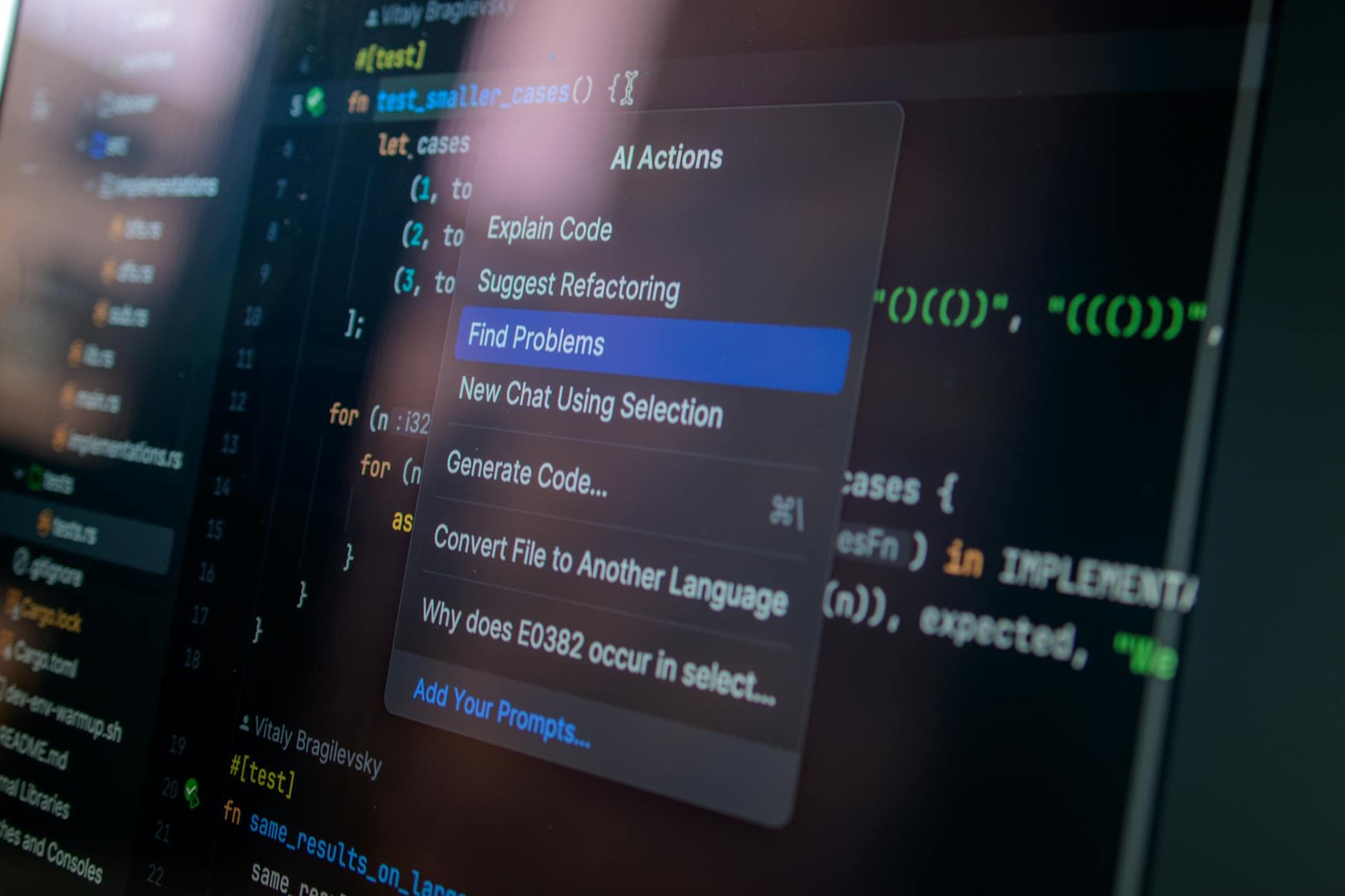
AI is moving from a side tool to a workflow layer at Goldman Sachs, and that changes the job before it changes the model. Marco Argenti’s latest outlook is useful precisely because it treats AI less like a novelty and more like infrastructure, with personal agents, larger context windows, memory, data access, and task orchestration starting to matter as much as the model itself.
What changes first in the Goldman workday
The first real shift will show up in the most repetitive, document-heavy parts of the job. That means draft materials, internal research pulls, market summaries, client-facing notes, and the back-and-forth that slows down pitch work, coverage work, and product execution. If AI becomes a true operating layer, analysts and associates will spend less time assembling information from scratch and more time checking, editing, and deciding what deserves a human sign-off.
In practice, the earliest gains should land in a few functions:
- Banking teams, where AI can speed up pitch book assembly, comparable-company work, and first-pass drafting.
- Research teams, where analysts can compress information gathering and scenario comparison.
- Engineering and operations teams, where internal tools can automate routine requests, code assistance, and knowledge retrieval.
- Legal, compliance, and controls groups, where AI can triage large volumes of text before humans review the edge cases.
That does not mean the work disappears. It means the work shifts toward judgment, exception handling, and client-specific tailoring, which is where Goldman’s people still earn their keep. For an analyst already stretched across 80-hour weeks, the near-term prize is not a fantasy of effortless work. It is fewer dead hours spent cleaning slides, chasing data, or rewriting the same section three times before a VP signs off.
Where human judgment still sets the pace
The parts of the job that remain hardest to automate are also the parts that matter most to career trajectory and bonus season. AI can help draft the materials, but it cannot own the relationship, absorb the political context in a client meeting, or decide when to push and when to wait on a transaction. It also cannot replace the judgment calls that come with pricing risk, shaping a financing structure, or reading whether a client is ready to move.
That is why the biggest upside for Goldman employees may be less about headcount reduction than about leverage. If a team can turn AI into faster execution without sacrificing quality, it can show up better prepared in meetings, respond faster to clients, and potentially create more room for high-value work that feeds promotion cases and year-end compensation discussions. The prestige premium in banking has always been tied to learning speed and exposure; AI could widen the gap between people who use that leverage well and people who treat it as a toy.
The hype, however, is likely to outrun the reality in one specific area: fully autonomous personal agents. The idea that every banker will hand off a complex workflow to an AI assistant sounds elegant, but Goldman’s own framing points to the real bottlenecks, integration, governance, memory, and access to the right data. In a regulated environment, the model is only as useful as the systems it can safely touch, and the firm will not hand over judgment-heavy tasks without guardrails.
Why cloud spending is still the other half of the story
Goldman’s outlook is not just about software behavior. It is also about how much money the hyperscalers are throwing at the physical backbone behind AI. Goldman Sachs Research says consensus 2026 capital spending for the largest hyperscale AI companies is about $527 billion, up from $465 billion at the start of the third-quarter earnings season. That is not a small shift. It is a signal that AI infrastructure is still in an expansion phase, with spend continuing to run hotter than many investors expected.
The scale matters for Goldman because the seven biggest tech companies now account for more than 30% of the S&P 500’s market capitalization and roughly one quarter of the index’s earnings. For a bank that lives on cross-asset flows, equity research, and client conversation, that concentration shapes everything from portfolio construction to sector rotation debates. It also means the AI trade is no longer a narrow tech story. It is a market structure story.
That is why the firm keeps connecting AI to software, semiconductors, power, and cloud infrastructure. If the spend keeps rising, the winners are not limited to the companies training the models. They include the chipmakers, networking vendors, data-center developers, cooling providers, utility-linked infrastructure players, and the capital markets teams financing all of it.
The gigawatt ceiling is where the story gets real
Goldman’s most practical warning is its so-called gigawatt ceiling, the idea that power demand and the long lead times needed to bring new facilities online will limit how fast AI can scale. This is the part of the story that should matter to anyone covering energy, utilities, or data centers inside the firm. A model can be improved quickly; a power plant, transmission upgrade, or new grid connection cannot.
Goldman’s broader AI and data-center research makes that constraint harder to ignore. U.S. spending on data-center construction has tripled over the last three years, and occupancy rates remain near record highs across most U.S. third-party leased data-center markets. Goldman Research now expects data-center power demand to rise 220% by 2030 versus 2023 levels. That is a reminder that the AI buildout is not just a software cycle. It is an electricity cycle.
For Goldman employees, that means the AI debate increasingly crosses desks. A banker working on a client pitch may now need to understand the power bottleneck behind a data-center expansion. A sector specialist may need to think about grid constraints alongside valuation. A researcher may need to ask whether a company’s AI strategy is limited by compute, land, power access, or all three.
What this means for Goldman’s 2026 playbook
This outlook fits into a broader market view that 2026 could be shaped by AI adoption, corporate re-leveraging, IPOs and dealmaking, and a search for value stocks. Goldman’s own S&P 500 call sees a 12% total return for 2026 and lists AI adoption as one of five key investment themes. That is an important backdrop for staff because it suggests AI is not some isolated technology sidebar. It is part of the main market narrative clients will keep asking about.
The day-to-day takeaway is simple. The first workflows to change will be the ones built on repetition, retrieval, and drafting. The work that survives is the work that requires trust, discretion, and judgment. And the most overhyped part of the AI story, at least for now, is the notion that agents will quickly become independent bankers.
Goldman’s 2026 AI outlook is really a workplace map. It says the firm’s future productivity gains will come from redesigning how work moves, not just from buying better tools, and it makes clear that the next bottleneck is not imagination. It is power, process, and disciplined execution.
This article was produced by Prism’s automated news system from verified source data, official records, and press releases, then run through automated quality and moderation checks before publishing. The system is built and supervised by the people who set the standards it runs under. Read our full AI policy.
Did this article answer your question?