Goldman Sachs sees chip designer shortage boosting Cadence and Synopsys
Goldman Sachs said a chip designer shortage could add $3.7 billion a year to EDA revenue by 2030, putting Cadence and Synopsys in the AI bottleneck trade.

Goldman Sachs is framing chip design talent as the next pressure point in AI infrastructure, and it wants investors looking at the software that sits closest to that constraint. In a July 2026 note, the bank said Cadence Design Systems and Synopsys should benefit from a structural shortage in semiconductor labor, especially as demand shifts toward custom AI silicon.
The call matters because it moves the AI story one layer deeper into the supply chain. Goldman said the design-engineer bottleneck could create about $3.7 billion a year in incremental electronic design automation revenue by 2030, a windfall for companies that provide the software used to design advanced chips before they ever reach a foundry. James Schneider was identified as the Goldman analyst behind the call.
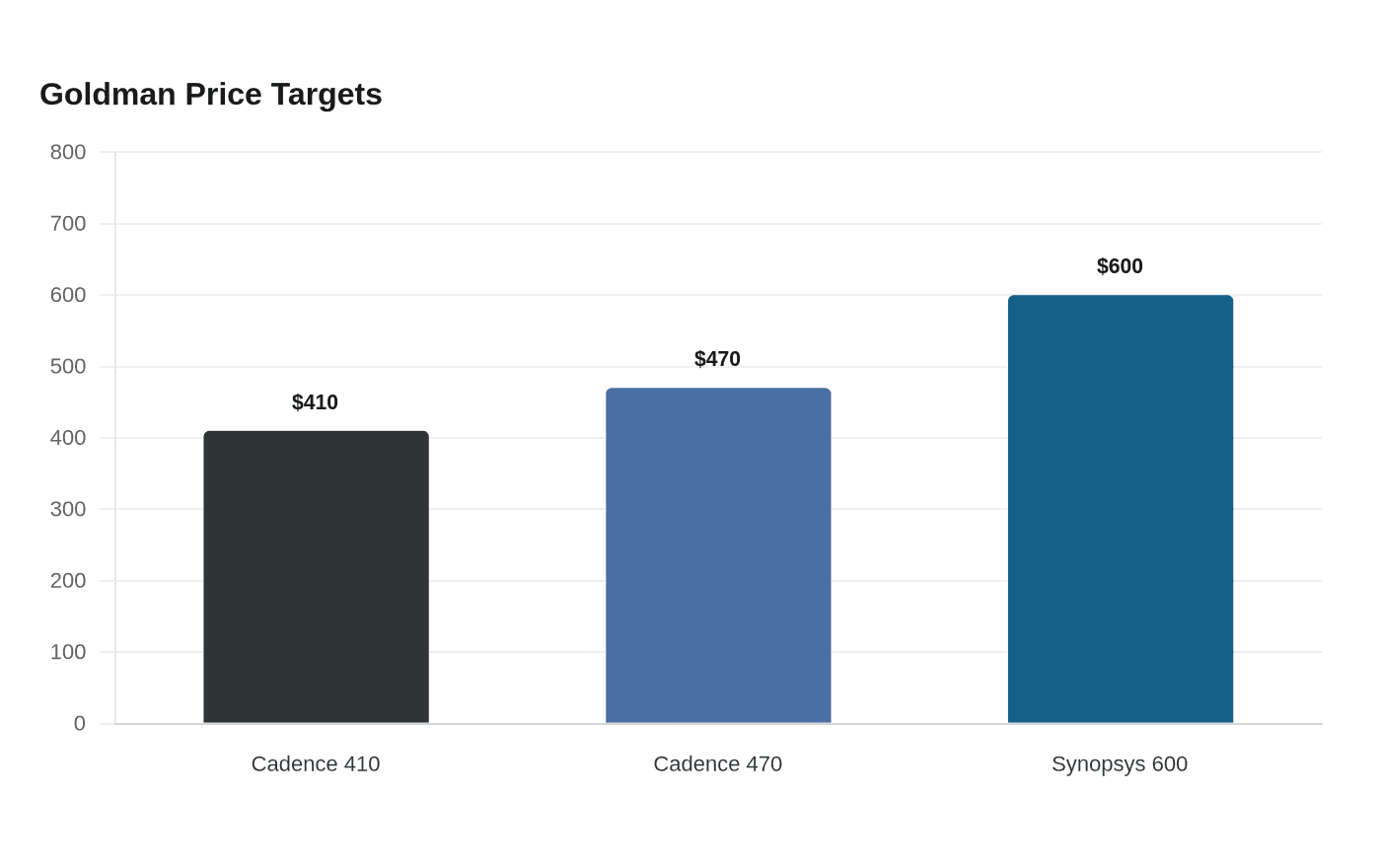
Goldman also nudged its view on Cadence by lifting the price target to $470 from $410, while keeping a $600 12-month target on Synopsys. For bankers pitching semiconductor clients, the message is straightforward: the scarcity is not just in fabs, packaging or cloud capacity. It is in the engineers who can design the next generation of AI chips, and that shortage can support pricing power for the software vendors sitting upstream.
The backdrop is a semiconductor market still being pulled by AI spending. Deloitte said in February 2026 that global semiconductor sales could reach a record US$975 billion in 2026, describing the year as a historic peak driven by AI infrastructure demand. That kind of capex environment has already pushed conversations on data-center buildouts, accelerator supply and custom silicon programs higher up the priority list for clients. Goldman’s latest view suggests the next constraint may be whether the industry can staff enough chip designers to turn that demand into product.

The broader industry structure helps explain why Goldman is focused on EDA. The Semiconductor Industry Association says the U.S. semiconductor ecosystem spans intellectual property and chip design software providers, chip design, fabrication, and suppliers of semiconductor manufacturing equipment and materials. That means a talent squeeze in design does not stay isolated inside engineering teams. It can ripple through software demand, project timelines, customer road maps and the investment case for companies like Cadence and Synopsys that sit at the front of the development chain.
This article was produced by Prism’s automated news system from verified source data, official records, and press releases, then run through automated quality and moderation checks before publishing. The system is built and supervised by the people who set the standards it runs under. Read our full AI policy.
Did this article answer your question?