Goldman Sachs sees private markets rebounding on growth, liquidity and AI
Goldman thinks private markets are turning when liquidity returns, exits thaw and AI fuels demand. The next trade is the plumbing: secondaries and structured capital.
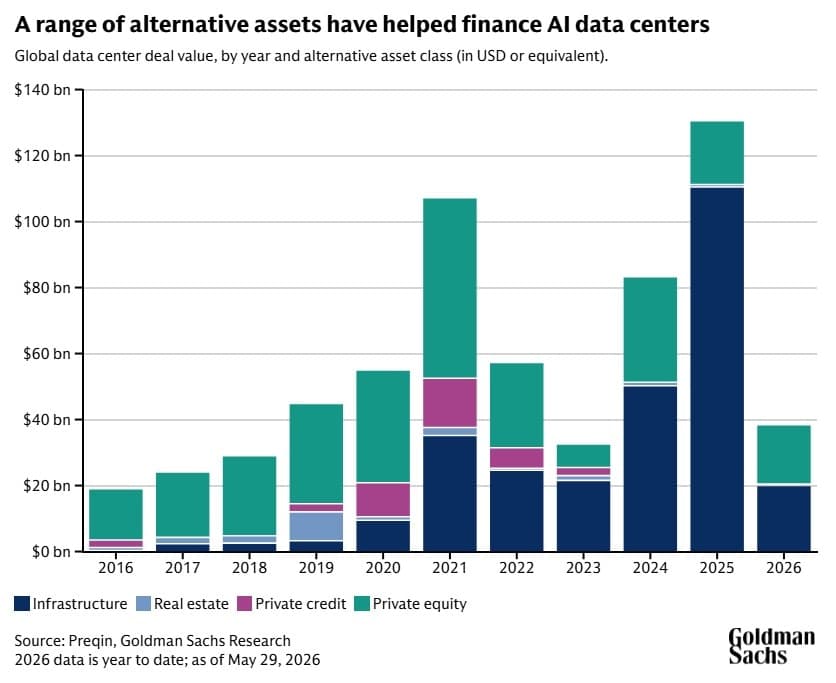
Goldman Sachs is treating private markets less like a lull and more like a reset. After rates began rising in 2022, the asset class stalled even as public markets pushed higher, and now the firm says a mix of sustained growth, improving liquidity and AI-driven innovation could pull it back into motion. For Goldman bankers, that is not just a macro call. It is a map of where fees, deal flow and career momentum may concentrate next.
Why Goldman thinks the corner is turning
The firm laid out its case in a June 8 podcast recorded on May 26, 2026, with Pete Lyon and Michael Brandmeyer arguing that private markets may be at an inflection point. Their framing matters because they are not describing a short pause caused by volatile markets. They are describing a structural change in how capital moves, where the bottleneck is liquidity, and where the next wave of activity is likely to come from.
That distinction is important inside Goldman. A cyclical rebound would mean a little more transaction volume when rates ease. A structural rebound means the market’s plumbing is changing, which creates a longer runway for sponsor coverage, capital solutions, private credit, secondaries and asset management teams. In other words, the opportunity is not just more buyouts. It is a broader shift in how private capital gets deployed and repaid.
The assumptions behind the rebound
Goldman’s bullish view depends on three things holding together: sustained economic growth, improving liquidity and AI-driven innovation. Lyon and Brandmeyer said distributions may gradually recover to 15% to 20%, and they said deal activity could surpass its 2021 peak within two to three years. That is a meaningful call, because 2021 was the kind of frothy year that left a lot of people in the industry wondering whether activity had already peaked.
Those assumptions are not trivial. If growth stays weak, if financing remains expensive or if exits stay stuck, the recovery loses fuel quickly. But if the economy keeps expanding and more assets can actually clear the market, private markets can move from defense to offense. That is the bet Goldman is making: not that every corner of the market snaps back at once, but that a healthier exit cycle and better liquidity are enough to restart the machine.
The real problem has been liquidity
Goldman’s broader message aligns with a view that private markets have been constrained by a circulatory system problem, not just a temporary slowdown. The issue is simple to describe and hard to fix: too little money has been moving through exits and distributions. Managers have kept assets longer, LPs have seen less cash return to them, and the whole system has become less fluid.
McKinsey’s 2024 Global Private Markets Review helps explain why that matters. It described private markets as entering a slower era in 2023, with macroeconomic headwinds, higher financing costs and an uncertain growth outlook weighing on fundraising, deal activity and performance. When money gets stuck for that long, it changes behavior. Investors become more selective, sponsors hold on longer, and everyone in the chain starts waiting for someone else to make the first move.
For Goldman employees, this is where the story stops being abstract. A distribution-starved market reduces the pace of realizations, which is what eventually feeds carried interest and bonus pools. It also changes the nature of the work. Instead of a steady stream of fresh deals, teams spend more time on liability management, liquidity solutions and ways to unlock value that has been trapped on the balance sheet.
Secondaries are the clearest sign of change
If private markets are thawing, secondaries are the most obvious place to watch. Goldman has described the private equity secondaries market as having grown substantially and reshaped the broader alternative asset landscape. That is not a niche observation anymore. It is a sign that the market has built its own release valve.
The numbers back that up. JPMorgan said global transaction volumes for private market secondaries hit a record $226 billion in 2025, up 41% from 2024. That kind of growth suggests the market is no longer just a backstop for distressed sellers. It is becoming a core part of how private assets get priced, recycled and financed.
For Goldman, that matters because secondaries sit at the intersection of so many of its franchises. They touch sponsor coverage, asset management, financing and advisory work. They also create room for continuation vehicles, structured exits and other tools that let firms manage liquidity without waiting for a clean IPO or trade sale. In a market where exits have been slow, the banks that can engineer liquidity have an edge.
Where AI fits into the next phase
Goldman’s decision to put AI alongside growth and liquidity is telling. The firm is not just saying AI will boost public markets or lift a few tech names. It is saying AI can change company formation, capital intensity and the types of businesses private markets want to fund.
That broadens the investable universe. New companies built around generative AI need capital, but so do the enabling businesses around compute, infrastructure and software adoption. Existing portfolio companies may need more capex, more restructuring or more creative financing to keep up. For bankers, that means the work becomes less about a single sponsor buyout template and more about understanding how AI changes valuation, funding needs and exit timing.
That also changes the internal skill set Goldman will reward. Analysts and associates who can model liquidity events, think through hybrid capital and understand how AI affects business economics will be more useful than those who only know how to run a standard LBO. The best teams will not just chase live deals. They will be able to explain why a company can be sold now, recapitalized later or kept private longer.
What Goldman is really betting on
The bank’s real takeaway is that the next pocket of opportunity after the post-2022 stall is not one giant transaction wave. It is the liquidity layer: secondaries, structured exits, refinancings and capital solutions that keep private assets moving. If distributions recover, if exits reopen and if AI keeps generating fresh capital needs, Goldman can capture activity across more products and more phases of the lifecycle.
That is why this inflection point matters inside the firm. It points to a market where the most valuable bankers are not just dealmakers, but liquidity engineers. If Goldman is right, the next phase of private markets will reward the people who understand how capital gets out as much as how it gets in.
This article was produced by Prism’s automated news system from verified source data, official records, and press releases, then run through automated quality and moderation checks before publishing. The system is built and supervised by the people who set the standards it runs under. Read our full AI policy.
Know something we missed? Have a correction or additional information?
Submit a Tip