Goldman Sachs sounds out investors for private fund loan risk transfer
Goldman is testing investor demand for a new loan-risk transfer tied to subscription lines, freeing balance-sheet room as private credit keeps swelling.

Goldman Sachs is trying to move more of its private-market lending risk off its own books without stepping away from the business that generates it. The firm is sounding out investors on a significant risk transfer tied to a portfolio of loans to private market funds, specifically subscription lines, with the reference portfolio said to be worth billions of dollars and final terms still under discussion.
For Goldman’s financing, risk, and private-markets teams, that is the point. A successful deal would let the bank keep originating fund-finance exposure and collecting fees while shifting a slice of the credit risk to outside investors. In practice, that can free up regulatory capital and leave room for more lending, which is increasingly valuable as private credit and fund finance take a larger share of the franchise.

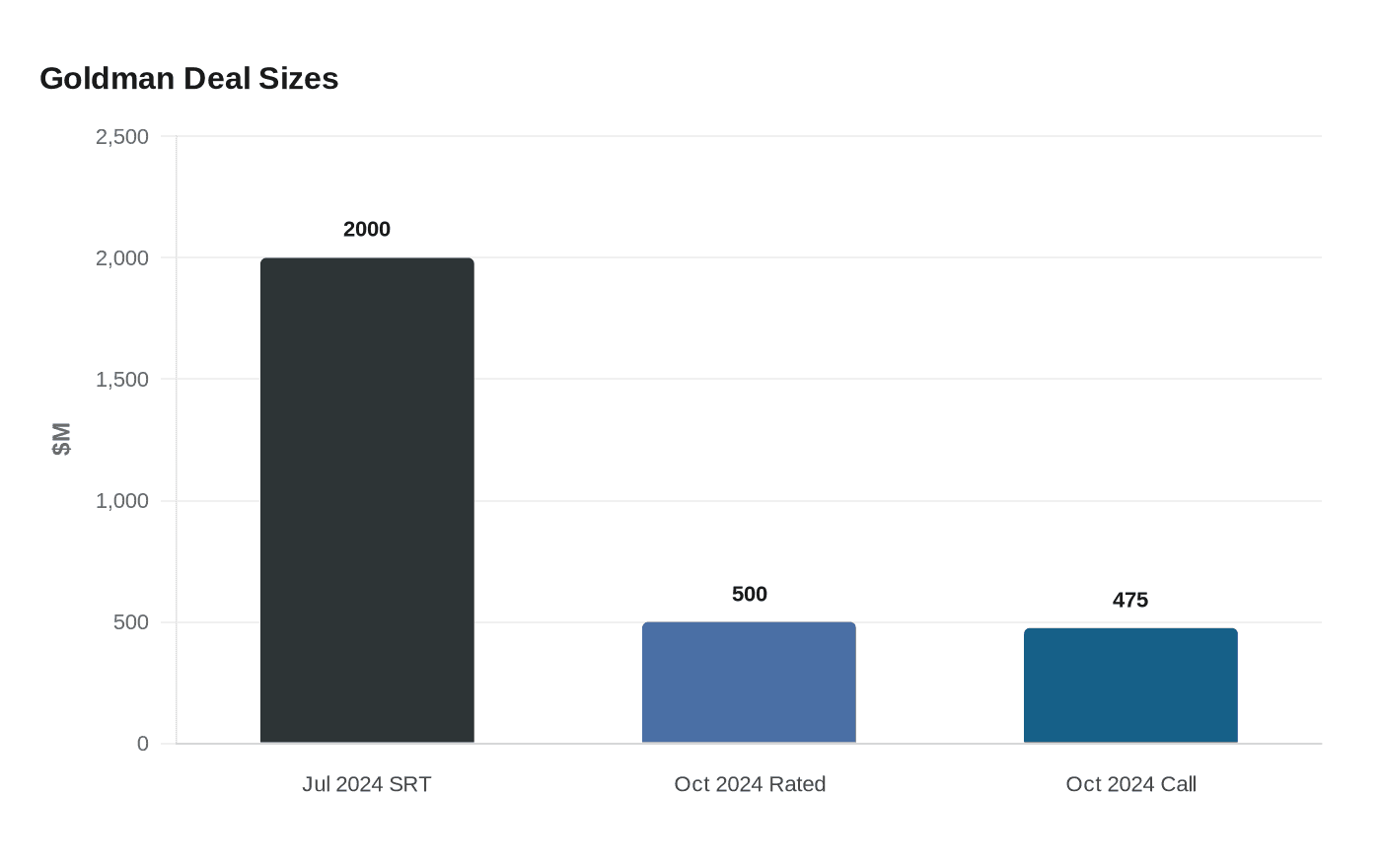
The move also fits a pattern. Goldman sold an SRT tied to about $2 billion of private fund loans in July 2024, then followed with a subscription-line securitization in October 2024 that industry coverage described as a $500 million rated deal and the first broadly syndicated, publicly rated securitization of subscription credit lines. Conyers described the same transaction as a $475 million capital call securitization. The message to Goldman desks is clear: the firm is not just lending into private markets, it is building a distribution model for the risk that comes with those loans.
The structure matters because it shows how these trades work. Fitch says a subscription finance facility securitization involves a bank selling a pool of subscription-finance receivables to a bankruptcy-remote vehicle, which then issues securities backed by those receivables to third-party investors. Fitch also said there were 150 rated subscription finance facilities totaling $190 billion across 80 unique general partners by the end of the third quarter of 2024, equal to about 19% of an estimated $1 trillion market. That growth helps explain why banks are looking for ways to recycle balance sheet more aggressively.
Inside Goldman, the work cuts across origination, structuring, legal, treasury, risk, and investor coverage. It also lands at a moment when Goldman Sachs Asset Management says its private-credit platform had more than $246 billion invested in private credit, backed by more than 210 investment professionals and 30 years of investing experience as of Dec. 31, 2025. The firm is still leaning into private markets, but the economics now depend as much on capital management as on deal flow.
This article was produced by Prism’s automated news system from verified source data, official records, and press releases, then run through automated quality and moderation checks before publishing. The system is built and supervised by the people who set the standards it runs under. Read our full AI policy.
Did this article answer your question?