Goldman Sachs to redeem $3.5 billion in notes a year early
Goldman is taking $3.5 billion of debt off the books a year early, a sign treasury has room to manage funding tightly while preserving flexibility for the businesses inside the firm.
Goldman Sachs is pulling $3.5 billion of funding off the books a year early, a move that says as much about balance-sheet confidence as it does about debt mechanics. For the people inside Goldman Sachs Bank USA who watch liquidity, capital and funding costs, the redemption is a reminder that the firm is actively managing liabilities, not just waiting for notes to roll off.
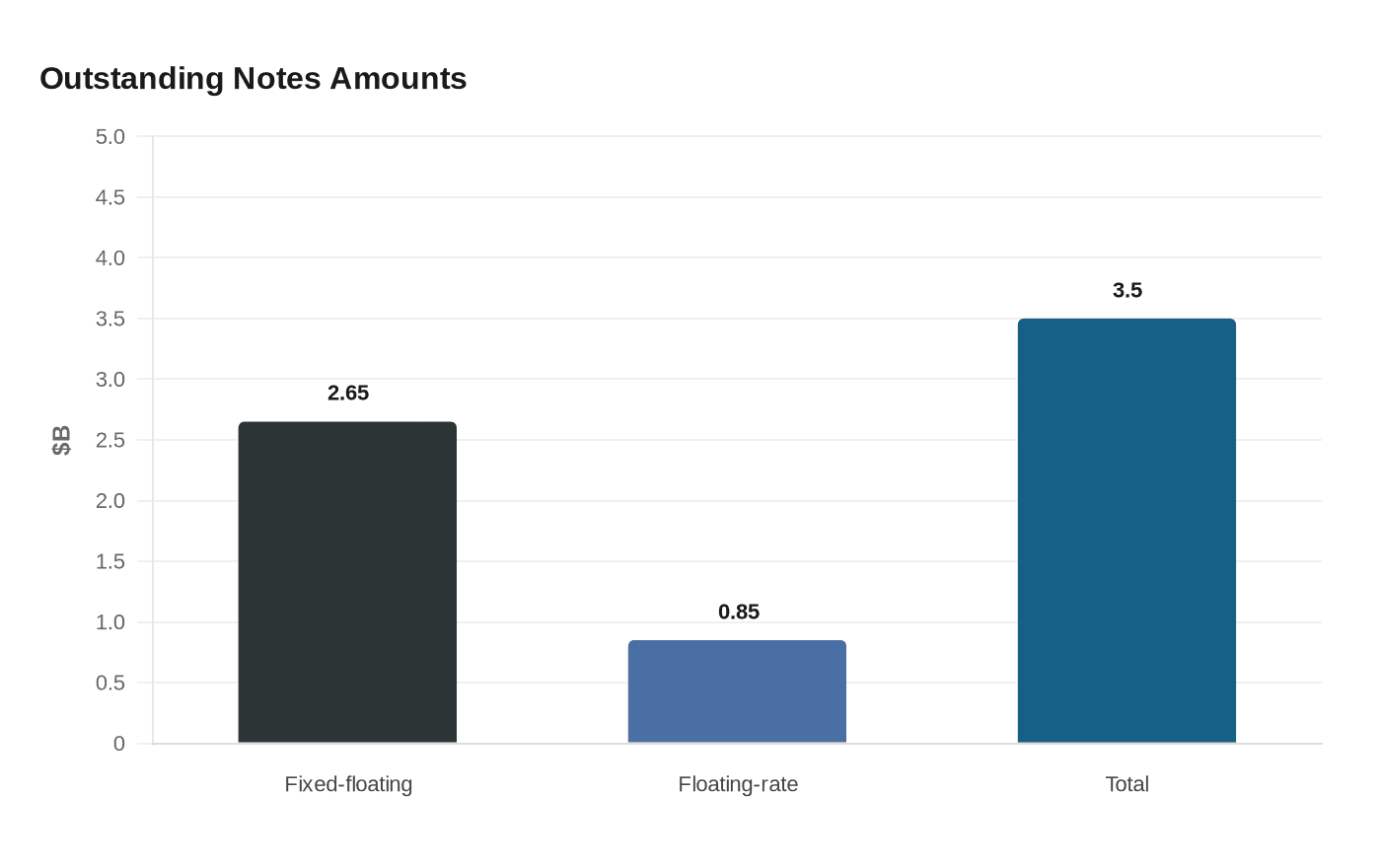
Goldman said on May 14 that it will redeem all of its outstanding 5.414% fixed-floating rate notes due May 21, 2027, along with all of its floating rate notes due the same date, on May 21, 2026. The fixed-floating tranche had $2.65 billion outstanding, and the floating-rate tranche had $850 million outstanding, for a combined principal amount of $3.5 billion. Both securities are separate issuances, but Goldman is taking them out together on the same redemption date.

The bank said the notes will be redeemed at 100% of principal plus accrued and unpaid interest up to, but excluding, the redemption date. Interest stops accruing on May 21. That is standard treasury housekeeping on paper, but it matters inside a firm like Goldman because each liability carries a cost and a set of constraints. Redeeming higher-cost or less useful funding can sharpen the bank’s funding profile, simplify the capital stack and leave more room to deploy balance-sheet capacity into lending, trading and other growth areas.
For employees in treasury, markets, risk and finance, the signal is straightforward: Goldman is treating funding the way it treats any other part of the franchise, with constant calibration. For client-facing staff, the impact is indirect but real. Funding discipline affects how aggressively the bank can commit capital, how much room it has in stress periods and how much flexibility it has to support businesses that depend on balance-sheet usage. In practice, that can shape everything from financing discussions with clients to internal debates over where capital gets allocated next.
This is also not a one-off. Goldman made a similar early-redemption move in March 2026, announcing that it would redeem another pair of 2027-dated notes with an aggregate outstanding amount of $4.0 billion. In August 2025, it redeemed another pair of notes due in 2026. The pattern suggests recurring liability management, not distress: Goldman is choosing when to clean up its funding structure, and that choice usually belongs to a firm that feels it has options.
This article was produced by Prism’s automated news system from verified source data, official records, and press releases, then run through automated quality and moderation checks before publishing. The system is built and supervised by the people who set the standards it runs under. Read our full AI policy.
Did this article answer your question?