Goldman Sachs warns AI capex boom could erode S&P 500 profitability
Goldman says AI spending may lift earnings near term, but rising depreciation and equity raises could cut mega-cap tech ROE by 700 basis points next year.
Goldman Sachs is backing the AI investment boom and warning that it may already be sowing the seeds of weaker profitability. In a June 12 report, Goldman Sachs Research said the S&P 500’s record margins and returns have been flattered by the surge in AI spending, but that the same capex wave could turn into a drag if returns do not keep pace.
The bank said the S&P 500 had gained 9% year to date and was trading at 21 times forward earnings. Its trailing four-quarter return on equity reached a record 22% in the first quarter of 2026, above the prior peak set in 2021. Goldman said that figure has been boosted by the growing weight of mega-cap technology, with the seven largest tech stocks, Nvidia, Apple, Alphabet, Microsoft, Amazon, Broadcom and Meta, posting a collective ROE of 44%, up 9 percentage points over the past three years.
That concentration is exactly what makes the next phase of the AI trade harder to read. Goldman said consensus estimates imply ROE for those seven technology names will fall by an average of 700 basis points next year. The firm said higher depreciation at hyperscalers, greater asset intensity, lower sales-to-asset turnover since the start of the AI boom and equity raises to fund investment spending are likely to reverse part of the ROE lift that has come from elevated semiconductor margins.
For Goldman employees, that shift matters because it changes the story clients want to hear. Equity sales, research and trading desks can no longer sell AI as a simple growth theme; the harder question is which companies can finance the build-out without damaging capital efficiency. That is the kind of distinction that shapes client conversations, informs pitch books and feeds into the work that ultimately drives revenue, bonus pools and career momentum inside the firm.
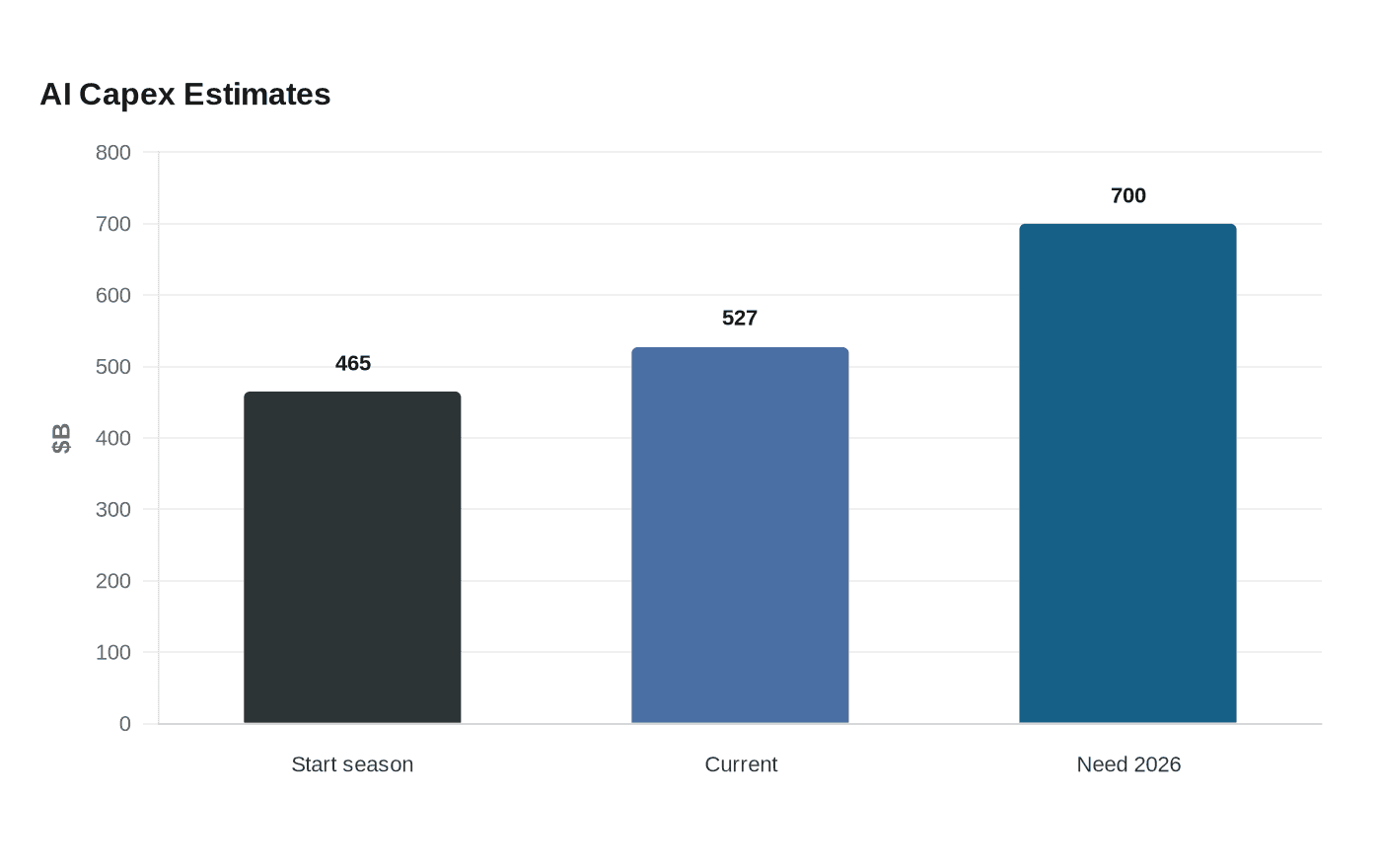
Goldman’s broader framework still remains constructive on equities, but it is increasingly focused on the cost of that optimism. The bank estimated roughly $7.6 trillion of capital spending between 2026 and 2031 across compute, data centers and power. It said consensus estimates for 2026 AI hyperscaler capex had risen to $527 billion from $465 billion at the start of earnings season, and argued that spending would need to reach $700 billion in 2026 to match the peak of the late-1990s telecom cycle.
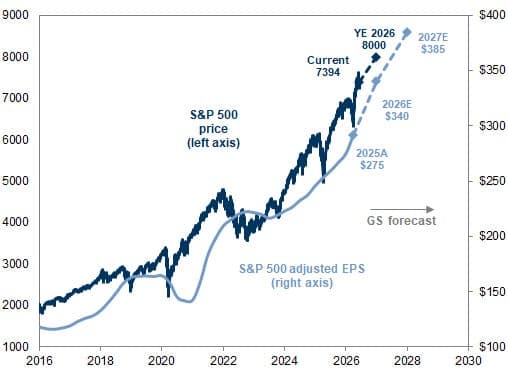
That tension runs through Goldman’s own market view. In its 2026 S&P 500 outlook, the firm raised its year-end target to 8,000 and projected 2026 earnings per share of $340, with AI infrastructure investment expected to account for about half of earnings growth. Its technology outlook also urged greater selectivity within the Magnificent 7 and a broader look at AI infrastructure, data governance, security and robotics. For Goldman, enthusiasm for AI is not disappearing. It is becoming a stricter test of who can turn spending into durable returns.
This article was produced by Prism’s automated news system from verified source data, official records, and press releases, then run through automated quality and moderation checks before publishing. The system is built and supervised by the people who set the standards it runs under. Read our full AI policy.
Know something we missed? Have a correction or additional information?
Submit a Tip