Goldman Sachs workplace unit powers security, efficiency, and office experience
Goldman’s CWS unit is the hidden machinery of office life, from security and transport to fire response. When it works, the whole firm feels it.
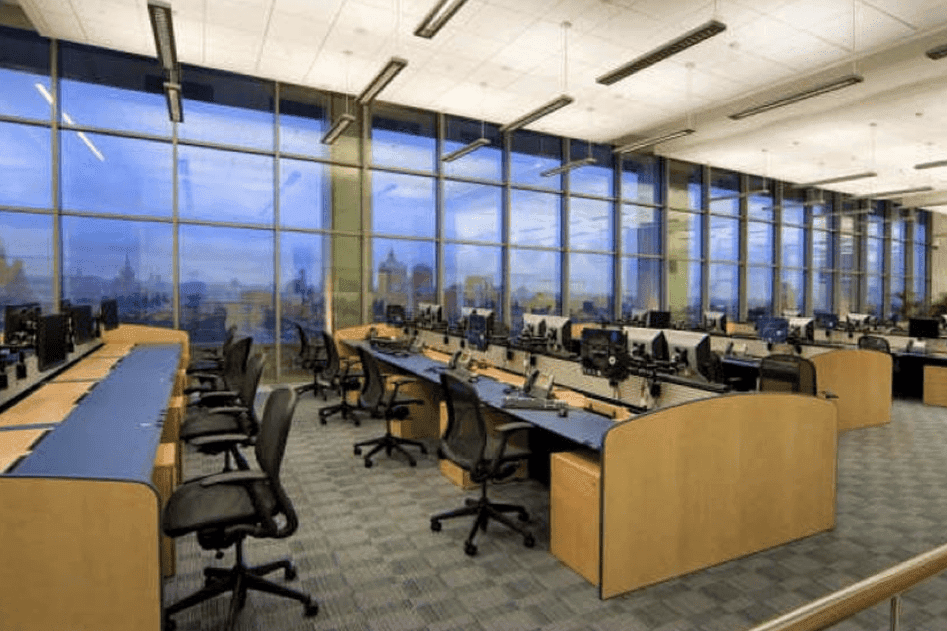
Goldman Sachs’ Corporate and Workplace Solutions unit is the hidden machinery behind the office day. It is the part of the firm that makes the building usable, the commute workable, the meetings happen, and the workday feel secure enough to get clients served without constant friction.
What Corporate and Workplace Solutions actually does
CWS is broader than most employees probably think. Goldman says it includes Workplace Experience, the Office of Global Security, the Chief Operating Officer function, CWS Engineering, and Regional Office Leadership. That remit runs from real estate strategy and real estate development to capital management, events, client and production engineering, facilities management, hospitality operations, document management, and ground transportation.
That mix matters because it shows workplace is not just about desks, conference rooms, and coffee stations. It is the operating layer that decides whether people can get into the building, find the room they booked, get a document where it needs to go, and move through the day without avoidable delays. For a firm that runs on speed, precision, and client responsiveness, those are not small conveniences. They are part of how the institution actually performs.
Why security is now part of the workplace experience
The Office of Global Security is one of the clearest examples of how Goldman treats workplace operations as a business function, not a back-office afterthought. Goldman says the team protects people and assets, assesses risk, and leads fire and life safety protocols, along with crisis management preparation, implementation, and recovery. In plain terms, that means the same operating group that helps keep office life smooth also has a direct role in keeping people safe when something goes wrong.
Goldman’s Safe and Healthy Workplace materials push the point further. The firm says health and safety are a prerequisite to achieving business objectives, and it identifies dedicated experts in Human Capital Management and Corporate Workplace Solutions who focus on health and wellness, safety, and fire and emergency response. That framing is important for employees because it makes clear that safety is not a side issue. It is treated as a condition for the firm’s work to happen at all.
Security now stretches beyond the front door
The firm’s security posture also reaches beyond physical buildings. Goldman says on its security and fraud awareness page that it uses programs and technical controls to protect client accounts and information from scams and fraud. That means the same broad security mindset that covers access, crisis planning, and life safety also connects to digital and behavioral risk.
For employees, the practical takeaway is simple: office security is no longer just about badges, guards, and locked doors. It sits at the intersection of physical space, client information, and the controls that keep the firm from being disrupted by fraud or scams. In a workplace where people move constantly between desks, conference rooms, travel, and remote communication, that overlap is part of the daily operating reality.
The office footprint is also a resilience strategy
Goldman links workplace operations to its broader operational impact goals, which makes CWS relevant to more than comfort and aesthetics. The firm says it aims to minimize its operational impact through energy management, physical workplace footprint consolidation, emissions reduction, renewable energy and carbon credit procurement, water and waste management, small business engagement, and responsible sourcing and supply chain management.
That matters because Goldman is not a small, single-site employer. Its main site says the firm has 46K+ people around the world, as of 2024, and its offices span major financial centers. Once a firm is operating at that scale, workplace decisions become a global systems question, not a local facilities issue. Consolidating space, managing energy use, and keeping supply chains dependable can shape how reliably the firm operates across time zones and business lines.
How 200 West Street shaped the model
The modern Goldman workplace story is hard to separate from 200 West Street in Lower Manhattan. On August 23, 2005, Goldman announced a new 2.1 million-square-foot world headquarters in Battery Park City, with total project cost estimated to exceed $2 billion. The firm broke ground on November 29, 2005, and its historical materials say it consolidated its New York presence into the new LEED Gold certified global headquarters in 2008.
That history still matters because it explains the scale and ambition of the operating model CWS now supports. The headquarters was never just a building announcement. It was a consolidation strategy that turned office operations, security, engineering, and workplace experience into a much larger internal system. Once a firm builds around that kind of density, the quality of the hidden infrastructure becomes part of the employee experience, whether people are in the office five days a week or navigating a more flexible routine.
What the team says about careers inside Goldman
CWS also gives a clue about how Goldman staffing works behind the scenes. The function draws people from management, finance, hospitality, engineering, real estate, international relations, political science, law enforcement, security, communications, and the arts and sciences. That range says the unit is not a narrow facilities shop. It is a serious operating platform with multiple entry points and skill sets.
For Goldman employees thinking about career path, that breadth matters. It shows there are ways to build a life inside the firm that are not confined to front-office coverage, trading intensity, or the classic bonus-cycle grind, even though those pressures still define much of Goldman’s culture. A sophisticated workplace function can offer another route into the institution, one that is closer to operations, resilience, safety, and the daily conditions that let the rest of the bank work.
The simplest way to understand Corporate and Workplace Solutions is this: if it disappears, employees notice immediately. Security, transport, meeting support, fire response, office logistics, and space planning are what keep Goldman from feeling like a collection of disconnected floors and screens. They are the systems that make the firm feel like a firm.
This article was produced by Prism’s automated news system from verified source data, official records, and press releases, then run through automated quality and moderation checks before publishing. The system is built and supervised by the people who set the standards it runs under. Read our full AI policy.
Did this article answer your question?