Goldman says private capital will finance AI data-center boom
Goldman is pushing the AI build-out past corporate debt and into private infrastructure and real estate, putting financing, real assets, and power-heavy underwriting desks at the center.
Goldman is betting that the AI data-center boom will force more money into private infrastructure and real estate, a shift that could make project finance, real assets, and capital formation work far more central inside the firm. The bank said the financing stack for artificial intelligence is no longer just about corporate borrowing: public, securitized and private markets will all be needed to fund the build-out as companies chase capacity for compute, land, power and buildings.
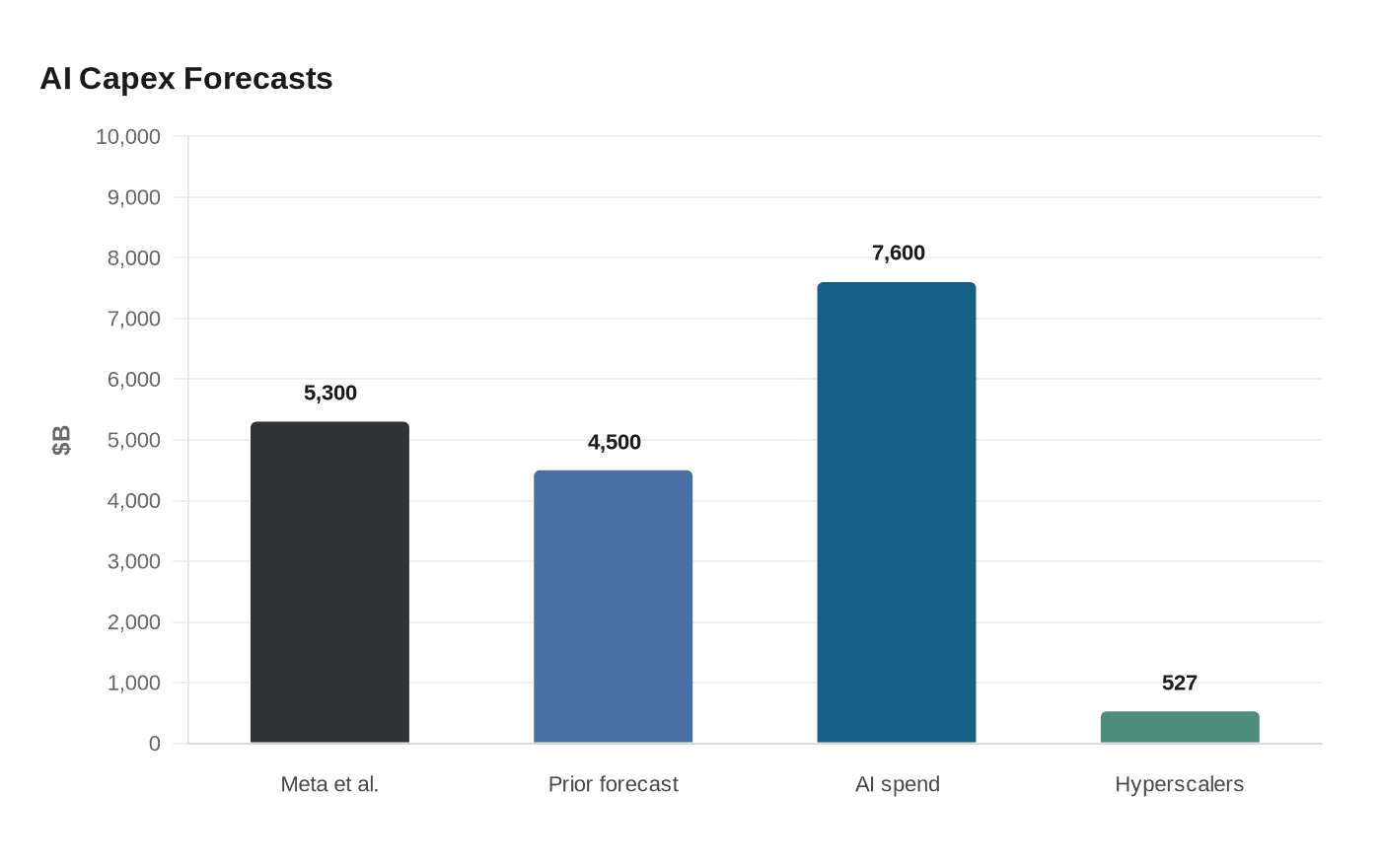
Goldman raised its combined capital-spending forecast for Meta, Microsoft, Amazon and Alphabet to $5.3 trillion for fiscal 2025 through 2030, up from $4.5 trillion before first-quarter earnings. In a separate May 1 framework, the bank said baseline aggregate AI capital spending could reach about $7.6 trillion between 2026 and 2031 across compute, data centers and power. Goldman also said Wall Street analysts now expect the largest hyperscale cloud companies to spend more than half a trillion dollars on capex in 2026, with consensus spending for the group at $527 billion, up from $465 billion at the start of the third-quarter earnings season.

For Goldman employees, that matters because the opportunity is not just in reading the AI trade. It is in financing it. As the need for capital broadens beyond plain-vanilla corporate debt, the work flows toward leveraged finance, real estate, infrastructure and alternatives, along with the operations, legal and risk teams that support those businesses. The more AI projects start to look like hybrid real asset deals, the more important bankers become who can underwrite power-intensive projects, structure securitizations and connect developers with private capital.
The bank’s earlier AI research helps explain why. Goldman said U.S. spending on data-center construction has tripled over the last three years, while occupancy rates for third-party leased data centers remain near record highs. That combination suggests a market where demand is outrunning the usual funding channels, especially as hyperscalers race to secure land, electricity and physical space before supply tightens further.
The optimism around funding comes with a sharper warning from inside Goldman itself. On a June 2 podcast, researcher Jim Covello said the economics of AI look more questionable today than two years ago because enterprise buyers, model companies and hyperscalers have not yet shown returns on their spending. For Goldman, that tension is the story: a giant financing opportunity on one side, and a still-unproven payoff on the other. That is why the desks closest to private capital, real assets and infrastructure may become more important than the ones simply issuing a fresh take on AI stocks.
This article was produced by Prism’s automated news system from verified source data, official records, and press releases, then run through automated quality and moderation checks before publishing. The system is built and supervised by the people who set the standards it runs under. Read our full AI policy.
Know something we missed? Have a correction or additional information?
Submit a Tip